Post by : Shweta
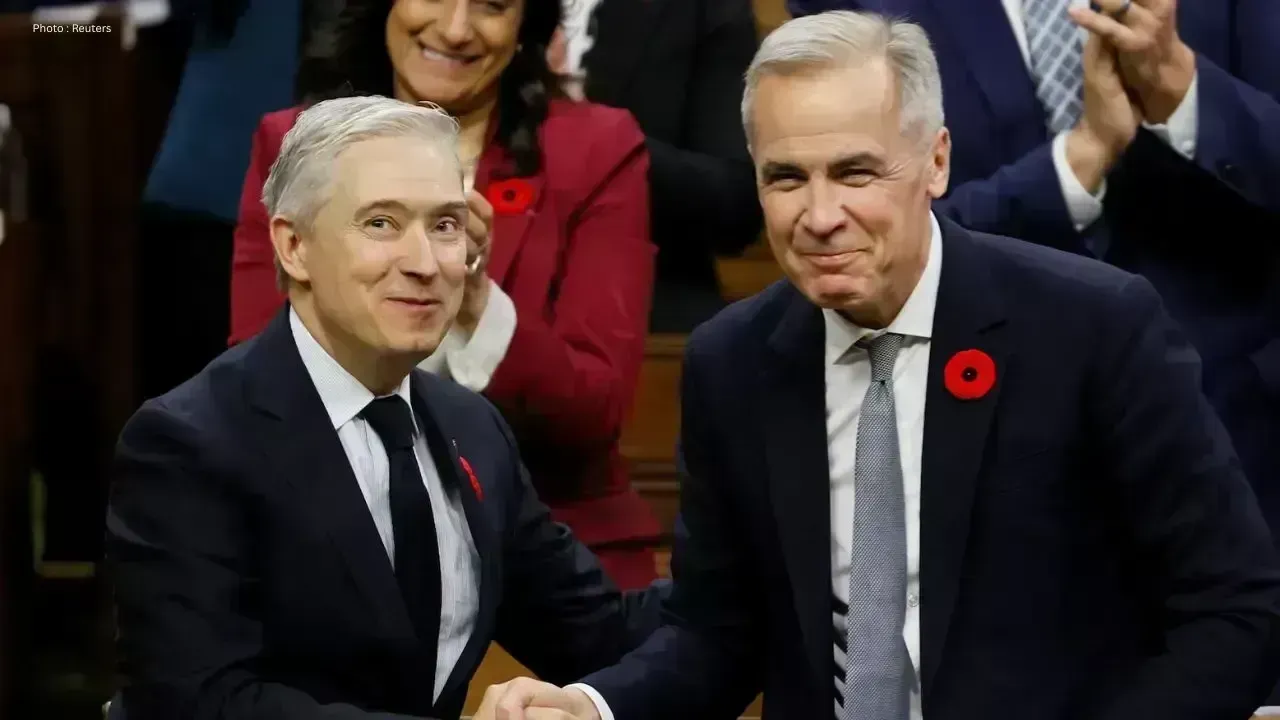
The recent fiscal update from Prime Minister Mark Carney has attracted criticism from various political and economic commentators, who argue that the government's financial approach leans too heavily on spending without adequately addressing the burgeoning debt and economic strains facing the country.
Columnist Jesse Kline stands out among the critics, contending that the federal government’s financial tactics fail to consider economic realities, particularly as Canadians grapple with affordability issues, inflation worries, and uncertainty surrounding long-term economic stability.
This criticism arises as the Canadian government rolls out significant spending initiatives linked to climate action, infrastructure development, social programs, and environmental conservation. Advocates for these expenditures assert that they are crucial for modernizing the economy, fostering clean energy, and preparing for future changes in the global economic landscape.
Detractors, however, have raised concerns that heightened public spending coupled with insufficient fiscal restraint could jeopardize the fiscal health of the nation. There are fears about ballooning deficits, increasing government borrowing, and the sustainability of spending commitments in the face of possible economic downturns.
Kline specifically criticized what he termed as symbolic, politically motivated spending that may fail to yield substantial economic benefits for everyday Canadians. He highlighted a perceived government inclination to chase costly environmental and social projects while countless households face struggles with housing prices, escalating living costs, and overall economic uncertainty.
The phrase “save the whales,” frequently used in this critique, encapsulates broader concerns from opponents who feel that environmental priorities are surpassing essential economic issues, including productivity, tax relief, and the pressures of living costs.
In defense, the Carney administration argues that targeted public investment is vital for maintaining Canada’s competitive edge and supporting sustainable long-term growth. Government officials insist that initiatives focused on clean energy, green infrastructure, and industrial innovation are key to job creation while transitioning the nation toward a more sustainable economic model.
Supporters further assert that climate-oriented spending is increasingly critical, given that nations worldwide are pouring resources into renewable energies and low-carbon industries. Federal officials warn that failure to invest now could jeopardize Canada's position in future global markets.
Simultaneously, opposition figures continue to voice skepticism about the feasibility of the government's financial forecasts. Some economists have pointed out that slower growth, rising interest rates, and global uncertainties might exacerbate the nation’s ability to manage debt levels while sustaining extensive spending programs.
The fiscal debate has gained prominence against a backdrop of growing concerns among Canadians regarding housing affordability, climbing grocery costs, and pressures on healthcare and public services. The electorate is keenly observing whether governmental policies will alleviate economic hardships or exacerbate the already burdensome financial strain on taxpayers.
Political analysts predict that disputes regarding government spending and economic strategies will remain pivotal in Canadian political discussions going forward. Supporters interpret the fiscal update as a strategic long-term investment endeavor aimed at economic reform, while critics warn of increasing debt without providing adequate immediate relief for the public.
As discussions progress, the Carney government will likely encounter mounting pressure to reconcile environmental objectives, social spending, and fiscal prudence while addressing economic concerns voiced by both businesses and households across Canada.










DAE Achieves Remarkable Growth in Q1 2026 With Record Revenue
Dubai Aerospace Enterprise announces impressive financial results for Q1 2026, reflecting a surge in

Price Increase for Sony PS5 in Southeast Asia Effective May 1
Sony announces a price increase for the PS5 across Southeast Asia starting May 1, 2026, impacting ga

Potential ‘Super El Niño’ in 2026: Understanding the Climate Risks
Could a Super El Niño emerge in 2026? Discover its implications and potential global climate impacts

Global Energy Crisis Intensifies: Markets React to Oil Supply Challenges
Markets are on edge as oil disruptions escalate, influencing prices and economic stability. Explore

Must-See Tourist Spots in London You Can't Overlook
Explore London's essential attractions, from royal landmarks to vibrant markets, ensuring an unforge

Ultimate Guide to Snagging Cheap Flights in 2026
Unlock the secrets to booking affordable flights in 2026 with insightful tips and strategies tailore




