
Post by : Shweta
Ukrainian forces have launched yet another drone strike against a Russian oil refinery, marking the third assault on this particular site in just two weeks. This action is part of Kyiv's broader strategy to disrupt Russia’s energy export capabilities during a time of heightened global oil market instability.
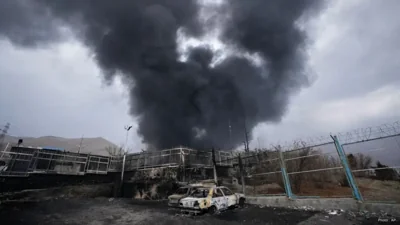
The focus of the latest attack was the Tuapse oil refinery, strategically located along Russia's Black Sea coast and owned by Rosneft, a major player in Russia's energy sector. Regional officials reported that the strike ignited a significant fire, prompting an urgent response from emergency services to mitigate smoke and potential environmental hazards.
Footage released post-attack depicts dense black smoke billowing from both the refinery and adjacent coastal regions. Authorities have voiced concerns over oil pollution resulting from previous strikes on the facility.
Ukrainian special forces have claimed responsibility for this operation, branding their repeated assaults as an effective campaign against Russia's energy infrastructure. Such actions are perceived in Kyiv as essential to destabilizing Moscow's financial resources for its ongoing military actions.
The Tuapse refinery is a pivotal target due to its critical role in Russian fuel exports in the Black Sea area. Experts estimate that this facility plays a key role in meeting Russia's fuel export demand and is responsible for producing diesel, fuel oil, and other petroleum products.
In response, Russian President Vladimir Putin accused Ukraine of exacerbating the global energy crisis through these attacks. The Kremlin has deployed emergency response teams and firefighting units to manage the damage caused by the drone strikes.
This refinery has faced significant challenges, as prior drone assaults earlier this month had already hampered export operations and disrupted shipping pathways. Reports suggest that Russian energy firms have begun to reroute oil supplies to Tuapse following damage at another export site near Novorossiysk.
Ukraine's drone strikes are occurring during a highly volatile time for global energy prices. Rising tensions in the Middle East, particularly concerning Iran and disruptions at the Strait of Hormuz, have significantly escalated oil prices worldwide.
Analysts note that some international allies had previously advised Kyiv to scale back on attacks against Russian refineries due to concerns that such actions could intensify the global energy crisis. Ukrainian President Volodymyr Zelenskyy has acknowledged these concerns from partners regarding the implications of refinery strikes on the global oil landscape.
Nevertheless, Ukrainian officials contend that Russia's energy exports are a vital financial lifeline supporting its war efforts, and they believe reducing these oil revenues is essential for degrading Moscow's military strength.
Energy analyst Oleksandr Kharchenko opined that these strikes are aimed at elevating the costs and operational complexities for Russian exports by damaging key infrastructure and heightening risks for shipping in the Black Sea.
Furthermore, analysts have observed significant updates in Ukraine's drone capabilities throughout the conflict. Enhanced operational scope and precision have empowered Kyiv to target energy infrastructure deep within Russian territory.
In the backdrop, global energy markets are closely watching these events unfold, as Russia holds a central position as a leading oil exporter. Any disruption in exports from Black Sea facilities could significantly impact fuel availability and pricing in various regions already grappling with economic challenges stemming from rising energy costs.
Despite concerns regarding market stability, Ukrainian authorities maintain that they will persist in targeting Russia's energy infrastructure until Moscow ceases its attacks on Ukrainian cities and energy systems.
The assault on the refinery underscores the shift in warfare focus from direct combat to economic and energy strategies, with both sides striving to compromise critical infrastructures as global markets react to a backdrop of increasing geopolitical volatility.









DAE Achieves Remarkable Growth in Q1 2026 With Record Revenue
Dubai Aerospace Enterprise announces impressive financial results for Q1 2026, reflecting a surge in

Price Increase for Sony PS5 in Southeast Asia Effective May 1
Sony announces a price increase for the PS5 across Southeast Asia starting May 1, 2026, impacting ga

Potential ‘Super El Niño’ in 2026: Understanding the Climate Risks
Could a Super El Niño emerge in 2026? Discover its implications and potential global climate impacts

Global Energy Crisis Intensifies: Markets React to Oil Supply Challenges
Markets are on edge as oil disruptions escalate, influencing prices and economic stability. Explore

Must-See Tourist Spots in London You Can't Overlook
Explore London's essential attractions, from royal landmarks to vibrant markets, ensuring an unforge

Ultimate Guide to Snagging Cheap Flights in 2026
Unlock the secrets to booking affordable flights in 2026 with insightful tips and strategies tailore




