Post by : Raina Nasser
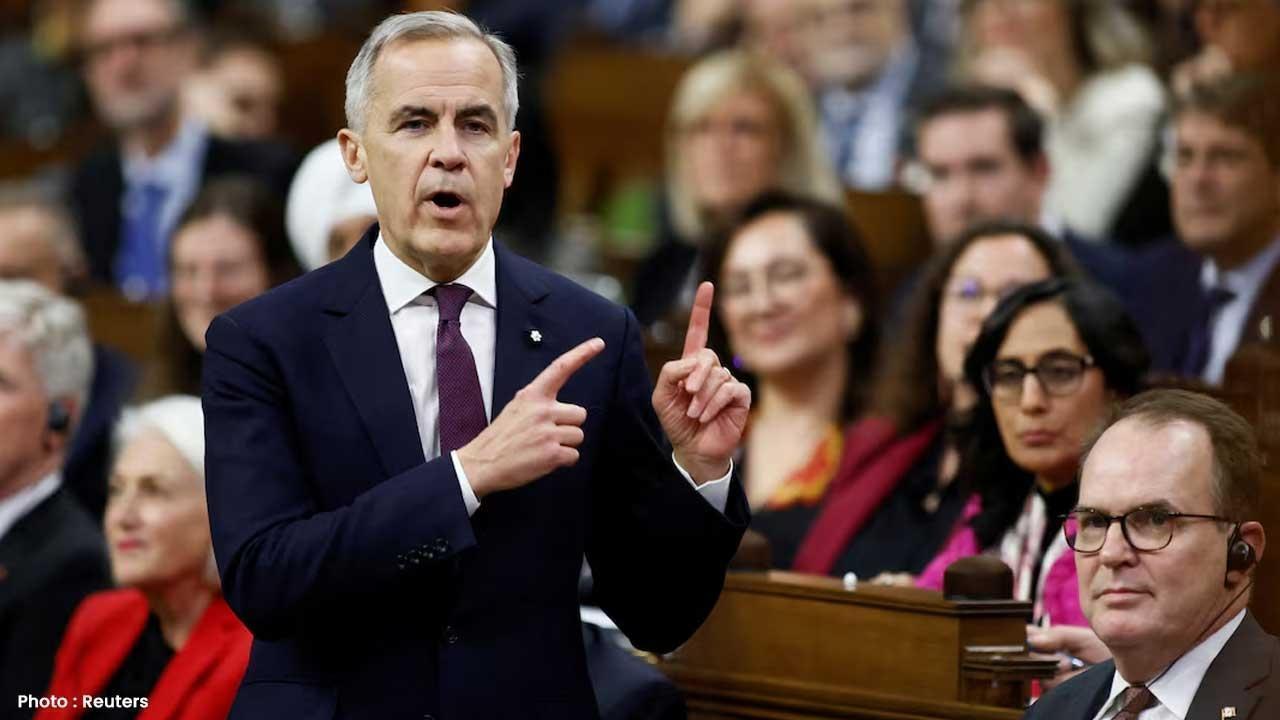
Prime Minister Mark Carney has narrowly achieved a crucial milestone, as Canada's Parliament sanctioned his first federal budget by a mere two votes. This dramatic outcome, 170 to 168, averts an early national election and paves the way for one of Canada’s largest-ever deficit surges.
Under Carney’s proposed fiscal strategy, the national deficit is projected to swell to C$78 billion, marking the second-largest budget in Canadian history. The Prime Minister, a veteran central banker in both Canada and the UK, argues that this budget represents a “generational investment” intended to bolster the economy amid global uncertainties.
A Minority Government's Fragile Stability
With the Liberal Party holding 169 seats—just shy of a majority—the approval of this budget hinged on the backing of opposition MPs. Despite full support from all Liberal members, Carney required external assistance or several abstentions from opposing factions to sidestep a politically damaging defeat.
This assistance materialized through a mix of abstentions and one pivotal “yes” vote.
Two NDP MPs and House Speaker Francis Scarpaleggia chose to abstain, with Conservative MPs Shannon Stubbs and Matt Jeneroux also refraining from a definitive vote—Jeneroux has recently announced his resignation.
However, it was Green Party leader Elizabeth May who ultimately provided the essential vote of confidence, contingent upon receiving assurances from Carney regarding Canada’s climate commitments.
“Had it not been for what I heard today from the Prime Minister, I would have voted against it,” May disclosed to reporters following the vote.
Opposition Critique of Budgetary Expansion
The Conservative Party, spearheaded by Pierre Poilievre, staunchly opposed the budget. Poilievre lambasted it as a “credit card budget,” accusing the Liberals of jeopardizing Canada's future amid escalating affordability issues.
According to Poilievre, “The costly deficit put forth by the Prime Minister threatens our future on the national credit card,” he argued during a fervent debate.
The Bloc Québécois similarly cast their vote against the proposal, claiming that the Liberals failed to deliver practical solutions for rising housing costs and ongoing economic challenges nationwide.
Concerns also reverberated within Liberal ranks. MP Nathaniel Erskine-Smith, while backing the budget, cautioned that it did not adequately address Canada’s housing crisis or stalled climate initiatives.
Future Implications of the Budget
The fiscal framework delineates C$140 billion in new expenditures over the next five years, aimed at enhancing productivity, innovation, and overall global competitiveness. Among its key proposals are:
Significant enhancements to ports and national trade infrastructure
Strategies designed to double exports to non-US markets within the next decade
Support for businesses affected by US tariffs on Canadian goods
Government forecasts of C$1 trillion in private investment over the following five years
In an attempt to balance this substantial spending, Carney has proposed a 10% reduction in the federal workforce—an initiative facing strong opposition from public sector unions who warn it may hinder government services instead of enhancing efficiency.
Political Drama Surrounding the Budget Discourse
The budget discourse unfolded amid notable political upheaval. A Conservative MP recently defected to the Liberals shortly after this fiscal plan's announcement, citing dissatisfaction with Poilievre’s “negative” political approach. Shortly after, another Conservative MP resigned to prioritize family matters, further destabilizing the opposition.
These exits have reignited doubts about Poilievre’s leadership. Nonetheless, he has affirmed his intention to continue leading the party.
“I aim to remain at the helm and be the sole advocate for an affordable Canada where diligent workers can secure housing and food,” he shared with journalists.
A Critical Victory for Carney
For Carney, the narrow passage of the budget signifies a vital political triumph. It provides temporary stability for his minority government and enables him to pursue his ambitious economic vision.
However, the challenges are far from over. With an escalating deficit, widening political divides, and increasing dissatisfaction among Canadians facing rising expenses, the scrutiny on Carney’s governance is likely to escalate.
Though Parliament has moved forward with the budget, the fundamental test—governing amid economic strain and political fragmentation—is just beginning.









DAE Achieves Remarkable Growth in Q1 2026 With Record Revenue
Dubai Aerospace Enterprise announces impressive financial results for Q1 2026, reflecting a surge in

Price Increase for Sony PS5 in Southeast Asia Effective May 1
Sony announces a price increase for the PS5 across Southeast Asia starting May 1, 2026, impacting ga

Potential ‘Super El Niño’ in 2026: Understanding the Climate Risks
Could a Super El Niño emerge in 2026? Discover its implications and potential global climate impacts

Global Energy Crisis Intensifies: Markets React to Oil Supply Challenges
Markets are on edge as oil disruptions escalate, influencing prices and economic stability. Explore

Must-See Tourist Spots in London You Can't Overlook
Explore London's essential attractions, from royal landmarks to vibrant markets, ensuring an unforge

Ultimate Guide to Snagging Cheap Flights in 2026
Unlock the secrets to booking affordable flights in 2026 with insightful tips and strategies tailore




