Post by : Anees Nasser
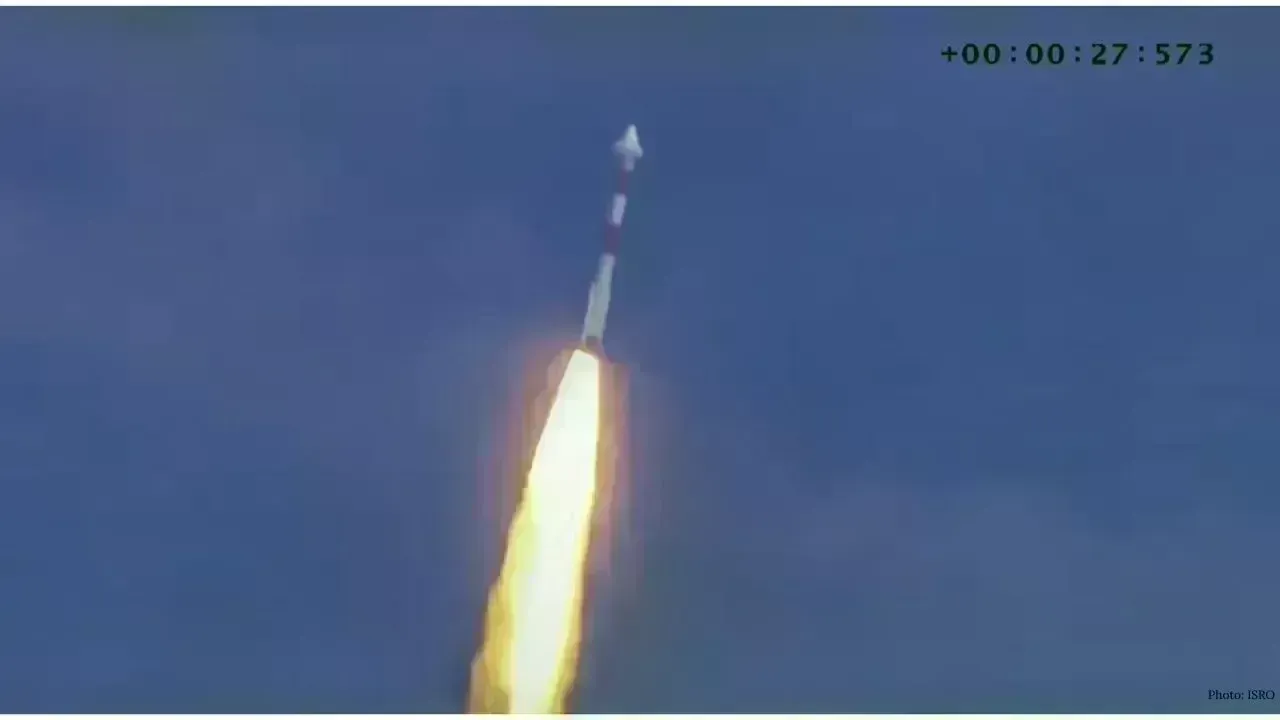
On January 12, 2026, the Indian Space Research Organisation (ISRO) faced a critical setback as the PSLV-C62 rocket failed to reach its designated orbit. This failure led to the loss of the important DRDO hyperspectral imaging satellite EOS-N1 (elegantly referred to as Anvesha) and 15 additional satellites equipped with advanced technologies. Intended as India’s first orbital launch of the year, the mission was abruptly halted after an anomaly disrupted the rocket's trajectory during the crucial third stage.
The implications of this failure extend across national security, confidence from international clients, and the thriving private space sector in India. This article will provide insight into the event, its significance, and future implications for ISRO and its collaborators.
The PSLV-C62 liftoff took place at the Satish Dhawan Space Centre’s First Launch Pad, Sriharikota, Andhra Pradesh, transporting a total of 16 satellites—a mix of strategic and commercial payloads from both Indian and international partners.
The primary payload was the EOS-N1 (Anvesha), developed alongside the Defence Research and Development Organisation (DRDO). This hyperspectral imaging satellite was anticipated to elevate surveillance capabilities—crucial for defence and civilian needs such as agricultural monitoring and urban planning.
In addition to EOS-N1, the mission included various payloads from startups and global partners, featuring innovative technologies in fields such as on-orbit refuelling and AI applications.
The mission utilized a PSLV-DL variant, characterized by a combination of solid and liquid stages along with two strap-on boosters. This launch vehicle is a variant of India's most dependable launch system, intended to successfully deliver the payloads to sun-synchronous orbits at an altitude of approximately 505–512 kilometers.
The initial flight stages proceeded as expected; however, complications arose during the third stage (PS3) burn when telemetry indicated an unanticipated disturbance and drop in pressure, resulting in a deviation from the planned trajectory.
ISRO Chair Dr. V. Narayanan confirmed significant anomalies occurred toward the end of this third stage, preventing the rocket from achieving the necessary velocity for successful deployment into orbit.
Such failures, particularly at this juncture, create substantial problems, as even a minor deviation can lead to catastrophic results.
ISRO has commenced a thorough investigation to uncover the root cause of this malfunction. Ground telemetry, system logs, and data from all rocket stages are being meticulously analyzed by engineers. They aim to assess if the failure originates from manufacturing tolerances, integration issues, propulsion inconsistencies, or other factors.
The agency has ensured transparency during this investigation and has committed to sharing detailed findings once the Failure Analysis Committee completes its assessment.
This hyperspectral Earth-observation satellite captured images across an extensive range of wavelengths—beyond traditional systems. Its applications were envisioned to include
Defensive surveillance
Monitoring borders and maritime areas
Agricultural assessment
Urban and environmental studies
The loss of EOS-N1 presents a significant obstacle for India's defence capabilities, intended to enhance situational awareness.
Accompanying EOS-N1 were 15 satellites from private and international collaborators, comprising payloads from startups such as Dhruva Space and others that aimed to advance technologies with both commercial and scientific applications.
These payloads aimed to demonstrate various concepts, including
On-orbit refuelling tests
Space-based AI processing
Advanced Earth imaging
Educational missions with universities
Collaborative international projects with several countries
This loss not only disrupts their technological timelines but also dent investor confidence and potential future launches.
India's private space industry has been flourishing, engaging in satellite manufacturing and new technologies. The PSLV-C62 mission was poised to represent significant collaboration between ISRO and private enterprises.
Investor concerns regarding launch reliability have emerged, especially for smaller companies relying on these rideshare opportunities. Individual entities have shown resolve to rebuild, but they will likely reassess insurance and launch contracts soon.
Beyond commercial considerations, the failure holds broader policy implications. Space assets are essential for national security and infrastructure. Losing EOS-N1 illuminates the necessity for
Redundancy in critical systems
Rigorous mission risk analyses
Enhanced quality control on launch components
The Indian government, along with ISRO, is likely to evaluate its risk management protocols and may consider policy revisions to expedite recovery missions.
The Polar Satellite Launch Vehicle has been pivotal in India's space history, successfully launching numerous satellites since the 1990s. Recent failures, including the prior PSLV-C61 mission, have raised concerns about third-stage anomalies and reliability issues.
Engineers are examining whether urgent updates to design, manufacturing standards, or integration practices are needed.
Despite these setbacks, Indian leaders emphasize that failures are part of exploration, and corrective measures will bolster upcoming missions. The PSLV's solid legacy and acquired insights will help forge a stronger path ahead.
Transparent communication about technical findings and resolutions is crucial in maintaining trust among international stakeholders engaged in India's space endeavors.
Following this setback, ISRO is undertaking immediate remediation steps:
Conducting a thorough failure analysis by seasoned engineers and external assessors
Evaluating telemetry and data from all rocket phases
Independent assessments of manufacturing records
Strategic reviews of design protocols
These initiatives aim to not only resume launches but also reaffirm India's reputation for precision in space missions.
Planning for replacements is underway among mission planners, stakeholders, and private partners, which could include
Building new satellites with revised specifications
Exploring alternative launch avenues
Enhancing backup payload structures
Private firms are considering claims and timeline revisions while global collaborators watch developments closely before future commitments.
The PSLV-C62 failure signifies a notable setback for India’s space ambitions, highlighting the complexities of orbital missions and the need for enhanced safeguards. Losing the DRDO satellite and multiple payloads emphasizes both the challenges and prospects inherent in space exploration.
Yet, setbacks have historically prompted innovation and resilience. Armed with a legacy of success and a burgeoning private sector, India’s space program is positioned to learn from this experience and carve a renewed path forward.
Disclaimer This article relies on information gathered from various news and official sources at the time of writing. The mission's specifics and investigation outcomes may change as further information becomes available.




Anticipated Dates for UAE Eid Al Adha 2026 Unveiled by Astronomical Experts
Experts predict Eid Al Adha 2026 in the UAE to start on May 27, prompting early holiday planning amo

DAE Achieves Remarkable Growth in Q1 2026 With Record Revenue
Dubai Aerospace Enterprise announces impressive financial results for Q1 2026, reflecting a surge in

Price Increase for Sony PS5 in Southeast Asia Effective May 1
Sony announces a price increase for the PS5 across Southeast Asia starting May 1, 2026, impacting ga

Potential ‘Super El Niño’ in 2026: Understanding the Climate Risks
Could a Super El Niño emerge in 2026? Discover its implications and potential global climate impacts

Global Energy Crisis Intensifies: Markets React to Oil Supply Challenges
Markets are on edge as oil disruptions escalate, influencing prices and economic stability. Explore

Must-See Tourist Spots in London You Can't Overlook
Explore London's essential attractions, from royal landmarks to vibrant markets, ensuring an unforge




