Post by : Shweta
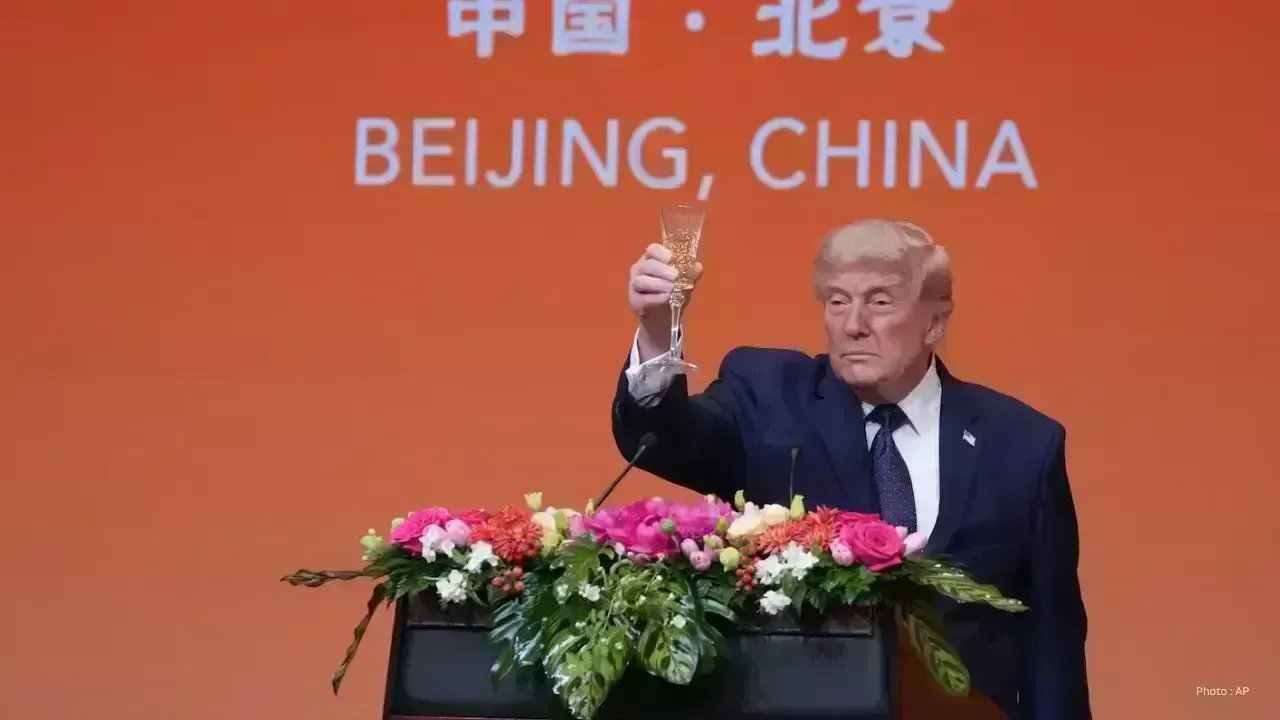
During a significant meeting, Chinese President Xi Jinping cautioned U.S. President Donald Trump that rising tensions surrounding Taiwan could lead to a serious conflict between China and the United States. This warning highlights Taiwan as a critical flashpoint in global geopolitics, particularly as tensions simmer in the Indo-Pacific region.
Officials involved in the discussions noted that Xi emphasized Taiwan as a “core national interest” for China and stated unequivocally that Beijing would not accept any actions advocating for Taiwanese independence. Over the years, Chinese leadership has consistently maintained that reunification with Taiwan is a priority and has warned foreign governments against intervening in what China views as an internal issue.
Xi expressed to Trump that ongoing U.S. military support, political ties, and strategic partnerships with Taiwan might lead the two nations toward direct confrontation. Chinese officials underscored that the Taiwan issue is among the most sensitive topics in U.S.-China relations.
In response, Trump acknowledged the necessity for stability while reiterating America’s established interests in the Indo-Pacific. U.S. support for Taiwan continues through arms sales and unofficial diplomatic relations, upheld by the Taiwan Relations Act.
In recent years, Taiwan has emerged as a focal point for global geopolitical conflicts. China has ramped up military activities around the island, deploying fighter jets, naval vessels, and surveillance aircraft in the vicinity of Taiwanese territory. Beijing contends that these operations are crucial for safeguarding national sovereignty and curbing independence movements.
Conversely, the U.S. and its allies perceive China’s increased military actions near Taiwan as a serious regional security threat. To ease allies' concerns and ensure navigation freedom in the Indo-Pacific, the United States has intensified its naval activities and military partnerships in the region.
Political analysts interpret Xi’s warning as a sign of Beijing’s rising irritation over the deepening U.S.-Taiwan cooperation. In recent years, American lawmakers and officials have broadened their interactions with Taiwanese leaders, alongside approvals for additional military aid.
The Taiwanese government firmly rejects China's territorial claims, insisting that its future should be determined by its populace through democratic means. Taiwanese authorities repeatedly express that China’s military pressure jeopardizes regional peace and stability.
The Taiwan situation holds vast international importance; any military conflict involving the island could disrupt global trade, technology production, and shipping routes significantly. Taiwan is home to leading semiconductor manufacturers, making it vital for global technology supply chains.
Xi’s concerns were raised in the context of broader discussions on trade conflicts, artificial intelligence, tariffs, cybersecurity, and international economic competition between the giants. While diplomatic communications persist, strategic rivalry shows no signs of abating.
Experts believe that both China and the U.S. aim to sidestep direct military conflict while strengthening their positions in Asia. Nonetheless, military incidents or political missteps related to Taiwan remain significant threats to international security.
Global markets, as well as international allies, are keeping a close watch on U.S.-China relations, wary that worsening tensions could have far-reaching economic implications. Nations throughout Asia, Europe, and the Pacific express concerns about potential conflict over Taiwan and its consequent impact on global trade and security.
Analysts suggest that maintaining open channels of communication between Trump and Xi is vital for mitigating misunderstandings and averting escalation, even amidst persistent disagreements. However, they also caution that the discourse surrounding Taiwan is growing increasingly combative from both sides.
As geopolitical tensions escalate between the U.S. and China, Taiwan stands at the heart of a more extensive contest that includes military power, economic influence, technological advancement, and regional supremacy in the Indo-Pacific.
Xi’s warning reflects how significantly the Taiwan issue now influences the trajectory of U.S.-China relations, and underscores its status as one of the most serious diplomatic challenges facing the global stage today.








Anticipated Dates for UAE Eid Al Adha 2026 Unveiled by Astronomical Experts
Experts predict Eid Al Adha 2026 in the UAE to start on May 27, prompting early holiday planning amo

DAE Achieves Remarkable Growth in Q1 2026 With Record Revenue
Dubai Aerospace Enterprise announces impressive financial results for Q1 2026, reflecting a surge in

Price Increase for Sony PS5 in Southeast Asia Effective May 1
Sony announces a price increase for the PS5 across Southeast Asia starting May 1, 2026, impacting ga

Potential ‘Super El Niño’ in 2026: Understanding the Climate Risks
Could a Super El Niño emerge in 2026? Discover its implications and potential global climate impacts

Global Energy Crisis Intensifies: Markets React to Oil Supply Challenges
Markets are on edge as oil disruptions escalate, influencing prices and economic stability. Explore

Must-See Tourist Spots in London You Can't Overlook
Explore London's essential attractions, from royal landmarks to vibrant markets, ensuring an unforge




