Post by : Shweta
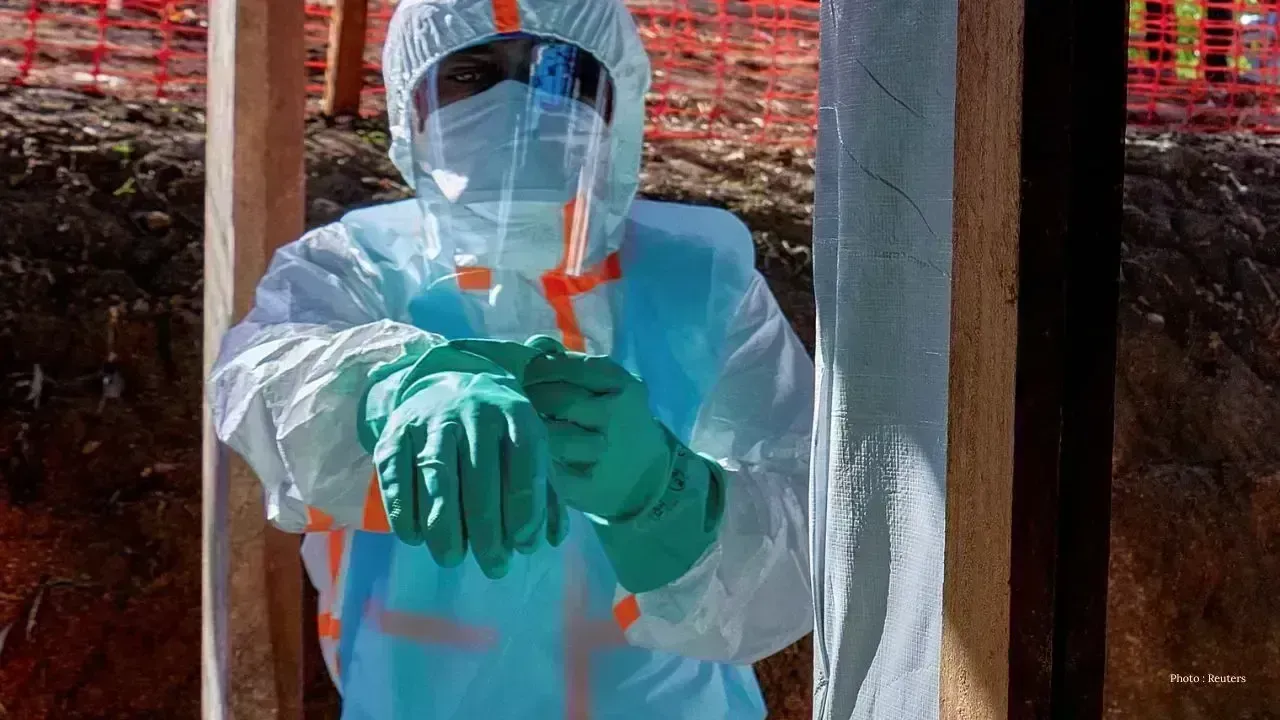
The World Health Organization (WHO) has emphasized the importance of community involvement in the Democratic Republic of the Congo (DRC) as health officials tackle a swiftly escalating Ebola outbreak affecting hundreds. The WHO asserts that public engagement is crucial to controlling the virus's spread, especially as health teams confront numerous challenges across various affected areas.
During a recent visit to Bunia, the capital of Ituri province—one of the outbreak's epicenters—WHO Director-General Dr. Tedros Adhanom Ghebreyesus stressed that halting the Ebola outbreak necessitates collaboration from local communities, families, religious figures, health professionals, and government entities. Dr. Tedros noted that controlling the outbreak is “everybody’s concern,” urging public participation to effectively manage the crisis.
The current outbreak is attributed to the Bundibugyo strain of the Ebola virus, which lacks an approved vaccine or targeted treatment options. While this raises alarm among health experts, WHO representatives assert that patients can survive with early medical intervention. Dr. Tedros encouraged individuals exhibiting symptoms to seek treatment at the earliest stages rather than postpone care until severe cases develop.
Authorities are grappling with significant resistance from some local communities, where traditional burial customs and health protocols concerning Ebola victims have sparked tension. Health experts caution that direct contact with infected corpses heightens transmission risks, leading to protests against preventive measures and further jeopardizing healthcare workers' safety.
Current reports indicate alarming contagion levels, with the WHO and local health agencies identifying numerous confirmed infections and ongoing investigations of suspected cases. The DRC has documented multiple fatalities linked to the virus, and several cases have emerged in neighboring Uganda, amplifying concerns about regional health safety and broader transmission risks.
Despite the dire circumstances, positive developments have emerged. The WHO has reported successful recoveries of several Ebola patients who have since been discharged from treatment facilities, illustrating that timely diagnosis and care can enhance survival rates—even in the absence of a dedicated vaccine for the Bundibugyo strain. Additionally, a new treatment center has been established in Bunia to bolster healthcare access for affected populations.
The outbreak unfolds in a context complicated by ongoing violence involving armed groups, hampering response efforts and limiting access for healthcare providers to many communities. Conflict in Ituri, North Kivu, and South Kivu provinces has displaced numerous individuals, intensifying the challenges of disease monitoring and contact tracing. The WHO has even called for ceasefires in certain regions, asserting that ongoing conflict impedes efforts to combat the virus effectively.
International aid organizations have ramped up support for outbreak response efforts. The WHO, along with the International Federation of Red Cross and Red Crescent Societies (IFRC), Médecins Sans Frontières (MSF), and others, is supplying medical equipment, training, surveillance aid, and emergency healthcare services. Recently, the WHO has delivered significant medical supplies while helping local authorities enhance testing and cross-border preparedness initiatives.
Misinformation remains a critical hurdle, with false narratives about the virus and mistrust in authorities dissuading individuals from seeking medical help. Health officials emphasize that fostering trust within communities is as vital as providing medical supplies and treatments. Engaging local leaders and organizations will be essential in promoting cooperation and enhancing understanding of disease transmission.
This outbreak has been designated a Public Health Emergency of International Concern by the WHO, underscoring the crisis's seriousness. Ongoing monitoring of suspected cases extends beyond Central Africa, with investigations of travelers in various regions. Although no significant international transmission has been documented, experts maintain vigilance and continuously reinforce monitoring frameworks.
Looking ahead, WHO officials express optimism that the outbreak can be controlled with active community engagement in response initiatives. Their message is straightforward: medical teams require cooperation from the public to halt Ebola's progress. The success of these efforts hinges on collaboration among residents, healthcare practitioners, government bodies, and international partners to safeguard lives and mitigate the outbreak's expansion. While challenges persist, experts believe that heightened community involvement could prove pivotal in bringing this crisis under control.








Achieve Radiant Skin with This Simple Rice Flour Treatment
Transform your skincare routine! Discover how a rice flour mix can restore your skin's glow without

Meta Unveils Subscription Plans for Instagram, Facebook, and WhatsApp
Meta introduces new subscription plans for users of Instagram, Facebook, and WhatsApp, featuring enh
Suvarna Joy on Education Leadership, Resilience, and Building Purpose Through Adversity in the UAE
Suvarna Joy shares her journey of education leadership, motherhood, faith, and resilience within the

Anticipated Dates for UAE Eid Al Adha 2026 Unveiled by Astronomical Experts
Experts predict Eid Al Adha 2026 in the UAE to start on May 27, prompting early holiday planning amo

DAE Achieves Remarkable Growth in Q1 2026 With Record Revenue
Dubai Aerospace Enterprise announces impressive financial results for Q1 2026, reflecting a surge in

Price Increase for Sony PS5 in Southeast Asia Effective May 1
Sony announces a price increase for the PS5 across Southeast Asia starting May 1, 2026, impacting ga




