Post by : Monika
Photo: Reuters
West Africa, which grows most of the world’s cocoa, might produce 10% less cocoa during the 2025–2026 season, according to experts in the chocolate industry. This warning comes from people who work closely with cocoa farmers and buyers in the region. The main reasons are poor weather and plant diseases that are hurting the cocoa trees.
This drop in cocoa production is worrying chocolate makers around the world. If less cocoa is grown, the price of chocolate and other products made from cocoa may rise.
Where Does Cocoa Come From?
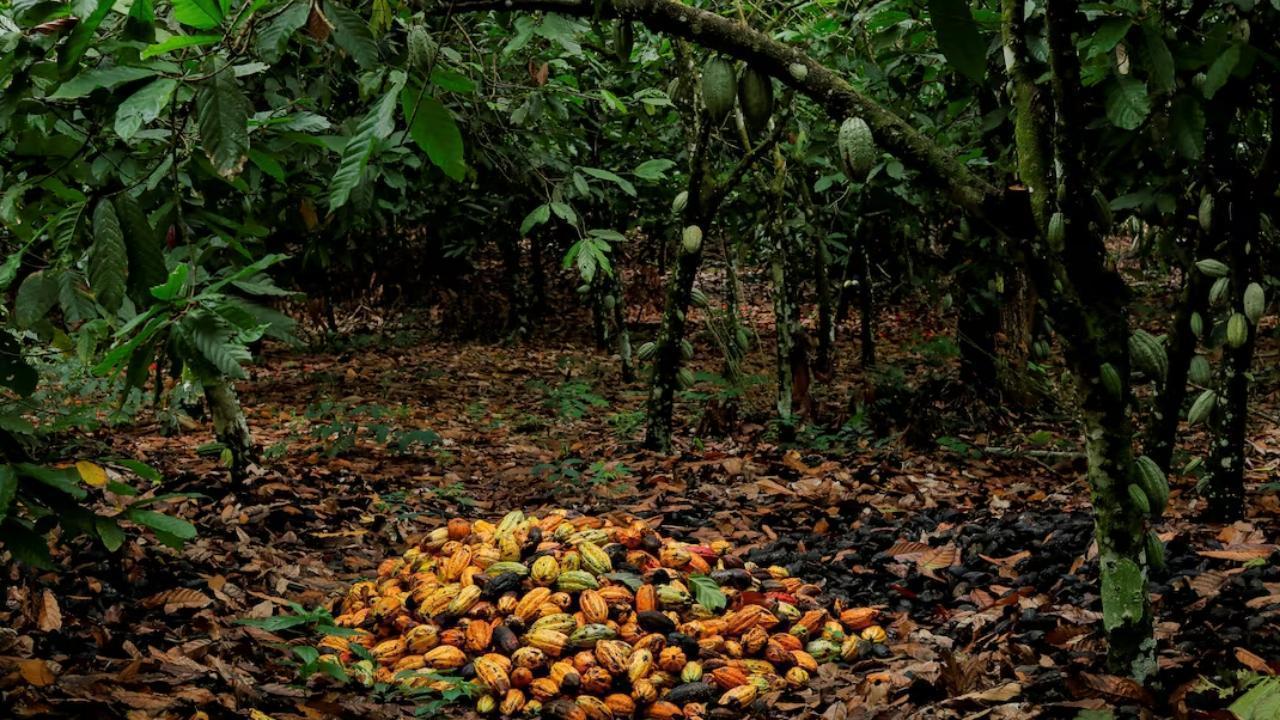
Cocoa beans are the main ingredient used to make chocolate. These beans grow inside pods on cocoa trees. Most of the world’s cocoa comes from just a few countries in West Africa, mainly Ivory Coast (Côte d’Ivoire) and Ghana. Together, they produce more than half of all the cocoa used across the globe.
Farmers in these countries grow cocoa in small farms, often passed down through families for generations. But now, many are struggling due to changing weather patterns and plant diseases.
What’s Causing the Drop in Cocoa?
Industry sources say that two big problems are causing the expected 10% fall in cocoa production:
1. Bad Weather
In recent months, the weather in West Africa has not been good for cocoa farming. There has been too much rain, which can lead to waterlogged soil. Cocoa trees don’t like “wet feet,” and too much moisture can damage the roots and reduce the number of pods.
Also, too much rain creates the perfect condition for plant diseases to spread faster.
2. Swollen Shoot Disease
One of the most serious problems facing cocoa farms right now is a disease called Swollen Shoot Virus. This virus spreads from tree to tree, causing branches to swell and pods to stop growing. Once a tree is infected, there is no cure. The only solution is to cut down the tree, which means farmers lose income.
In Ghana especially, this disease is spreading quickly, and many cocoa trees have already been destroyed.
How Much Cocoa Could Be Lost?
Experts who spoke with Reuters say that the 2025–2026 cocoa season, which begins in October, could see a 10% drop in cocoa production compared to the current year.
This means that Ivory Coast and Ghana together may produce 300,000 to 400,000 tonnes less than expected. That’s a large amount—especially when the world’s need for cocoa is still growing.
Even smaller cocoa-producing countries like Nigeria and Cameroon are also facing challenges with disease and heavy rainfall.
What This Means for Chocolate Lovers
If cocoa becomes harder to get, the cost of chocolate may go up. Many chocolate companies have already warned that they may have to increase prices or use less cocoa in their products.
Over the past year, cocoa prices have reached record highs in the international market. Some companies are trying to find other ways to deal with the problem, such as changing how chocolate is made or reducing the size of chocolate bars.
What Farmers Are Saying
Many cocoa farmers in West Africa say they are frustrated. They work hard, but the conditions are making it very difficult to grow healthy crops.
In Ghana, some farmers have told local reporters that they had to cut down almost half of their trees because of swollen shoot disease. And replanting new trees takes time—it can take 3 to 5 years for new cocoa trees to grow big enough to produce pods.
Farmers are also struggling with the rising costs of farming tools and fertilizers. Some say they cannot afford the materials they need to protect their trees.
What Are the Governments Doing?
Both Ghana and Ivory Coast have taken steps to try and help their cocoa farmers. Government programs have been set up to fight diseases and support farmers who lose their crops. But the size of the problem is big, and help has not reached everyone.
In Ghana, the government has started a new tree replacement program. This plan helps farmers remove sick trees and plant new ones. But since new trees take years to produce, many farmers still face hard times.
In Ivory Coast, there are efforts to train farmers on better farming methods and disease control. Still, many small farms do not have access to these programs.
What About Climate Change?
Many experts believe that climate change is making the situation worse. As temperatures shift and rainfall becomes less predictable, cocoa farming becomes harder. Too much heat or rain can both damage crops.
Experts say that if countries don’t take stronger action to protect the environment and help farmers adjust, cocoa production could keep falling in the years ahead.
Can Cocoa Be Grown Elsewhere?
Some countries outside West Africa also grow cocoa, such as Indonesia, Ecuador, and Brazil. But these countries produce much smaller amounts compared to Ghana and Ivory Coast.
In the short term, it is not possible for other countries to make up for the loss expected in West Africa. The trees take too long to grow, and the right conditions for cocoa farming are not found everywhere.
The Bigger Picture
The world depends heavily on small cocoa farmers in West Africa. These farmers face many challenges—weather, disease, low income, and now climate change. If cocoa production continues to drop, the effects could be felt worldwide, from higher prices in supermarkets to job losses in farming communities.
West Africa’s cocoa harvest may shrink by 10% in the 2025–26 season, and that is a big deal for the global chocolate industry. The main causes are bad weather and diseases hurting cocoa trees, especially in Ghana and Ivory Coast.
While some governments are trying to help, more support is needed to protect the future of cocoa farming. At the same time, the world must understand how climate and environmental changes are making things worse for small farmers.
If action isn’t taken soon, the future of chocolate could look very different from what we know today.








DAE Achieves Remarkable Growth in Q1 2026 With Record Revenue
Dubai Aerospace Enterprise announces impressive financial results for Q1 2026, reflecting a surge in

Price Increase for Sony PS5 in Southeast Asia Effective May 1
Sony announces a price increase for the PS5 across Southeast Asia starting May 1, 2026, impacting ga

Potential ‘Super El Niño’ in 2026: Understanding the Climate Risks
Could a Super El Niño emerge in 2026? Discover its implications and potential global climate impacts

Global Energy Crisis Intensifies: Markets React to Oil Supply Challenges
Markets are on edge as oil disruptions escalate, influencing prices and economic stability. Explore

Must-See Tourist Spots in London You Can't Overlook
Explore London's essential attractions, from royal landmarks to vibrant markets, ensuring an unforge

Ultimate Guide to Snagging Cheap Flights in 2026
Unlock the secrets to booking affordable flights in 2026 with insightful tips and strategies tailore




