Post by : Anees Nasser
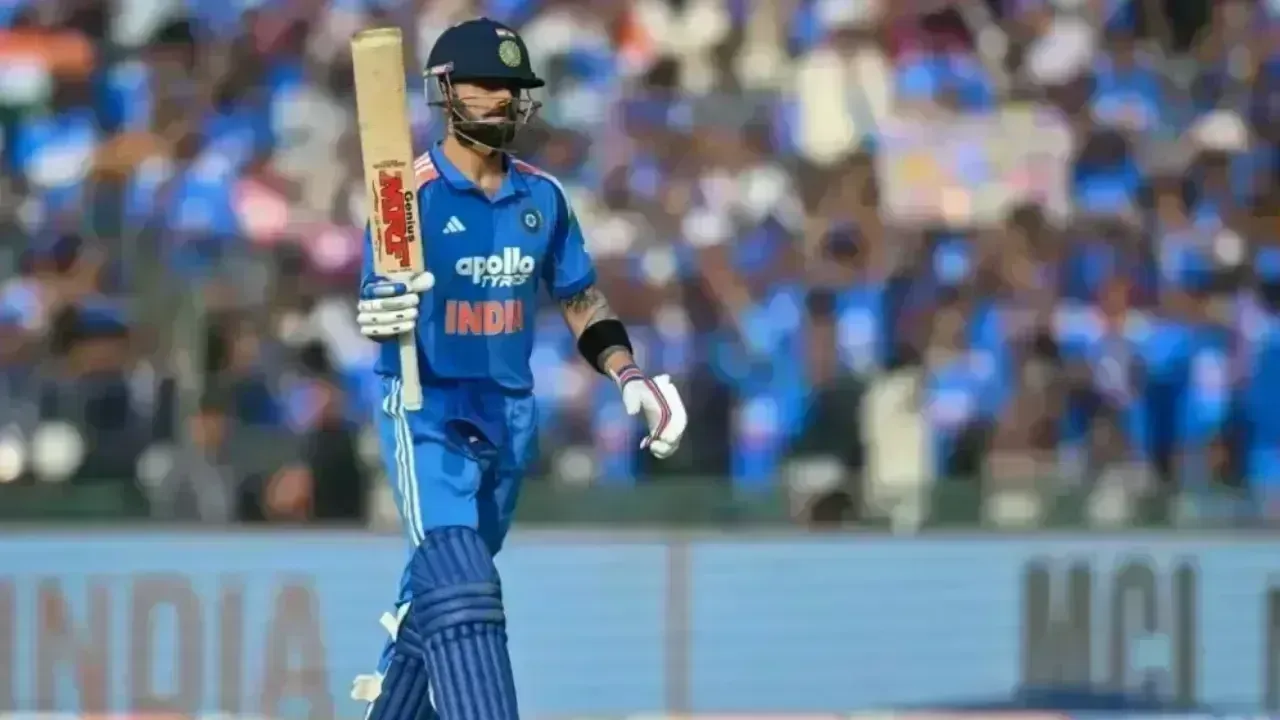
The return of a champion resonates deeply within the cricketing community. When Virat Kohli regained his position as the No.1 batsman in the ICC One Day International rankings, it was more than just a number. It symbolized perseverance, discipline, and an insatiable drive for excellence.
For nearly five long years, Kohli had been absent from the top tier of ODI rankings. Throughout this phase, cricket witnessed transformation—fresh talents emerged, formats shifted, and scrutiny intensified on seasoned players. Yet, amidst these changes, Kohli's dedication to his craft stood firm. His composed performance, featuring a crucial half-century against New Zealand, rekindled his status, quelling skepticism about his relevance in the sport.
Kohli’s innings against New Zealand was characterized not by flamboyance, but by exceptional control. Facing a disciplined bowling attack, he crafted his performance with pinpoint accuracy. Seamlessly rotating the strike, punishing loose balls, and handling pressure with grace, he again illustrated why he is regarded as one of the finest chasers in the game.
This innings did more than stabilize India's position; it became the backbone of their chase. As other players came and went, Kohli set the rhythm, ensuring the game remained comfortably within reach—a testament to his strategic acumen.
This performance was not a mere flash in the pan. It represented a culmination of consistent efforts that had quietly labored to elevate Kohli's ranking points over several months. Steady contributions against formidable opponents, particularly under pressure, propelled his return. The innings against New Zealand simply marked the intersection of diligence and opportunity.
Bouncing back to the top after five years is an extraordinary achievement. During this time, Kohli encountered challenges that tested his mental and technical prowess. Evolution in bowling strategies and aggressive field setups demanded adaptability. Embracing change, Kohli refined his approach.
He enhanced his shot selection, prioritized fitness, and cultivated patience. This internal transformation was essential. Rather than clinging to past accolades, he created a persona tailored for contemporary cricket, valuing efficiency alongside technique.
With his return to the top, Kohli enters an elite domain once again—marking his eleventh tenure at No.1 in ODI batting. This achievement places him among a select few who have dominated across eras and types of competition. His longevity as the world's top-ranked ODI batsman is a significant testament to his prowess in a sport known for its competitiveness.
Modern ODI cricket is marked by intense rivalry. Exceptional players constantly vie for the top positions, making every ranking shift a product of intricate calculations.
Kohli's comeback elevated him above several in-form international batters.
The competition among the top players remains tight, reinforcing that sustained performance, rather than singular brilliance, is crucial for remaining at the top.
Every series now carries heightened stakes, significantly influencing the rankings.
Kohli's resurgence highlights that his return is rooted in outperforming peers rather than benefitting from others' declines.
For the Indian team, Kohli's ascent is more than an individual achievement; it fortifies the batting order and offers clear strategic direction. In the dynamic world of ODIs, having a player who can consistently steer an innings is priceless.
His presence empowers younger athletes, enabling them to play freely, secure in the knowledge that a solid anchor supports them. This blend of security and aggression is essential for enduring success.
Even without the title of captain, Kohli's impact remains significant. His rigorous preparation and relentless pursuit of excellence create benchmarks within the squad. Younger teammates often express how observing him instills valuable lessons that transcend formal coaching.
His return to the top plays a critical part in fostering a culture of accountability, where performance is something earned, and where excellence becomes the standard.
A notable aspect of Kohli's recent style is his improved decision-making regarding deliveries outside off-stump. By leaving more balls and trusting his defense from the outset, he minimizes vulnerable exits, allowing him to construct longer innings.
While many players slow down with age, Kohli's commitment to fitness is remarkable. His agility between wickets consistently transforms singles into doubles, gently reversing pressure onto bowlers. This physical edge enhances his technical abilities, rendering him a well-rounded ODI batter even in the twilight of his career.
Though milestones naturally accompany a player of Kohli’s caliber, his recent approach indicates a focus shift. Rather than obsessing over numbers, he immerses himself in match dynamics, placing context above records. Paradoxically, this philosophy leads to natural achievements, asserting that true greatness stems from purpose.
One of Kohli’s uncelebrated attributes is his mental resilience. Managing scrutiny, public opinion, and personal aspirations necessitates exceptional strength. His process-oriented mindset amid external chatter is crucial for maintaining form throughout tournaments.
In an age dominated by T20 formats, the future of ODIs has been cast into doubt. Yet, Kohli's resurgence serves as a compelling argument for the format's significance. His innings against New Zealand reaffirmed why ODIs are vital—rewarding patience, adaptability, and acumen.
ODIs represent a blend of endurance and excitement. Kohli's balanced batting exemplifies the core values of the format, reinforcing that traditional skills remain pertinent, even as the sport evolves.
Holding onto the No.1 position is often more arduous than achieving it. Upcoming matches, diverse conditions, and relentless rivals will put Kohli’s consistency to the test. Bowlers will adapt, tactics will shift, and expectations will heighten.
However, if his recent performances are any indication, Kohli appears more than ready—both technically and mentally—for the challenges that lie ahead.
For aspiring cricketers, Kohli’s journey provides an invaluable lesson: setbacks are temporary, not terminal. His rise back to the summit at this stage of his career demonstrates that growth is a continuous journey, achievable through discipline and faith.
Virat Kohli's ascent to the No.1 ODI ranking signifies much more than topping a chart; it underscores the essence of maintaining significance in a rapidly transforming sport. It encapsulates the idea of evolving while retaining core identity—adapting without sacrificing foundational skills.
As cricket moves forward, this chapter will resonate not just for the runs scored but for its broader message—that true greatness is validated through the ability to make a comeback repeatedly.
This article draws from publicly accessible match reports, official ranking updates, and widely circulated insights into international cricket as of January 2026. The interpretations and analyses presented are intended solely for informational purposes.









Anticipated Dates for UAE Eid Al Adha 2026 Unveiled by Astronomical Experts
Experts predict Eid Al Adha 2026 in the UAE to start on May 27, prompting early holiday planning amo

DAE Achieves Remarkable Growth in Q1 2026 With Record Revenue
Dubai Aerospace Enterprise announces impressive financial results for Q1 2026, reflecting a surge in

Price Increase for Sony PS5 in Southeast Asia Effective May 1
Sony announces a price increase for the PS5 across Southeast Asia starting May 1, 2026, impacting ga

Potential ‘Super El Niño’ in 2026: Understanding the Climate Risks
Could a Super El Niño emerge in 2026? Discover its implications and potential global climate impacts

Global Energy Crisis Intensifies: Markets React to Oil Supply Challenges
Markets are on edge as oil disruptions escalate, influencing prices and economic stability. Explore

Must-See Tourist Spots in London You Can't Overlook
Explore London's essential attractions, from royal landmarks to vibrant markets, ensuring an unforge




