Post by : Anees Nasser
In the arena of natural resources, Venezuela exemplifies the clash of wealth, politics, and economic decline. Though it boasts the largest proven crude oil reserves globally, this nation faces a grim reality of energy collapse, driven by a complex web of mismanagement, sanctions, and geopolitical tensions.
The conversations surrounding energy security reverberate from Washington to Brussels, and Venezuela’s oil is a focal point once more. As global markets navigate between supply shortages and unpredictable demand, the core question isn't whether Venezuela's oil will play a role, but rather the timing and extent - particularly in light of international influence.
With more than 300 billion barrels of proven oil reserves, Venezuela outstrips both Saudi Arabia and Iran. The Orinoco Belt, laden with extra-heavy crude, holds potential greater than entire regions’ reserves.
This sets the stage for understanding the scale:
Venezuela harbors almost one-fifth of the global oil supply
These reserves could theoretically fulfill global oil needs for nearly a decade
Even a partial revival of production can significantly realign global oil dynamics
However, mere reserves do not equate to power. Extraction practices, investment influx, and geopolitical strategies govern the flow of oil into markets.
Peaking in the late 1990s at over 3.2 million barrels per day, Venezuela now languishes at just a fraction of that output, hindered by infrastructural decline, lack of investment, and export limitations.
This decline can be attributed to systemic issues rather than sudden events.
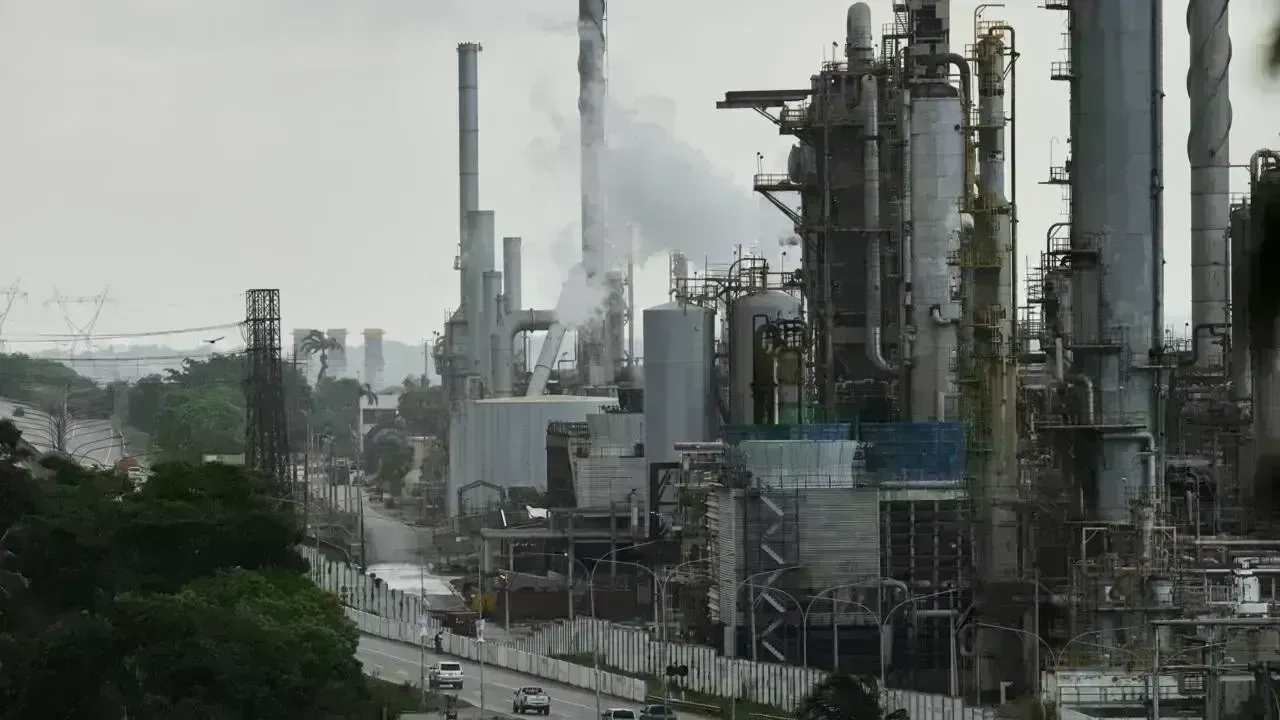
Once a respected state-owned entity, PDVSA has been crippled by years of political meddling, chronic underfunding, and the exodus of skilled personnel.
Aging refineries fell into disrepair, talented engineers fled the country, and essential equipment has deteriorated, crippling production.
Despite sanctions exacerbating the crisis, the decline had set in long before.
The US has imposed extensive sanctions on Venezuela's oil industry, curtailing exports and blocking financial pathways. These draconian measures aimed to tighten political pressure on Caracas but inadvertently altered the landscape of global energy supply.
American refiners, who once significantly relied on Venezuelan crude, had to explore alternatives, prompting the nation to seek out shadow networks for trade.
Recent shifts in US policy have tentatively opened pathways for Venezuelan oil exports under stringent conditions. While these changes signify a pragmatic recognition of Venezuela's oil significance, they illustrate a nuanced play rather than a complete reversal.
Though the US does not own Venezuelan oil assets, its influence persists through:
Financial mechanisms
Shipping insurance policies
Compliance with sanctions
Access to critical Western technology
Such mechanisms govern who can engage with Venezuelan oil in the global market.
The global oil arena remains in flux, with uncertainties from OPEC production cuts and rising geopolitical tensions in the Middle East complicating supply stability.
In this context, an additional 500,000 barrels per day from Venezuela could:
Alleviate rising price pressures
Help stabilize supply chains across regions
Curb volatility during spikes in demand
Venezuela’s latent oil offers a significant potential to balance market dynamics.
As Western avenues closed, Venezuela has turned towards non-Western partners, notably China and Russia, employing barter systems and alternative shipping routes.
This alternative trade network:
Facilitates oil exchanges amid sanctions
Often involves substantial discounts
Obscures the transparency of oil flows
While these arrangements can yield short-term gains, they could hamper Venezuela's long-term revenue prospects and bargaining power.
Reviving Venezuelan oil production involves significant hurdles. Years of neglect present the following challenges:
Pipelines in dire need of repairs
Refineries that require updates
Storage facilities that are in disrepair
Experts suggest restoring production to even 2 million barrels per day would demand substantial investment and several years for recovery.
Despite ambitious goals for clean energy, oil remains critical to global industries and geopolitical strategies. The transition to sustainable energy is uneven and fossil fuels still play a dominant role in consumption.
Venezuela finds itself in a unique position amid this contradiction:
Enormous oil reserves within a decarbonizing narrative
Potential wealth for revitalization
Risk of stranded investments in an accelerated transition
Timing could be pivotal.
Should sanctions ease, Venezuela could:
Legally ramp up exports
Gain access to Western technologies
Enhance transparency and oversight
Such developments would likely lead to stabilization, rather than a collapse of oil prices.
If sanctions intensify again, Venezuela would remain bound to obscure, heavily discounted channels for trade, significantly limiting its resurgence and impact.
The significance of Venezuelan oil stretches beyond economic value; it serves as a geopolitical tool. Entities that can unlock this resource will gain substantial influence in Latin America and broader energy discussions.
Thus, the eyes of Washington, Beijing, Moscow, and major energy players remain fixed on Venezuela.
While oil shapes discussions, Venezuela's economic downfall has precipitated one of the most significant migration crises worldwide. Millions have ventured abroad in search of better prospects.
If handled wisely, oil revenues could:
Stabilize public finances
Rebuild essential services
Mitigate outward emigration
Yet, past experiences make investors and governments wary.
The oil reserves in Venezuela are among the most substantial, yet they remain hindered from operational utilization. While the United States does not possess direct ownership, it significantly influences the oil’s trajectory towards market re-entry. Currently, Venezuelan oil does not sway global prices, but future considerations are already made with its reserves in mind.
As energy security takes precedence over ideological affiliations, Venezuela’s oil assets may eventually break free from their constraints. The implications will resonate beyond Caracas—impacting energy costs, political landscapes, and global power dynamics.
The oil lies ready; the world is watchful. The central question persists: not if Venezuelan oil will return to the market, but rather under whose terms.
Disclaimer:
This article serves solely for informational and analytical purposes and should not be interpreted as financial, investment, or geopolitical counsel. Readers are encouraged to consult multiple sources and seek expert opinions before drawing conclusions.






Anticipated Dates for UAE Eid Al Adha 2026 Unveiled by Astronomical Experts
Experts predict Eid Al Adha 2026 in the UAE to start on May 27, prompting early holiday planning amo

DAE Achieves Remarkable Growth in Q1 2026 With Record Revenue
Dubai Aerospace Enterprise announces impressive financial results for Q1 2026, reflecting a surge in

Price Increase for Sony PS5 in Southeast Asia Effective May 1
Sony announces a price increase for the PS5 across Southeast Asia starting May 1, 2026, impacting ga

Potential ‘Super El Niño’ in 2026: Understanding the Climate Risks
Could a Super El Niño emerge in 2026? Discover its implications and potential global climate impacts

Global Energy Crisis Intensifies: Markets React to Oil Supply Challenges
Markets are on edge as oil disruptions escalate, influencing prices and economic stability. Explore

Must-See Tourist Spots in London You Can't Overlook
Explore London's essential attractions, from royal landmarks to vibrant markets, ensuring an unforge




