Post by : Shakul
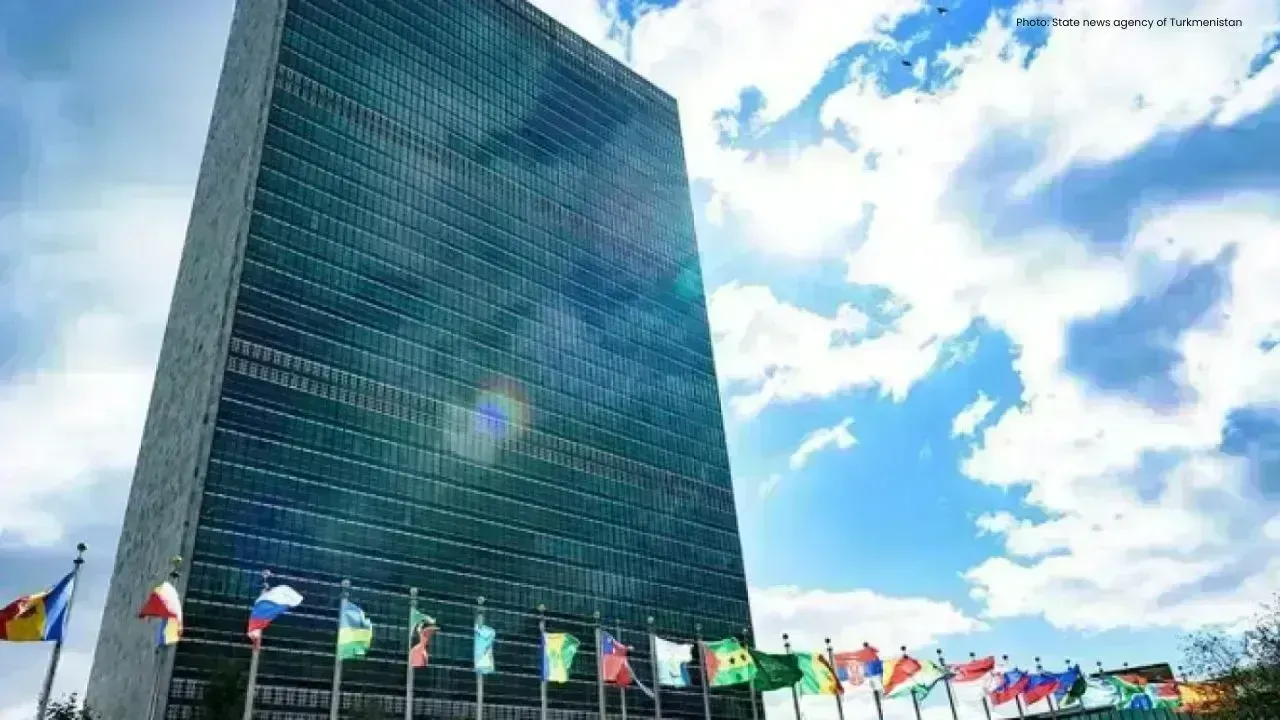
In a significant development, Turkmenistan and the United Nations reaffirmed their dedication to enhancing international security cooperation during high-level discussions in New York. Turkmen Foreign Minister Rashid Meredov, while visiting the United States, engaged with Acting United Nations Under-Secretary-General and Head of the United Nations Office of Counter-Terrorism Alexander Zuev to explore various security and diplomatic initiatives.
The talks underscored the enduring strategic partnership between Turkmenistan and the UN. Both parties expressed contentment with the expanding collaboration across numerous domains and highlighted the necessity for close coordination to tackle emerging global challenges concerning peace, security, and sustainable development.
A key point of discussion was the recent endorsement of the UN General Assembly resolution titled “The Role and Importance of a Policy of Neutrality in Maintaining and Strengthening International Peace, Security and Sustainable Development,” approved on May 20, 2026. Officials hailed this resolution as a notable acknowledgment of Turkmenistan’s enduring policy of neutrality and its contributions to global peacebuilding efforts.
Meredov's delegation introduced several pivotal initiatives designed to foster peace and preventive diplomacy. This included a proposal for establishing an Academic Center focusing on the Study of Peace, Neutrality, and Preventive Diplomacy, to be located at the Institute of International Relations of the Ministry of Foreign Affairs. This initiative aims to promote research, education, and international dialogues surrounding conflict prevention and peaceful cooperation.
Furthermore, the Turkmen representatives presented plans for a Chamber of Mediation aimed at providing a functional framework for dialogue and negotiation to resolve conflicts. The discussions also encompassed the collaborative development of international guidelines to implement neutrality principles and advance President Serdar Berdimuhamedov’s proposal for a Global Security Strategy grounded in international legislation.
Regional and global security matters were additional focal points during the meetings. Turkmenistan reiterated its support for the United Nations Regional Centre for Preventive Diplomacy for Central Asia, emphasizing the critical necessity for collective approaches to address evolving security challenges. Officials affirmed that preventive diplomacy is among the most effective techniques for ensuring regional stability.
A noteworthy proposal that emerged was the establishment of a Programme Office for the United Nations Office of Counter-Terrorism in Ashgabat. Turkmen representatives indicated that this office would serve as a crucial analytical and expert platform facilitating regional cooperation in counter-terrorism, enhancing security capacities, and encouraging information exchange. The discussions concluded with expressions of mutual enthusiasm to further deepen collaboration through joint initiatives, professional training programs, and ongoing diplomatic interactions.






Meta Unveils Subscription Plans for Instagram, Facebook, and WhatsApp
Meta introduces new subscription plans for users of Instagram, Facebook, and WhatsApp, featuring enh
Suvarna Joy on Education Leadership, Resilience, and Building Purpose Through Adversity in the UAE
Suvarna Joy shares her journey of education leadership, motherhood, faith, and resilience within the

Anticipated Dates for UAE Eid Al Adha 2026 Unveiled by Astronomical Experts
Experts predict Eid Al Adha 2026 in the UAE to start on May 27, prompting early holiday planning amo

DAE Achieves Remarkable Growth in Q1 2026 With Record Revenue
Dubai Aerospace Enterprise announces impressive financial results for Q1 2026, reflecting a surge in

Price Increase for Sony PS5 in Southeast Asia Effective May 1
Sony announces a price increase for the PS5 across Southeast Asia starting May 1, 2026, impacting ga

Potential ‘Super El Niño’ in 2026: Understanding the Climate Risks
Could a Super El Niño emerge in 2026? Discover its implications and potential global climate impacts




