Post by : Saif Nasser
A possible new farm trade agreement between the United States and China is becoming a major topic ahead of the expected summit between U.S. President Donald Trump and Chinese President Xi Jinping. However, experts say China’s lower demand for soybeans may reduce the impact of any new agricultural deal between the world’s two largest economies.
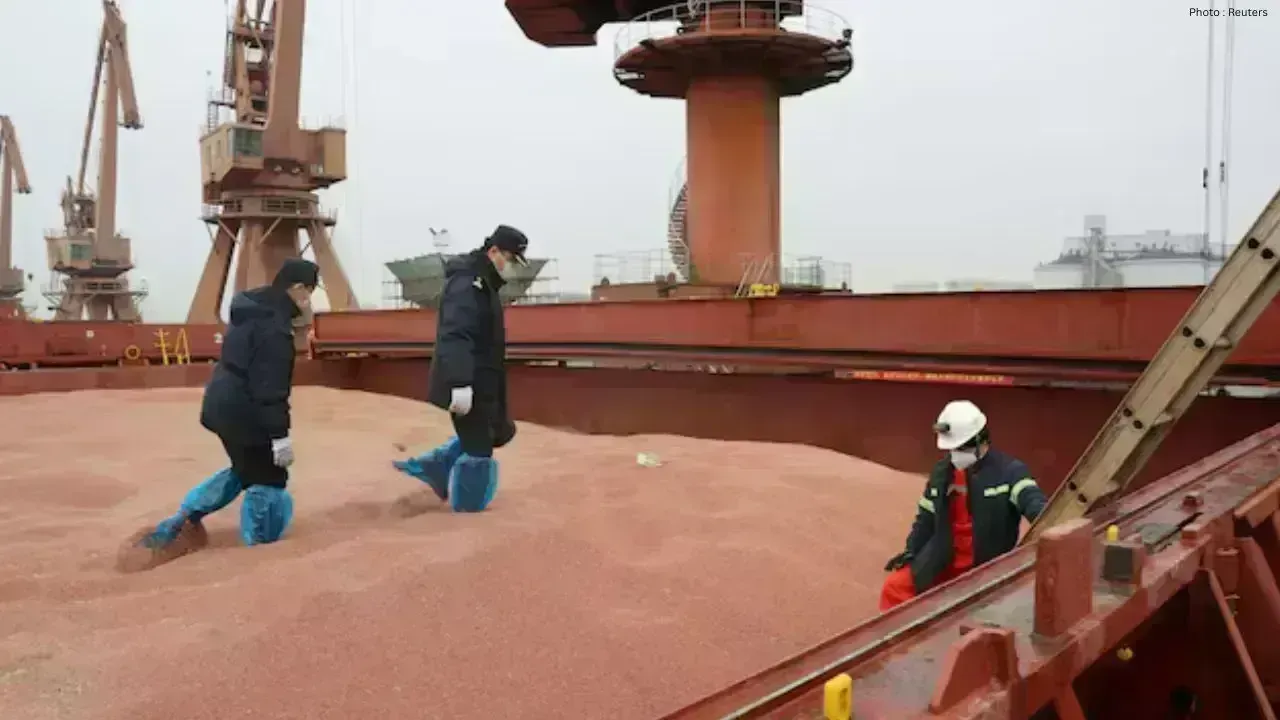
According to reports, U.S. officials hope the summit could lead to increased Chinese purchases of American agricultural products, especially soybeans. American farmers have long depended on China as one of their biggest export markets. Before trade tensions began several years ago, China bought massive amounts of U.S. soybeans every year.
Soybeans are one of America’s most important agricultural exports. They are widely used in animal feed, cooking oil, and food production. China traditionally imported large soybean supplies to support its huge livestock and food industries.
However, the situation has changed in recent years. China’s soybean demand has become weaker because of slower economic growth, changing food demand, and problems in the country’s livestock sector. Industry experts say China no longer needs as many soybean imports as it once did.
China has also worked to reduce dependence on American farm products by increasing purchases from countries such as Brazil and Argentina. Brazil has now become China’s largest soybean supplier, giving Beijing more flexibility during trade negotiations with Washington.
The possible farm agreement comes as both countries try to stabilize relations after years of trade disputes and economic competition. Earlier tariff battles between the United States and China hurt businesses, farmers, manufacturers, and global supply chains.
For President Trump, a new agricultural deal could help support American farmers ahead of future political campaigns. Farm states remain an important political base in the United States, and soybean exports are closely watched by the agricultural industry.
At the same time, China may use limited farm purchases as part of wider negotiations involving technology restrictions, tariffs, and access to global markets. Experts say Beijing is likely to avoid making very large promises if domestic demand remains weak.
The trade relationship between the two countries remains highly important for the global economy. The United States and China together represent two of the world’s largest markets, and tensions between them often affect international trade, shipping, manufacturing, and financial markets.
Even if a soybean agreement is reached, analysts believe it may not fully restore earlier trade levels between the two countries. Global agriculture markets have changed significantly over the past few years, and China now has more supply options from other regions.
The issue also highlights how politics and economics are deeply connected in international trade. Agricultural exports are not only about food demand but also about diplomacy, strategic influence, and economic pressure between major powers.
Farmers in the United States continue hoping for stronger export opportunities, especially after facing years of uncertainty caused by tariffs, weather problems, and changing global markets. Many believe stable trade relations with China remain important for the future of American agriculture.
Meanwhile, Chinese officials are expected to remain cautious as the country deals with economic slowdown concerns and efforts to strengthen domestic industries. Beijing is trying to balance trade cooperation with long-term economic independence.
The expected Trump-Xi summit may therefore bring some positive developments, but experts warn that deep differences between the two countries still remain. Trade, technology, Taiwan, and global political influence continue creating tension between Washington and Beijing.
For now, any possible soybean agreement may offer limited economic relief rather than a complete reset in U.S.-China relations. Still, the summit will be closely watched because decisions made by the two leaders could affect global trade and economic stability for years to come.










Anticipated Dates for UAE Eid Al Adha 2026 Unveiled by Astronomical Experts
Experts predict Eid Al Adha 2026 in the UAE to start on May 27, prompting early holiday planning amo

DAE Achieves Remarkable Growth in Q1 2026 With Record Revenue
Dubai Aerospace Enterprise announces impressive financial results for Q1 2026, reflecting a surge in

Price Increase for Sony PS5 in Southeast Asia Effective May 1
Sony announces a price increase for the PS5 across Southeast Asia starting May 1, 2026, impacting ga

Potential ‘Super El Niño’ in 2026: Understanding the Climate Risks
Could a Super El Niño emerge in 2026? Discover its implications and potential global climate impacts

Global Energy Crisis Intensifies: Markets React to Oil Supply Challenges
Markets are on edge as oil disruptions escalate, influencing prices and economic stability. Explore

Must-See Tourist Spots in London You Can't Overlook
Explore London's essential attractions, from royal landmarks to vibrant markets, ensuring an unforge




