Post by : Saif Nasser
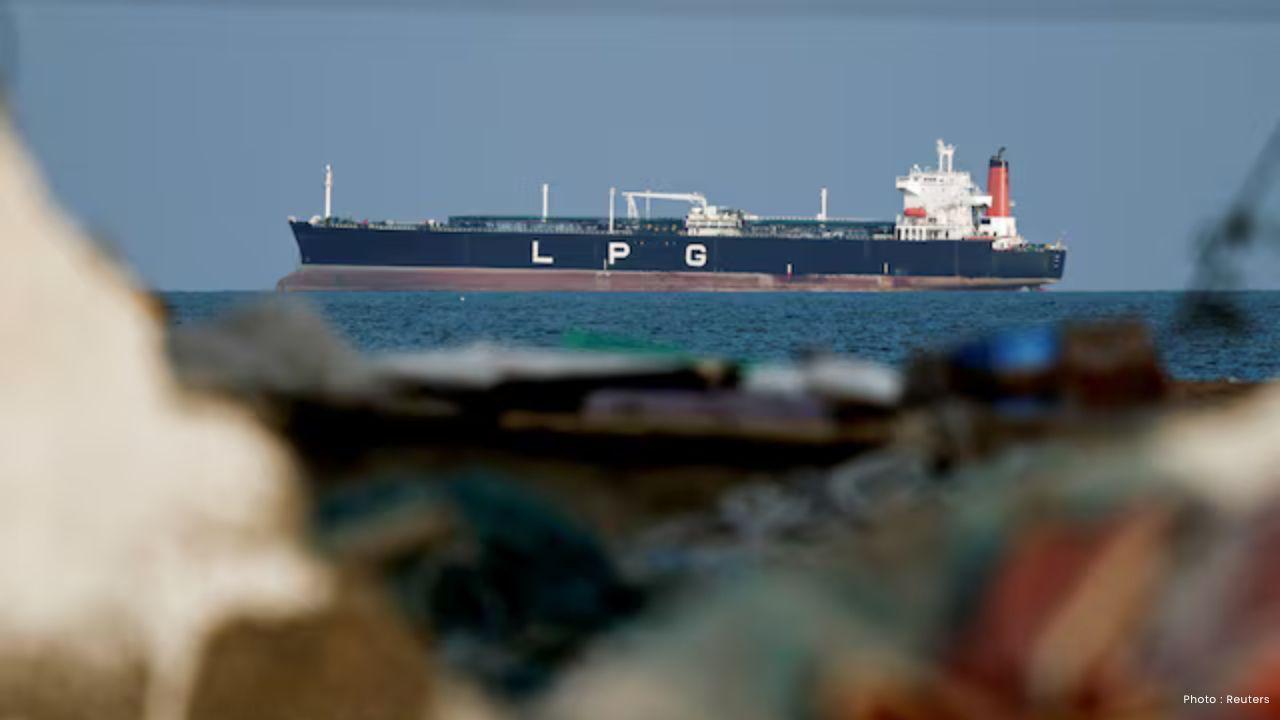
The rising tensions in the Middle East have once again brought the world’s attention to the Strait of Hormuz, a narrow but extremely important sea route used for transporting oil across the globe. Recently, Donald Trump, the President of the United States, urged several countries to help protect ships traveling through this vital waterway. However, two important American allies—Japan and Australia—have clearly stated that they currently have no plans to send naval forces to the area.
The situation highlights the growing challenges facing the international community as the conflict in the Middle East continues to raise fears about global energy security and safe shipping routes.
The Strait of Hormuz lies between Iran and Oman, linking the Persian Gulf to the Arabian Sea. Although the passage is narrow, it plays a huge role in the global economy. Every day, millions of barrels of oil travel through this route on tankers heading to markets in Asia, Europe, and other regions.
Experts estimate that roughly one-fifth of the world’s oil supply moves through this waterway. Because of this, even small disruptions can quickly create major problems in global energy markets. Rising tensions or military threats in the region can make shipping companies nervous and push oil prices higher.
The latest concerns have emerged because of the ongoing conflict involving the United States, Israel, and Iran. The situation has become more dangerous after several weeks of military actions, drone attacks, and missile strikes in different parts of the region. These incidents have increased worries that ships passing through the strait could become targets or face other security threats.
President Trump has said that protecting the Strait of Hormuz should not be the responsibility of the United States alone. He believes that many countries benefit from the oil transported through the strait and should therefore help defend it. According to reports, the United States has reached out to several nations and asked them to join a coalition that could escort commercial ships and ensure safe passage.
Trump pointed out that many large economies rely heavily on energy supplies that travel through this route. Countries such as China, Japan, and South Korea import significant amounts of oil from the Persian Gulf. Because of this dependence, he believes these countries should also play a role in protecting the shipping lane.
Despite the request, Japan has responded cautiously. Japanese officials said their government is not currently planning to send ships to escort tankers in the Strait of Hormuz. Leaders in Tokyo explained that overseas military missions are limited by Japan’s laws and its pacifist constitution. The country’s defense forces can operate abroad only under certain conditions, and any deployment requires careful political and legal review.
Australian officials have also expressed a similar position. The government in Canberra said that while it understands the importance of secure trade routes, it has not made any decision to send naval forces to the area. Authorities also indicated that they have not received a formal request from the United States for such a mission.
These responses reflect the difficult choices many countries are facing. On one hand, they want to support global trade and maintain stable energy supplies. On the other hand, they are concerned that sending warships to the region could draw them deeper into a military conflict.
The conflict in the Middle East has already had a noticeable impact on global oil markets. Traders and investors are watching developments closely because any disruption in the Strait of Hormuz could reduce supply and push prices higher.
In recent days, oil prices have risen sharply as fears about the safety of shipping routes increased. Higher oil prices can affect economies around the world by increasing transportation costs, raising fuel prices, and putting pressure on businesses and consumers.
Energy analysts warn that if the situation becomes worse and ships are unable to move freely through the strait, the effects could spread quickly across global markets. Many countries depend heavily on oil imports from the Gulf region, so even a short disruption could cause serious economic problems.
At the same time, diplomatic tensions remain high. Iran has strongly rejected pressure from the United States and has warned that it will defend its interests in the region. Military activities on all sides have increased, and the possibility of further escalation continues to worry international observers.
Some experts believe that international cooperation will be necessary to keep the shipping route open. However, building such cooperation may not be easy. Many countries prefer diplomatic solutions rather than direct military involvement.
The current situation shows how closely connected global energy markets and international politics have become. A conflict in one region can quickly affect economies and security concerns across the world.
For now, the future of the Strait of Hormuz remains uncertain. The United States continues to push for a broader international effort to protect the shipping lane, but many countries are still deciding how far they are willing to go.
As tensions continue, governments, businesses, and energy markets will be watching every development carefully. The safe movement of oil through the Strait of Hormuz is not only a regional issue but a matter that affects the entire global economy.









DAE Achieves Remarkable Growth in Q1 2026 With Record Revenue
Dubai Aerospace Enterprise announces impressive financial results for Q1 2026, reflecting a surge in

Price Increase for Sony PS5 in Southeast Asia Effective May 1
Sony announces a price increase for the PS5 across Southeast Asia starting May 1, 2026, impacting ga

Potential ‘Super El Niño’ in 2026: Understanding the Climate Risks
Could a Super El Niño emerge in 2026? Discover its implications and potential global climate impacts

Global Energy Crisis Intensifies: Markets React to Oil Supply Challenges
Markets are on edge as oil disruptions escalate, influencing prices and economic stability. Explore

Must-See Tourist Spots in London You Can't Overlook
Explore London's essential attractions, from royal landmarks to vibrant markets, ensuring an unforge

Ultimate Guide to Snagging Cheap Flights in 2026
Unlock the secrets to booking affordable flights in 2026 with insightful tips and strategies tailore




