Post by : Anees Nasser
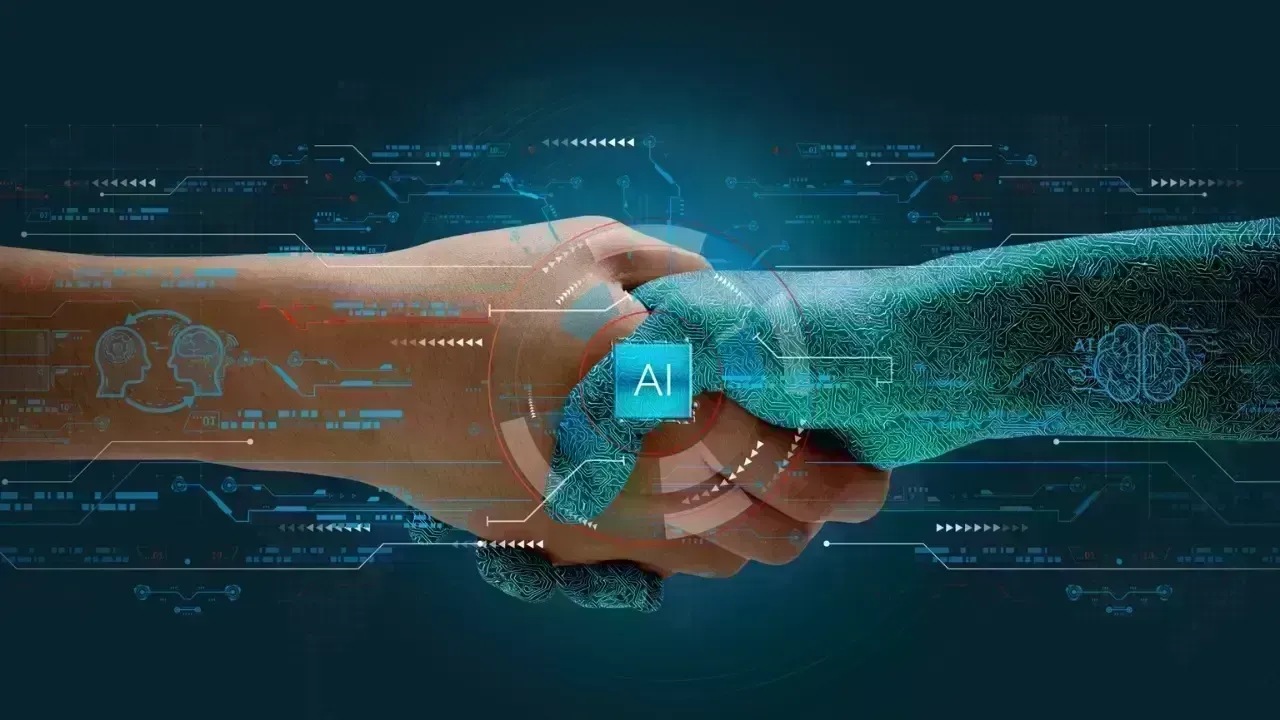
The rapid advancement of artificial intelligence (AI) is fundamentally altering the workplace landscape. No longer just tools for executing tasks or automating processes, AI is evolving into a crucial collaborative partner in daily operations. Insights from esteemed organizations such as Nasscom and Indeed indicate that by 2027, human-AI interactions will be essential, not just influencing workflow but defining it. This transformation is already impacting roles, workflows, hiring practices, and skill expectations across various industries, driving a need for organizations to reassess how work is organized and evaluated.
Traditionally, AI has served as a mere tool, functioning separately from human efforts to assist with specific tasks such as data analysis or automation. This perception is fading. Current industry research suggests that AI will seamlessly integrate into daily workflows, fostering a collaborative environment where humans and machines synergize to achieve results unattainable by either alone.
AI systems are maturing into cooperative partners, working alongside humans to enhance decision-making and undertake complex responsibilities. This evolution allows AI to manage repetitive tasks, enabling people to engage in higher-order thinking, creativity, and strategic planning.
Recent studies by global research bodies reveal a remarkable 97 percent of HR leaders believe that, by 2027, human interaction with AI will be deeply integrated into workflows, becoming a staple in daily operations across sectors, from tech to marketing.
In practical terms, this indicates that job functions will be reimagined around AI capabilities. Rather than a threat or replacement, AI will be viewed as an ally that boosts productivity, creativity, and decision-making efficiency.
Data suggests that 20–40 percent of tasks in technology companies are already performed with direct AI integration. Particularly in software development, AI supports or executes up to 45 percent of development tasks.
Tasks like code generation and quality assurance are increasingly supported by AI, permitting human workers to focus on design, strategic oversight, and creative endeavors requiring human intuition.
Performance metrics are shifting from simply executing tasks to delivering meaningful outcomes. In a collaborative human-AI setting, employees are assessed based on the value added through human insights, innovation, and strategic thought. AI manages data-heavy operations where precision and speed are critical, freeing humans to leverage emotional intelligence and creative problem-solving skills.
Despite AI’s evolving capabilities, the necessity for human oversight remains paramount due to occasional inaccuracies. More than half of HR leaders acknowledge that humans are essential to validate and refine AI outputs, maintaining standards and ensuring ethical decision-making in business contexts.
This transition could result in a rise in roles focused on system architecture, data model design, and strategic leadership, which require nuanced judgment and situational awareness—skills that AI currently cannot replicate.
The integration of AI into the workplace is reshaping hiring criteria. Conventional credentials like degrees are ceding ground to skills-based assessments, emphasizing demonstrable capabilities and real-world outcomes instead.
Currently, around 85 percent of hiring managers prioritize skills and practical abilities over formal qualifications, recognizing the growing need for multidisciplinary skill sets that blend technical knowledge with soft skills like communication and creativity.
With AI taking over routine tasks, the pressure to upskill and reskill is growing. Companies are implementing training initiatives aimed at preparing workers for hybrid roles in which human and AI collaboration is the norm. Skills in critical thinking, data interpretation, and decision science will be essential for success in this transforming landscape.
The tech sector leads in AI integration, with tools already assisting in over 40 percent of coding tasks. This enhancement not only bolsters efficiency but redefines the skill sets programmers and engineers must master. Human developers are increasingly tasked with guiding AI systems and ensuring quality results.
In sectors where decision-making is critical, such as finance and legal services, AI will augment human judgment. While AI analyzes data for trends, professionals must interpret these findings, adapt them to ethical paradigms, and apply them to business strategies.
Even sectors with everyday operations, such as marketing and HR, are seeing AI being integrated into routine activities. Predictive analytics and automation are transforming responsibilities, leading to more rapid decision-making processes and reduced manual workloads.
The collaboration of human ingenuity and AI efficiency promises revolutionary productivity benefits. AI accelerates data analysis, while humans introduce ethical and contextual understanding, leading to swifter innovation and valuable decision-making across sectors.
Far from displacing workers, AI can redefine how tasks are performed. By automating monotonous tasks, it allows employees to invest time in strategic and creative projects, potentially boosting job satisfaction and professional development.
Despite the opportunities AI presents, organizations face challenges like skills gaps, with many professionals lacking adequate training. Ensuring employee preparedness for AI integration is crucial for seamless transitions.
Concerns surrounding ethics, such as data privacy and fairness, also arise as AI takes on sensitive decision-making roles. A robust human-AI partnership necessitates frameworks to foster accountability and trust.
Workers must prioritize continuous education. Both employers and individuals should focus on pathways promoting AI literacy, critical thinking, adaptability, and ethical awareness. Embracing lifelong learning will be vital to thriving in an AI-infused workplace.
Organizations must reconsider job frameworks to allow AI to manage routine tasks while humans lead in strategic and creative roles. This strategic blend should leverage machine efficiency while maximizing human value, enhancing both productivity and employee well-being.
To foster effective collaboration, trust in AI systems is essential. Adopting transparent governance and clear ethical guidelines will help ensure AI is seen as a supportive partner, aligned with policies safeguarding fairness and privacy.
By 2027, the workforce will be profoundly influenced by AI, not merely shaping its role but transforming it through deep collaboration. The evolving workplace will embed technology within daily practices, redefining roles, expectations, and value creation methods. Humans will excel in judgment and creativity while AI manages precision and analysis, jointly reshaping productivity and innovation, marking the dawn of a transformative working era.
Disclaimer:
This article draws upon industry insights and research trends related to human-AI collaboration and the future of work for informational purposes only and is not to be construed as professional advice. Developments in AI adoption and workplace practices may vary rapidly across industries.










Anticipated Dates for UAE Eid Al Adha 2026 Unveiled by Astronomical Experts
Experts predict Eid Al Adha 2026 in the UAE to start on May 27, prompting early holiday planning amo

DAE Achieves Remarkable Growth in Q1 2026 With Record Revenue
Dubai Aerospace Enterprise announces impressive financial results for Q1 2026, reflecting a surge in

Price Increase for Sony PS5 in Southeast Asia Effective May 1
Sony announces a price increase for the PS5 across Southeast Asia starting May 1, 2026, impacting ga

Potential ‘Super El Niño’ in 2026: Understanding the Climate Risks
Could a Super El Niño emerge in 2026? Discover its implications and potential global climate impacts

Global Energy Crisis Intensifies: Markets React to Oil Supply Challenges
Markets are on edge as oil disruptions escalate, influencing prices and economic stability. Explore

Must-See Tourist Spots in London You Can't Overlook
Explore London's essential attractions, from royal landmarks to vibrant markets, ensuring an unforge




