Post by : Anees Nasser
Once upon a time, phone screens primarily served as tools for communication and casual browsing. The resolutions were basic, with colors lacking vibrancy, and scrolling felt unrefined. The arrival of HD, then Full HD, and subsequently AMOLED displays heralded a new era. Today, smartphones are crossing into the realm previously exclusive to high-end gaming monitors and televisions.
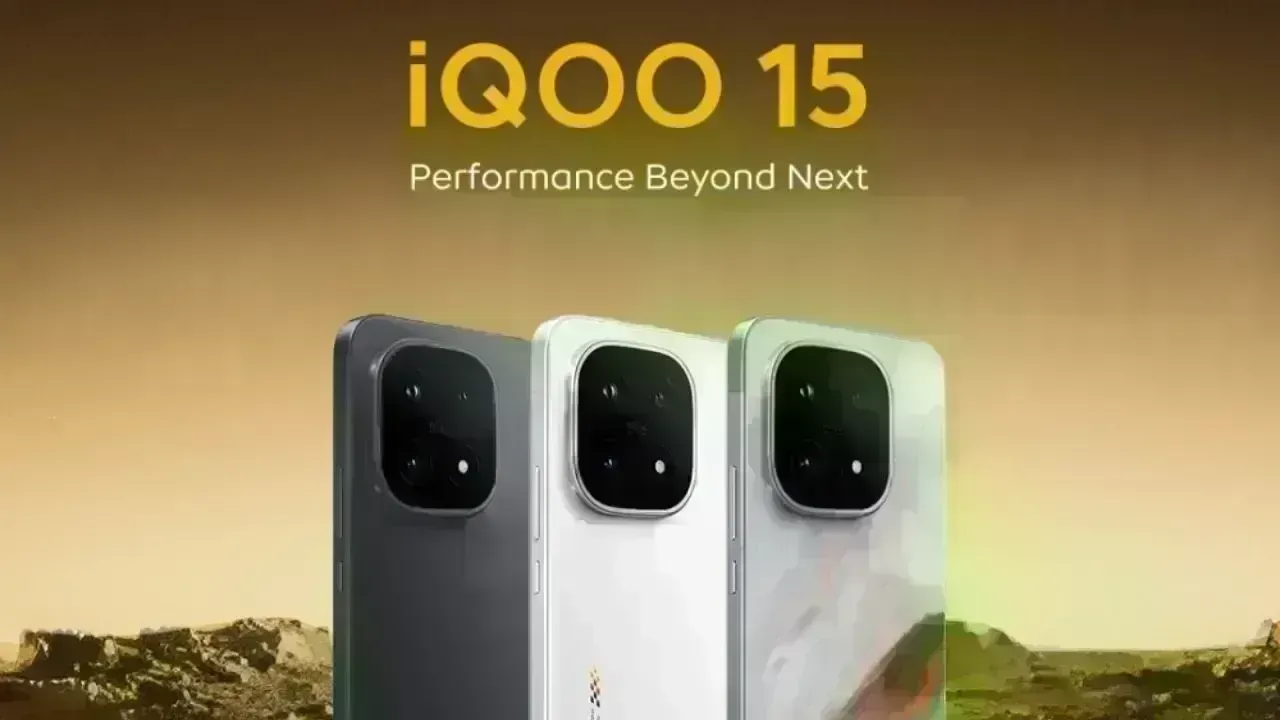
With the introduction of the iQOO 15, flaunting a 144Hz refresh rate and a stunning 2K display, it clearly targets the premium segment. While it boasts ultra-smooth scrolling and sharp visuals, we must ask ourselves: is this enhancement genuinely beneficial for day-to-day life, or just a strategy for spec competition?
Let's explore this further.
A 2K display boasts significantly enhanced pixel density over a Full HD screen, resulting in clearer text and sharper imagery. However, it's crucial to note that the human eye can only perceive differences in sharpness up to a certain limit, especially on smaller displays.
While moving from Full HD to 4K on larger TVs provides striking improvements, the upgrade from high-quality Full HD to 2K on a smartphone, which is typically viewed at arm’s length, is only evident under close examination or side comparisons.
A 2K display shines in scenarios such as:
Reading intricate texts
Zooming into photographs
Enjoying high-res videos
Editing pictures
Utilizing the phone as an auxiliary display for work
Examining detailed graphics/maps
However, for regular tasks like messaging, browsing, and social media, a Full HD display suffices beautifully on a 6.5-inch device.
Thus, while 2K is luxurious, it isn’t indispensable.
Refresh rate indicates how many times per second the display refreshes its image:
60Hz = 60 updates per second
90Hz = smoother visuals
120Hz = ultra-smooth rendering
144Hz = graphics-intensive excellence
Higher refresh rates provide smoother scrolling, cleaner animations, and quicker touch responses.
Indeed, especially when navigating apps and scrolling. Once you experience a device over 90Hz, lower rates may seem sluggish. However, the shift from 120Hz to 144Hz feels negligible for most users, though vital for gamers.
While fluid scrolling may impress initially, it quickly becomes the norm.
High-resolution and high-refresh-rate screens draw more power, making them one of the principal battery drains on smartphones:
More pixels need additional processing
Higher refresh rates mean frequent updates
Brighter screens consume greater energy
Despite smart refresh rate adjustments, a 144Hz 2K display will invariably deplete the battery more rapidly than a standard Full HD 60Hz screen.
If you:
Enjoy watching videos
Play games on your phone
Scroll for extended periods
Maintain high brightness
Frequently use navigation
Then battery management will be critical for you.
High-end display technology is stunning but thirsty.
Currently, most mobile content is:
Capped at 1080p
Typically 60Hz
Often heavily compressed
Even if your device can support 2K and 144Hz, many platforms:
Stream at 1080p
Regulate playback to 60 frames per second
Focus on compression rather than purity
It’s like possessing a high-performance vehicle but navigating through slow city traffic.
The true advantage of a premium screen stems more from:
Enhanced brightness control
Contrast and color accuracy
HDR performance
Color fidelity
Visibility in sunlight
Flagship displays tend to deliver:
Deeper blacks
Brighter highlights
True-to-life colors
Visibility in bright conditions
Authentic HDR experiences
Resolution may not only determine performance, but superior color quality enhances the viewing experience significantly.
This improvement is particularly noticeable when:
Watching films
Viewing photographs
Editing tasks
Reading outdoors
Navigating in sunlight
In such scenarios, high-quality screens provide tangible advantages.
In compatible games:
144Hz minimizes motion blur
Enhances aiming precision
Improves perceived reaction times
Clarifies rapid movements
Competitive players immediately notice these benefits.
Touch reactivity becomes sharper.
Frame consistency improves.
Movements feel sharper.
If you engage in fast-paced gaming regularly, this display is undoubtedly beneficial.
Elevated refresh rates:
Diminish micro-stutter
Make scrolling seamless
Lessen perceived flickering
This can result in:
Easier extended reading
Less tiring browsing
Reduced motion-induced stress
Nevertheless, factors such as blue light exposure, total screen time, and brightness take precedence over refresh rates.
A captivating screen won’t offset poor habits.
High-end displays increase:
Production complexity
Component costs
Repair expenses
Power management needs
Quality control measures
Purchasing a flagship display means supporting:
State-of-the-art materials
Precision in manufacturing
Refined calibration
Superior glass protection
Higher replacement costs
Damage becomes costly.
Repair prices escalate.
Insurance gains value.
Devices with sophisticated displays:
Tend to age well
Maintain visual relevance longer
Retain their premium feel for years
However, it’s vital to recall:
Battery performance declines
Software updates may cease
Camera technology progresses
Charging technologies evolve
Your display may appear top-notch long after other features have dated.
You may find it necessary if you:
Engage in competitive gaming frequently
Cherish refined design and aesthetics
Delight in high-res content consumption
Watch films on your smartphone
Aim for long-term satisfaction with your device
Plan to retain phones for the next 3–4 years
Seek tactile interface smoothness
You may not necessarily “require” it, yet it’s a feature that you will appreciate.
Consider skipping the upgrade if you:
Primarily utilize messaging platforms
Watch videos moderately
Rarely engage in gaming
Prioritize battery longevity over display quality
Change devices every 18 months
Seek functional durability over advanced features
Prefer enhanced camera or storage options instead
In such situations, the decision is more emotional than practical.
Brands compete heavily on numerical specs because they are visible and striking.
A 144Hz rating seems more compelling than 120Hz.
A 2K screen sounds superior to HD.
However, user experience doesn't always grow in line with specs.
Beyond a specific threshold, enhancements yield diminishing returns.
A high-quality display:
Gives the device a unique feel
Boosts user satisfaction
Diminishes the urge to upgrade
Enhances visual recall
Provides emotional gratification
These factors hold significant weight.
Technology encompasses more than just utility.
It’s about the experience.
No—you don't truly need it.
However, that doesn't imply you wouldn’t enjoy it.
If function is your sole criteria, a Full HD at 120Hz suffices.
If the experience matters to you, this display is delightful.
If gaming is your primary focus, then 144Hz has value.
If battery life is a primary concern, it’s a trade-off you’ll have to consider.
You're purchasing more than necessity.
You're investing in excellence.
And that’s perfectly fine—as long as you understand it.
The iQOO 15's display isn't just an exaggerated feature.
It exemplifies advanced engineering.
Nonetheless, most users prioritize balance over sheer perfection in their device choices.
Performance.
Battery life.
Camera quality.
Usability.
Durability.
A display should accentuate your device, rather than overshadow your decision-making.
Choose it because of your liking, not solely based on specs.
The article serves as general information and does not substitute for professional purchase advice. Specifications, performance, and display experiences may vary regionally, considering usage patterns and software updates. Buyers are encouraged to review multiple devices and legitimate user reviews before making a purchasing decision.










Anticipated Dates for UAE Eid Al Adha 2026 Unveiled by Astronomical Experts
Experts predict Eid Al Adha 2026 in the UAE to start on May 27, prompting early holiday planning amo

DAE Achieves Remarkable Growth in Q1 2026 With Record Revenue
Dubai Aerospace Enterprise announces impressive financial results for Q1 2026, reflecting a surge in

Price Increase for Sony PS5 in Southeast Asia Effective May 1
Sony announces a price increase for the PS5 across Southeast Asia starting May 1, 2026, impacting ga

Potential ‘Super El Niño’ in 2026: Understanding the Climate Risks
Could a Super El Niño emerge in 2026? Discover its implications and potential global climate impacts

Global Energy Crisis Intensifies: Markets React to Oil Supply Challenges
Markets are on edge as oil disruptions escalate, influencing prices and economic stability. Explore

Must-See Tourist Spots in London You Can't Overlook
Explore London's essential attractions, from royal landmarks to vibrant markets, ensuring an unforge




