Post by : Sami Jeet
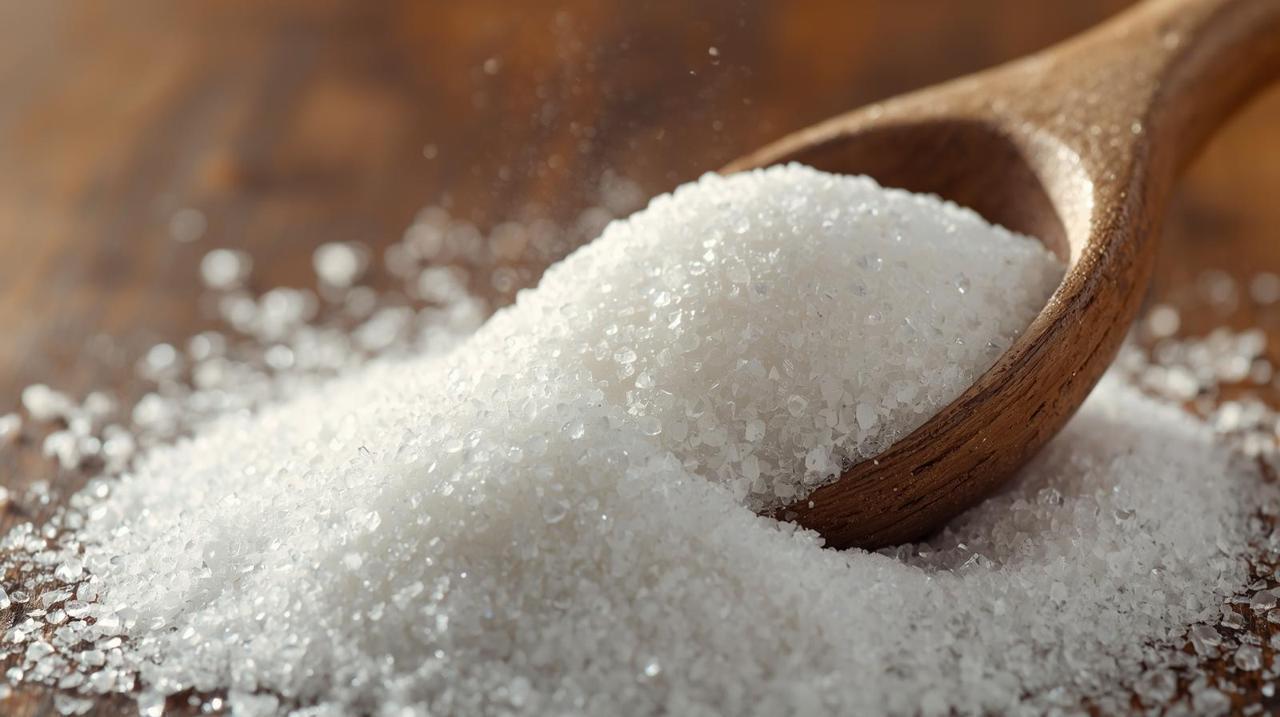
Salt stands as one of the most vital ingredients in human history. Long before the era of gold or modern trade systems, salt dictated commerce, initiated conflicts, preserved food, and even supported entire empires. What is now a common seasoning once wielded tremendous power over societal development. This exploration will uncover how salt transitioned to a globally prized commodity, influencing cultures and economies alike, and its enduring significance in our modern world of refrigeration and industrialized food.
In antiquity, salt held such immense value that it functioned as a currency. The term “salary” derives from the Latin “salarium,” which denotes the wages Roman soldiers received for purchasing salt.
It was crucial for preserving meat and fish well before the invention of refrigeration. It sustained armies during prolonged campaigns and helped civilizations endure harsh winters and droughts.
Given its role in food security, salt emerged as a symbol of power. Those who controlled salt sources shaped trade dynamics.
Numerous ancient capitals and kingdoms flourished thanks to salt.
The Egyptians utilized salt for mummification and food preservation, while China was among the first to impose salt taxation. The Romans constructed extensive roadways for salt transport across Europe.
In these scenarios, salt impacted not merely cuisine but also governance, economic structures, and military prowess.
Routes established for salt trade interconnected various continents, fostering cultural exchanges.
Trans-Saharan caravans moved large quantities of salt across Africa, while Venice accrued wealth by controlling Mediterranean salt trading routes. Northern Europe relied on salt from Iberia to ensure fish preservation during winter months.
These exchanges laid the groundwork for early globalization long before transatlantic voyages.
Salt trade spurred innovation, leading to new techniques and tools.
The development of salting and curing processes, early chemistry advancements via brine evaporation, and improved food storage practices.
Without salt, societies would have struggled to sustain large populations or safely store food.
Salt has historically served as a catalyst for various political revolutions.
The imposition of a British salt tax in India ignited one of the most significant acts of civil disobedience in contemporary history: Gandhi’s Salt March. By contesting British control over salt, Gandhi challenged the very foundation of colonial economic dominance.
Thus, salt transcended mere mineral status to become a symbol of liberation.
Salt’s influence is not exclusively cultural; it is fundamentally scientific.
It governs nerve activity, sustains hydration, and facilitates muscle movement.
Without salt, human survival is compromised. This biological dependency elucidates why ancient societies so fervently valued it, leading people to traverse great distances for acquisition.
Salt significantly impacted food flavor profiles and shaped culinary traditions across cultures.
It enhances flavors, permits long-term preservation of meats and fish, and supports fermentation processes, resulting in products like pickles, soy sauce, cheese, kimchi, and cured meats.
Many beloved dishes owe their existence to salt’s preservation capabilities.
Currently, salt is more than a mere flavor enhancer. It is critical in global manufacturing.
Fields such as pharmaceuticals, chemical manufacturing, water treatment, food processing, and agriculture utilize vast quantities of salt each year to create indispensable products that sustain modern societies.
Salt's price plummeted due to industrial-scale mining, processing, and better transport systems.
The world remains dependent on salt for health, manufacturing, and food supply. The distinction is that it is now readily accessible, rendering it commonplace—even if its historical impact remains remarkable.
Certainly. Salt has swayed wars, policies, economies, trade, culture, science, and technological advancement.
It underpins global food systems and is pivotal in major industries while remaining a universal component in cooking.
Even if its economic clout has diminished, its historical ramifications are irrefutable.
A seemingly mundane kitchen staple—salt—has profoundly influenced human history for millennia. It supported empires, bridged cultures, and instigated revolutions. Its transition from a rare commodity to an everyday necessity mirrors the evolution of global civilization itself. Today, though salt may sit quietly on your table, its rich legacy is a testament to its power, resilience, and world-altering influence.
This article serves educational and informational purposes. Historical analyses and examples mentioned are based on general research but may vary among various sources. Readers are encouraged to validate historical information independently or consult academic materials for thorough understanding. The author bears no responsibility for decisions based on this content.










Anticipated Dates for UAE Eid Al Adha 2026 Unveiled by Astronomical Experts
Experts predict Eid Al Adha 2026 in the UAE to start on May 27, prompting early holiday planning amo

DAE Achieves Remarkable Growth in Q1 2026 With Record Revenue
Dubai Aerospace Enterprise announces impressive financial results for Q1 2026, reflecting a surge in

Price Increase for Sony PS5 in Southeast Asia Effective May 1
Sony announces a price increase for the PS5 across Southeast Asia starting May 1, 2026, impacting ga

Potential ‘Super El Niño’ in 2026: Understanding the Climate Risks
Could a Super El Niño emerge in 2026? Discover its implications and potential global climate impacts

Global Energy Crisis Intensifies: Markets React to Oil Supply Challenges
Markets are on edge as oil disruptions escalate, influencing prices and economic stability. Explore

Must-See Tourist Spots in London You Can't Overlook
Explore London's essential attractions, from royal landmarks to vibrant markets, ensuring an unforge




