Post by : Shakul
A crucial bilateral meeting took place during the IMF-World Bank Spring Meetings 2026 in Washington, D.C., as leaders from Thailand and Singapore convened to tackle urgent global economic challenges. This dialogue underscored the necessity for synchronized international strategies amidst prevailing uncertainties influenced by geopolitical tensions and erratic energy markets.
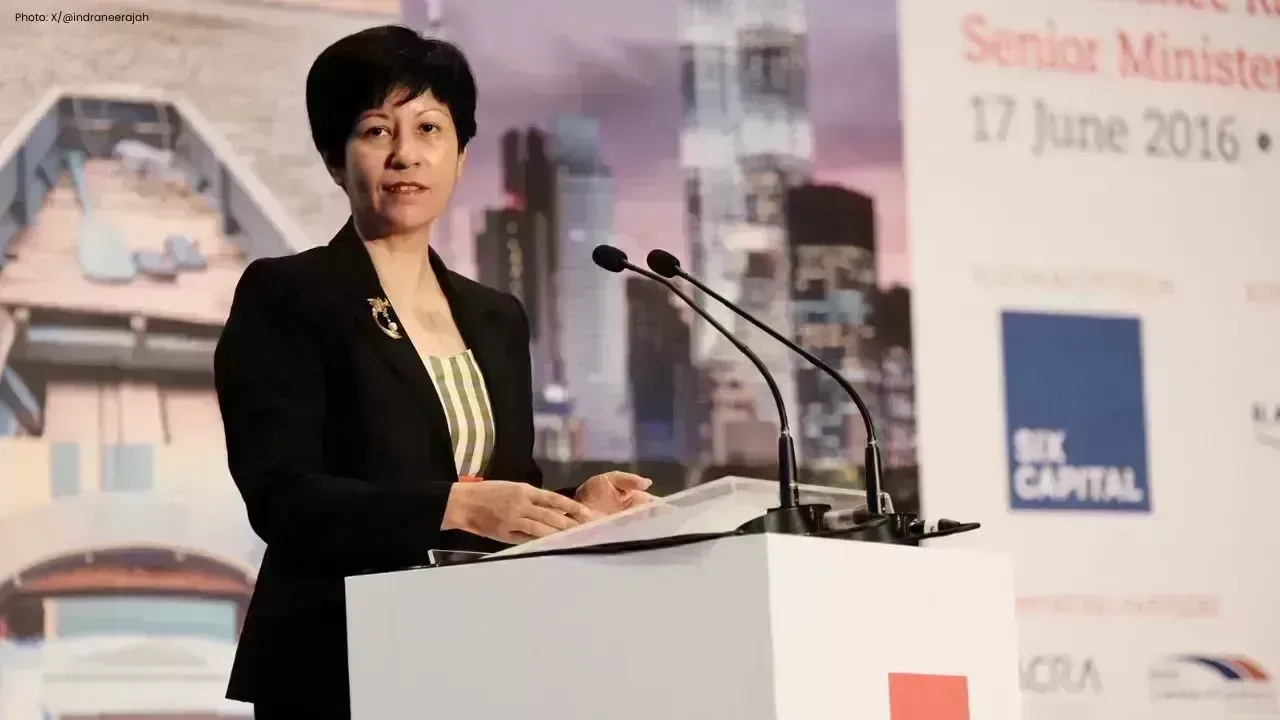
Dr. Ekniti Nitithanpraphas, Thailand’s Deputy Prime Minister and Finance Minister, engaged in thorough discussions with Indranee Rajah, Singapore’s Minister in the Prime Minister’s Department and State Minister for Finance. Their exchange demonstrated a mutual recognition of the need for enhanced cooperation to address global economic vulnerabilities while reinforcing bilateral and regional alliances.
During their talks, the leaders scrutinized the current economic landscape, particularly the implications of the escalating conflict in Iran. This situation not only fuels volatility in commodity markets but also poses significant threats to energy supply chain stability. The Strait of Hormuz emerged as a focal point of concern, given its role as a key maritime passage for global oil transport. Disruptions in this area could lead to soaring fuel prices and widespread economic fallout.
Acknowledging the pressure of surging energy costs on economies worldwide, especially in developing nations reliant on imports, they explored policy solutions aimed at alleviating these challenges. Strategies discussed included stabilizing supply chains, controlling inflation, and ensuring robust economic growth in the face of external disturbances. The dialogue highlighted the need for proactive and collaborative policy measures to successfully navigate an unpredictable global environment.
Beyond addressing immediate issues, the meeting also emphasized long-term regional collaboration within ASEAN. Both nations reiterated their commitment to a structured financial agenda that will advance regional integration. With Singapore due to chair ASEAN in 2027 and Thailand in 2028, they have a pivotal opportunity to align economic strategies over multiple years.
A significant point of discussion was the role of advanced technologies, particularly artificial intelligence, in enhancing the financial sector's efficiency and service delivery. By adopting AI, both countries aim to develop robust financial systems that can quickly adapt to technological advancements. Additionally, the establishment of regional energy infrastructure, such as the ASEAN Power Grid initiative, was recognized as vital for ensuring long-term energy security and sustainability.
The talks also highlighted the necessity of expanding cross-border financial services and improving connectivity within ASEAN economies. By promoting deeper financial integration, member states can better endure global economic upheavals and seize new opportunities. This meeting reaffirmed Thailand and Singapore’s commitment to not only confronting current challenges but also building a more resilient, interconnected regional economy.










Achieve Radiant Skin with This Simple Rice Flour Treatment
Transform your skincare routine! Discover how a rice flour mix can restore your skin's glow without

Meta Unveils Subscription Plans for Instagram, Facebook, and WhatsApp
Meta introduces new subscription plans for users of Instagram, Facebook, and WhatsApp, featuring enh

Suvarna Joy on Education Leadership, Resilience, and Building Purpose Through Adversity in the UAE
Suvarna Joy shares her journey of education leadership, motherhood, faith, and resilience within the

Anticipated Dates for UAE Eid Al Adha 2026 Unveiled by Astronomical Experts
Experts predict Eid Al Adha 2026 in the UAE to start on May 27, prompting early holiday planning amo

DAE Achieves Remarkable Growth in Q1 2026 With Record Revenue
Dubai Aerospace Enterprise announces impressive financial results for Q1 2026, reflecting a surge in

Price Increase for Sony PS5 in Southeast Asia Effective May 1
Sony announces a price increase for the PS5 across Southeast Asia starting May 1, 2026, impacting ga




