Post by : Saif Nasser
Taiwan President Lai Ching-te marked his second year in office during a period of growing political and military tension between Taiwan and China. As regional pressure continues to rise, Lai’s government is facing challenges related to security, diplomacy, economic growth, and internal political divisions.
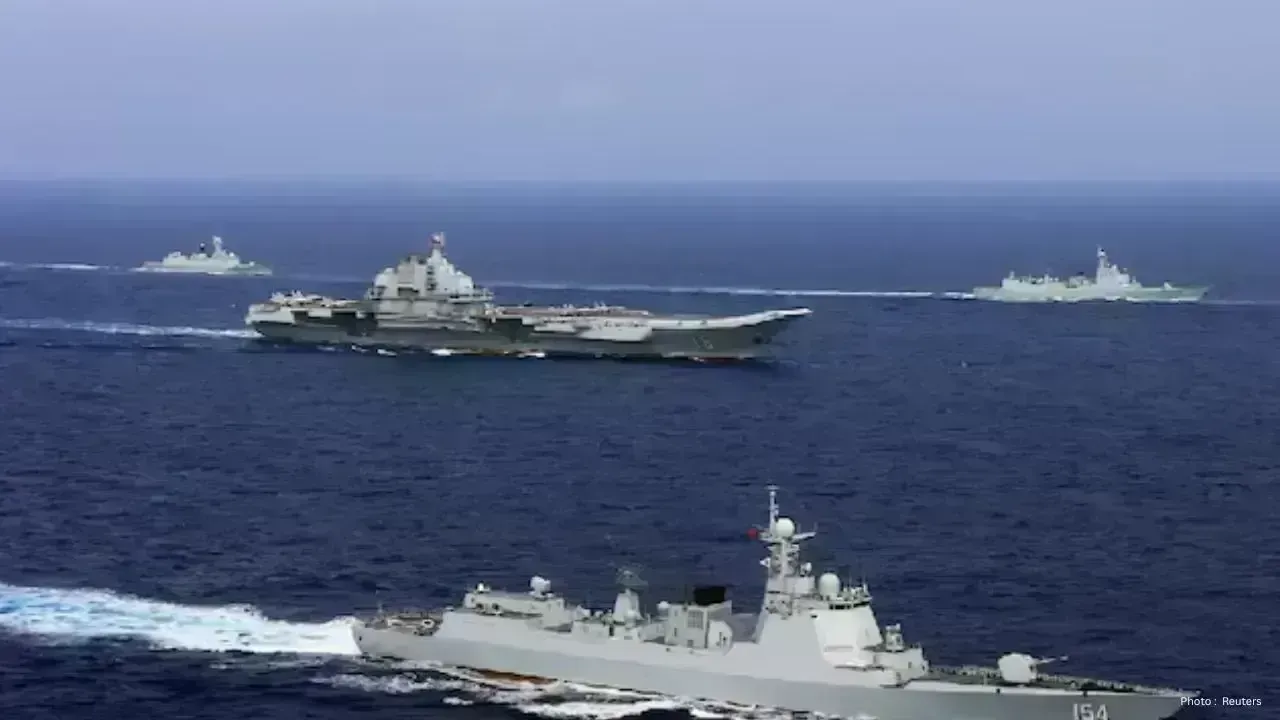
Ahead of his public address, Taiwan’s leadership strongly criticised China’s increasing military activities around the island. Taiwan officials described Beijing’s actions as one of the biggest threats to peace and stability in the Indo-Pacific region. Chinese military aircraft, naval ships, and war exercises near Taiwan have increased over the past year, creating concern both inside Taiwan and internationally.
China considers Taiwan part of its territory and has repeatedly said it could use force if necessary to bring the island under its control. Taiwan, however, rejects these claims and says its future should be decided by its own people. President Lai has continued to defend Taiwan’s democratic system and sovereignty while also calling for peaceful dialogue with Beijing.
Since taking office in 2024, Lai has faced both international and domestic pressure. His government has focused heavily on strengthening Taiwan’s defence systems and building closer relations with democratic countries, especially the United States. Taiwan has also increased cooperation in areas such as technology, trade, semiconductors, and security partnerships.
At the same time, political opposition inside Taiwan has created additional challenges for the president. Opposition parties currently control much of the parliament and have blocked several government proposals. Political disagreements over defence spending, economic policy, and relations with China have increased tension inside Taiwan’s political system.
Another important issue for Taiwan is international recognition. China continues to pressure countries and international organisations to limit Taiwan’s participation. Recently, Taiwan was again excluded from the World Health Assembly due to Chinese opposition, despite support from some countries that argued Taiwan could contribute to global health cooperation.
Experts believe the coming years will be extremely important for Taiwan’s future. The island remains one of the world’s leading producers of advanced semiconductors, making it strategically important for the global economy and technology industry. Because of this, tensions involving Taiwan affect not only Asia but also international markets and global politics.
President Lai’s second anniversary in office reflects the difficult balance Taiwan is trying to maintain — protecting its democracy and security while avoiding direct conflict with China. Many people in Taiwan hope peace and stability can continue, but growing military activity and political pressure keep regional tensions high.


Anticipated Dates for UAE Eid Al Adha 2026 Unveiled by Astronomical Experts
Experts predict Eid Al Adha 2026 in the UAE to start on May 27, prompting early holiday planning amo

DAE Achieves Remarkable Growth in Q1 2026 With Record Revenue
Dubai Aerospace Enterprise announces impressive financial results for Q1 2026, reflecting a surge in

Price Increase for Sony PS5 in Southeast Asia Effective May 1
Sony announces a price increase for the PS5 across Southeast Asia starting May 1, 2026, impacting ga

Potential ‘Super El Niño’ in 2026: Understanding the Climate Risks
Could a Super El Niño emerge in 2026? Discover its implications and potential global climate impacts

Global Energy Crisis Intensifies: Markets React to Oil Supply Challenges
Markets are on edge as oil disruptions escalate, influencing prices and economic stability. Explore

Must-See Tourist Spots in London You Can't Overlook
Explore London's essential attractions, from royal landmarks to vibrant markets, ensuring an unforge




