Post by : Priya
Photo:AP
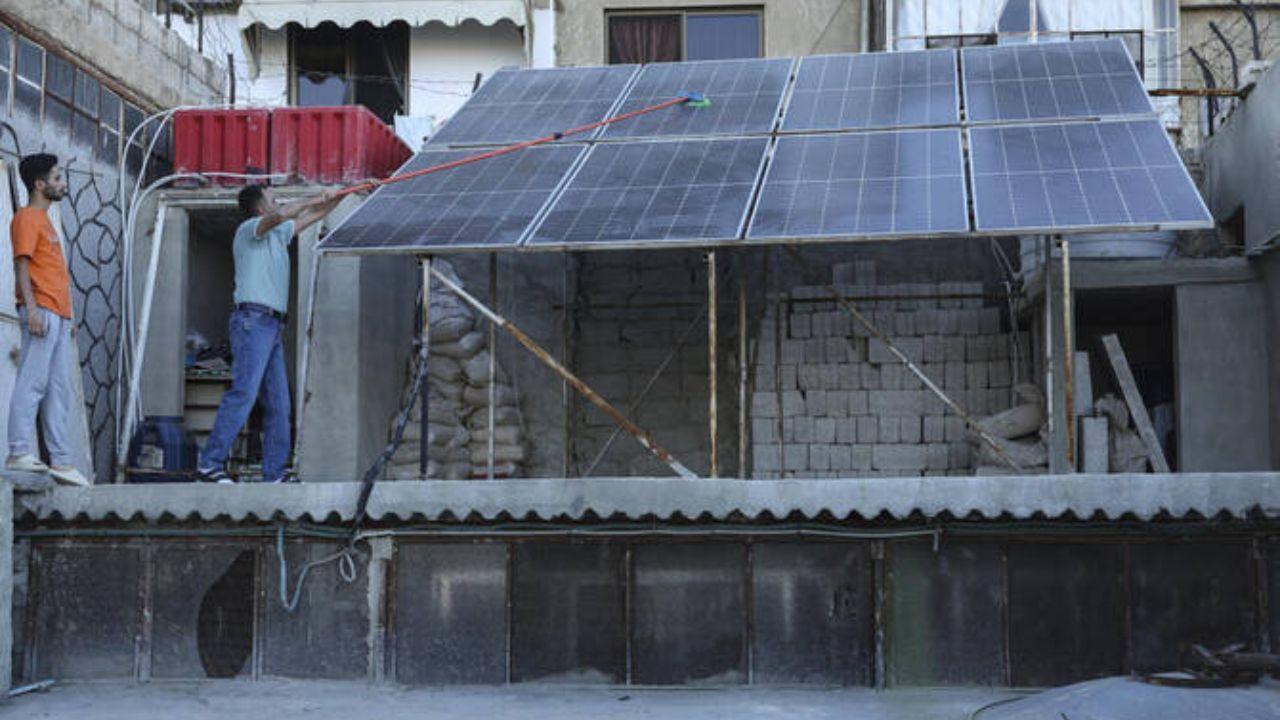
After more than a decade of war, destruction, and international isolation, Syria is taking a hopeful step toward solving one of its deepest problems — the national energy crisis. With international sanctions beginning to ease, and access to equipment gradually improving, the country is turning to one of its most abundant and overlooked resources: sunlight.
This shift to solar energy is not just a temporary measure, but a serious push to rebuild the country’s power supply and reduce its dependence on oil and gas. Syria's new approach is seen as a potential turning point in the country’s long recovery, not only from war but from the chronic power shortages that have paralyzed the economy and daily life.
This in-depth editorial investigates how solar energy is becoming a national priority in Syria, the motivations behind the move, the challenges on the ground, and what the future may hold.
The Broken Backbone of a Nation: Syria's Energy Crisis
Syria once had a functioning energy system. Before the war, electricity reached most corners of the country. Cities and towns had regular access to power, factories ran full-time, and homes used modern appliances. But that changed dramatically after 2011, when civil war broke out and the national power grid began to collapse.
Key power stations were damaged or destroyed during the fighting. Transmission lines were cut, fuel deliveries halted, and maintenance became nearly impossible in conflict zones. As the war intensified, blackouts became normal. Even Damascus, the capital, began to experience severe power shortages.
According to the Syrian Ministry of Electricity, over 60 percent of the country’s energy infrastructure was either destroyed or rendered nonfunctional during the war years. Cities like Aleppo and Raqqa were left with little to no electricity for months at a time. Villages were plunged into darkness. Hospitals operated on limited diesel generators, schools held classes without lights, and water systems were unable to pump.
The energy crisis not only caused daily hardships but also slowed reconstruction and economic activity. With fuel imports restricted by international sanctions and domestic oil production in decline, Syria's government struggled to supply even basic electricity to its people.
Sunlight as a Lifeline: Why Solar Power Makes Sense
Syria is among the sunniest countries in the region. It receives over 3,000 hours of sunshine per year in many areas, especially in the central and southern provinces. This geographic advantage makes solar energy a highly suitable solution for the country's ongoing power problems.
Solar energy offers several key benefits:
Recognizing these advantages, Syria has started integrating solar into its rebuilding efforts. The push is coming from all levels — government, private businesses, aid organizations, and everyday citizens.
Government Policy: From Emergency Fix to National Strategy
Initially, solar panels were seen as a survival tool. People installed small rooftop panels to charge mobile phones, power lights, and operate essential appliances. These were often expensive and imported through informal networks, making them inaccessible to many.
In 2024, however, Syria’s Ministry of Electricity introduced a new national policy supporting the development of renewable energy. This includes:
Allowing private companies to invest in solar farms.
Simplifying the licensing process for solar power installations.
Reducing import duties on solar equipment.
Supporting solar projects in public buildings like schools and clinics.
Introducing small-scale funding programs for solar startups.
Under this new policy, multiple solar farms have been approved in provinces such as Homs, Tartus, and the outskirts of Damascus. Some of these projects are supported by local businesses and foreign partners from friendly countries.
Electricity Minister Ghassan al-Zamil recently said, “We can no longer depend on oil and gas alone. Our goal is to produce at least 500 megawatts of solar energy within the next three years. It’s time to build a smarter, cleaner power sector.”
Solar for the People: Stories from the Ground
In the Damascus suburb of Douma, residents are embracing solar power to bring back a sense of normalcy. Abu Ahmed, a local store owner, installed solar panels on his roof last year. “I used to shut down early because of power cuts,” he explains. “Now, with solar energy, I keep my shop open till late. It has made a big difference in my life.”
In Sweida, a public school now runs entirely on solar energy. Solar panels were installed with help from a local NGO. The system powers classrooms, fans, computers, and even emergency lights during exam season. Teachers say it has improved student performance and safety.
A farm in Daraa province has switched to solar-powered irrigation pumps. “Before, I lost crops due to water shortages,” says farmer Abu Khaled. “Now I can pump water regularly. Solar energy is not just light, it’s food.”
These stories are becoming more common across Syria, as communities take energy into their own hands.
Private Sector Role: Investment and Innovation
The easing of some sanctions has made it easier for Syrian businesses to import solar panels, inverters, and batteries. This has sparked growth in a new sector of solar energy companies, mostly small to mid-sized, that provide equipment and installation services.
Local entrepreneur Lina Hariri started a solar tech company in 2023. “When I began, it was just me and two workers,” she says. “Now we have 12 staff and more than 300 clients. People are tired of waiting for the government. They want power now.”
Her company focuses on homes, farms, and small businesses, offering low-cost payment plans. Hariri says her biggest challenge is lack of qualified technicians, but she's training young engineers to fill the gap.
Banks have also started offering special loans for solar equipment, although interest rates remain high due to inflation. Still, the demand is growing steadily.
Barriers to Progress: What’s Holding Syria Back?
Despite the positive steps, many challenges remain:
1. High Upfront Costs
Even with falling prices worldwide, a basic solar home setup can cost $1,000 to $3,000 — far beyond what most Syrians can afford. Batteries, which store energy for nighttime use, are especially costly.
2. Shortage of Skilled Workers
Solar systems require proper installation and maintenance. Syria still lacks enough trained technicians, and mistakes can lead to fires, breakdowns, or wasted investment.
3. Logistics and Import Hurdles
Though some sanctions have eased, importing quality solar equipment remains difficult. Customs delays, lack of spare parts, and unstable currency exchange rates complicate business.
4. Security and Conflict Zones
In areas like Idlib and parts of northeastern Syria, ongoing instability makes it risky to invest in large solar projects. Infrastructure can be looted or destroyed.
5. Lack of Unified Regulations
Syria’s energy laws are outdated. There is no clear national solar energy code or pricing policy for solar electricity sold back to the grid. This uncertainty limits large-scale investment.
International Role: A Call for Support
For Syria to fully benefit from solar energy, international cooperation is essential. Humanitarian agencies, foreign governments, and green energy companies could:
Fund large-scale solar farms for public use.
Support training programs for local engineers and electricians.
Donate affordable solar kits to vulnerable families.
Help develop a modern renewable energy framework.
Several friendly countries, such as Iran and Russia, have already provided limited solar aid. Gulf-based charities have funded small solar projects in rural areas. The United Nations Development Programme (UNDP) is also piloting solar street lighting in some post-conflict towns.
However, more widespread and coordinated efforts are needed to scale up solar development across Syria.
Environmental and Economic Benefits
Solar power is not only practical for Syria — it’s also clean. With heavy reliance on diesel generators, the country has seen a rise in air pollution and noise. Solar systems can help reduce carbon emissions and promote a healthier environment.
Economically, solar energy could reduce Syria’s fuel import bill and create new jobs. Solar manufacturing, sales, and services can employ thousands, particularly young people who struggle to find work.
In time, a well-developed solar sector could even allow Syria to export solar expertise or technology to other countries in the region facing similar energy challenges.







DAE Achieves Remarkable Growth in Q1 2026 With Record Revenue
Dubai Aerospace Enterprise announces impressive financial results for Q1 2026, reflecting a surge in

Price Increase for Sony PS5 in Southeast Asia Effective May 1
Sony announces a price increase for the PS5 across Southeast Asia starting May 1, 2026, impacting ga

Potential ‘Super El Niño’ in 2026: Understanding the Climate Risks
Could a Super El Niño emerge in 2026? Discover its implications and potential global climate impacts

Global Energy Crisis Intensifies: Markets React to Oil Supply Challenges
Markets are on edge as oil disruptions escalate, influencing prices and economic stability. Explore

Must-See Tourist Spots in London You Can't Overlook
Explore London's essential attractions, from royal landmarks to vibrant markets, ensuring an unforge

Ultimate Guide to Snagging Cheap Flights in 2026
Unlock the secrets to booking affordable flights in 2026 with insightful tips and strategies tailore




