Post by : Saif Nasser
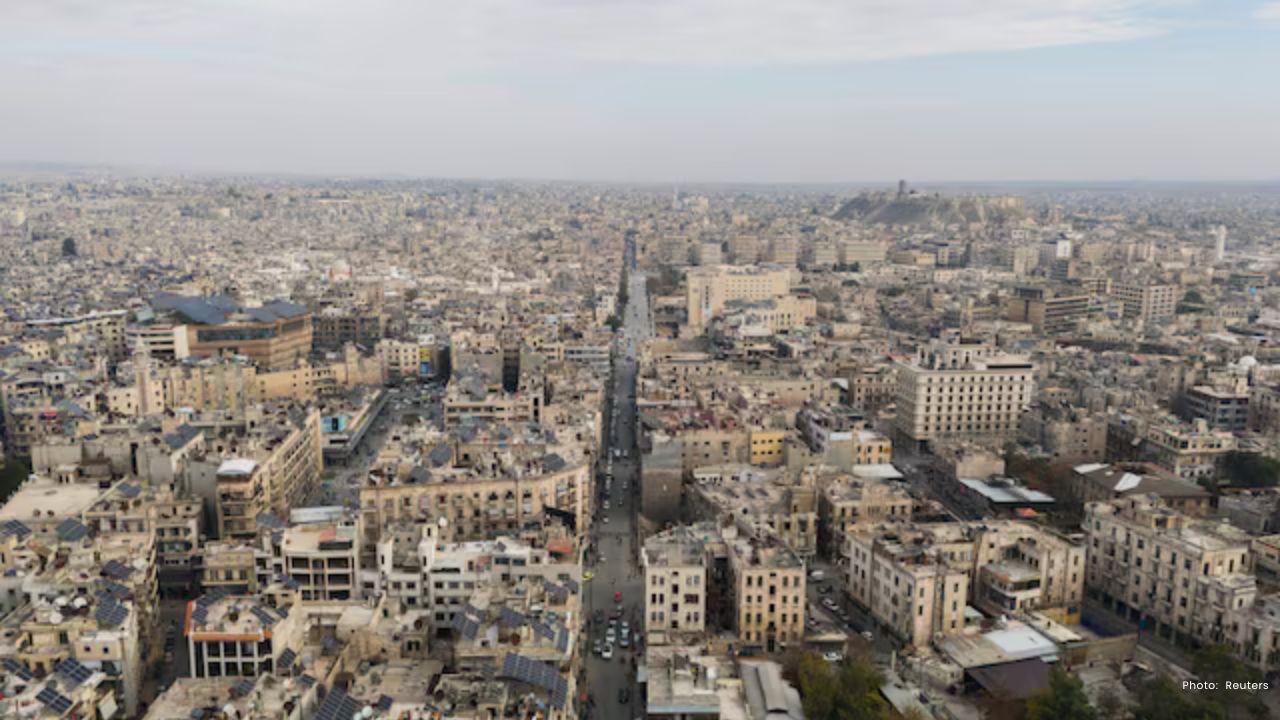
Syria has reopened an important air corridor linking the northern city of Aleppo to the Mediterranean Sea, a move that could help ease pressure on crowded air routes across the Middle East. The decision comes at a time when military tensions and security risks in the region have forced many airlines to change their flight paths, creating heavy congestion in the skies.
According to Syrian aviation officials, the newly reactivated corridor will allow both foreign airlines and Syria’s national carrier to use this route as air traffic gradually resumes through Aleppo International Airport. The step is meant to provide an alternative path for flights traveling between Europe, the Middle East, and parts of Asia.
Air travel across the Middle East has faced serious disruption in recent weeks due to rising military tensions and missile exchanges in several parts of the region. Some countries temporarily closed parts of their airspace while others restricted flights as a safety measure. These actions forced airlines to take longer routes, increasing congestion along the few remaining safe corridors.
In this difficult situation, reopening even a single air corridor can help improve the flow of flights. Syria’s new Aleppo–Mediterranean path provides airlines with another option, which may reduce pressure on other routes that have become heavily crowded due to the conflict.
Officials from the Syrian Civil Aviation Authority said the corridor was reopened after a detailed review of safety conditions. They explained that the decision was taken to balance aviation safety with the need to maintain a minimum level of air connectivity for passengers, cargo shipments, and essential travel.
The reopening also allows Aleppo International Airport to gradually return to operation. Aleppo is one of Syria’s largest cities and has long served as an important transport hub connecting the country with other parts of the region. The airport had previously faced interruptions because of security concerns and regional instability.
Experts say the location of Syrian airspace makes it strategically important for international aviation. Flights between Europe and South Asia or the Gulf region often pass through this area because it offers some of the shortest and most efficient routes. When Syrian airspace closes, airlines are forced to fly longer paths, which increases fuel costs and travel time.
The recent conflicts in the Middle East have caused several countries to close or restrict parts of their airspace. As a result, airlines have had to divert flights around danger zones. These detours not only make flights longer but also create heavy traffic in the limited safe corridors that remain open.
For airline companies, these disruptions have serious financial consequences. Longer routes mean more fuel consumption, higher operating costs, and delays for passengers and cargo shipments. Many airlines have also canceled or reduced flights because of the uncertainty.
The Syrian government hopes that reopening this corridor will provide some relief to the aviation sector. By offering an additional safe route, Syria could help reduce congestion and make it easier for airlines to manage their schedules.
At the same time, the reopening may bring economic benefits for Syria. Countries that allow aircraft to pass through their airspace usually collect overflight fees from airlines. Before years of conflict reduced air traffic, these fees were an important source of revenue for the Syrian government. Restoring some air routes could help bring back part of that income.
However, the situation remains fragile. Many airlines are still cautious about flying over areas close to conflict zones. Safety concerns remain a top priority for international carriers, and companies closely monitor security conditions before choosing their flight routes.
In addition, other parts of Syrian airspace remain restricted. Authorities have indicated that the reopening is only partial and that decisions about further openings will depend on how the regional security situation develops.
The broader Middle East aviation network has been under strain due to the ongoing conflicts involving several countries in the region. Military activity, missile launches, and air defense systems can all create serious risks for civilian aircraft. Because of this, aviation regulators and airlines must constantly evaluate which routes are safe.
In recent years, international aviation organizations have emphasized the importance of cooperation between governments and airlines to ensure flight safety in conflict zones. Real-time information sharing, careful monitoring of airspace, and coordination between civil and military authorities are essential to prevent accidents.
For passengers, these developments often appear as sudden flight cancellations, delays, or longer travel times. Behind the scenes, however, airlines are making complex decisions about safety and logistics.
Syria’s decision to reopen the Aleppo–Mediterranean air corridor shows how countries are trying to adapt to the rapidly changing conditions in regional air travel. Even small changes in available routes can have a large impact on global aviation networks.
While the corridor alone will not solve all the challenges facing airlines in the Middle East, it may help reduce some of the pressure on heavily used routes. As long as tensions continue in the region, aviation authorities will likely keep adjusting airspace policies in an effort to maintain safe and reliable travel.
For now, the reopening of this corridor represents a cautious step toward restoring limited air connectivity in a region where the skies have become increasingly complex and uncertain.






DAE Achieves Remarkable Growth in Q1 2026 With Record Revenue
Dubai Aerospace Enterprise announces impressive financial results for Q1 2026, reflecting a surge in

Price Increase for Sony PS5 in Southeast Asia Effective May 1
Sony announces a price increase for the PS5 across Southeast Asia starting May 1, 2026, impacting ga

Potential ‘Super El Niño’ in 2026: Understanding the Climate Risks
Could a Super El Niño emerge in 2026? Discover its implications and potential global climate impacts

Global Energy Crisis Intensifies: Markets React to Oil Supply Challenges
Markets are on edge as oil disruptions escalate, influencing prices and economic stability. Explore

Must-See Tourist Spots in London You Can't Overlook
Explore London's essential attractions, from royal landmarks to vibrant markets, ensuring an unforge

Ultimate Guide to Snagging Cheap Flights in 2026
Unlock the secrets to booking affordable flights in 2026 with insightful tips and strategies tailore




