Post by : Saif Nasser
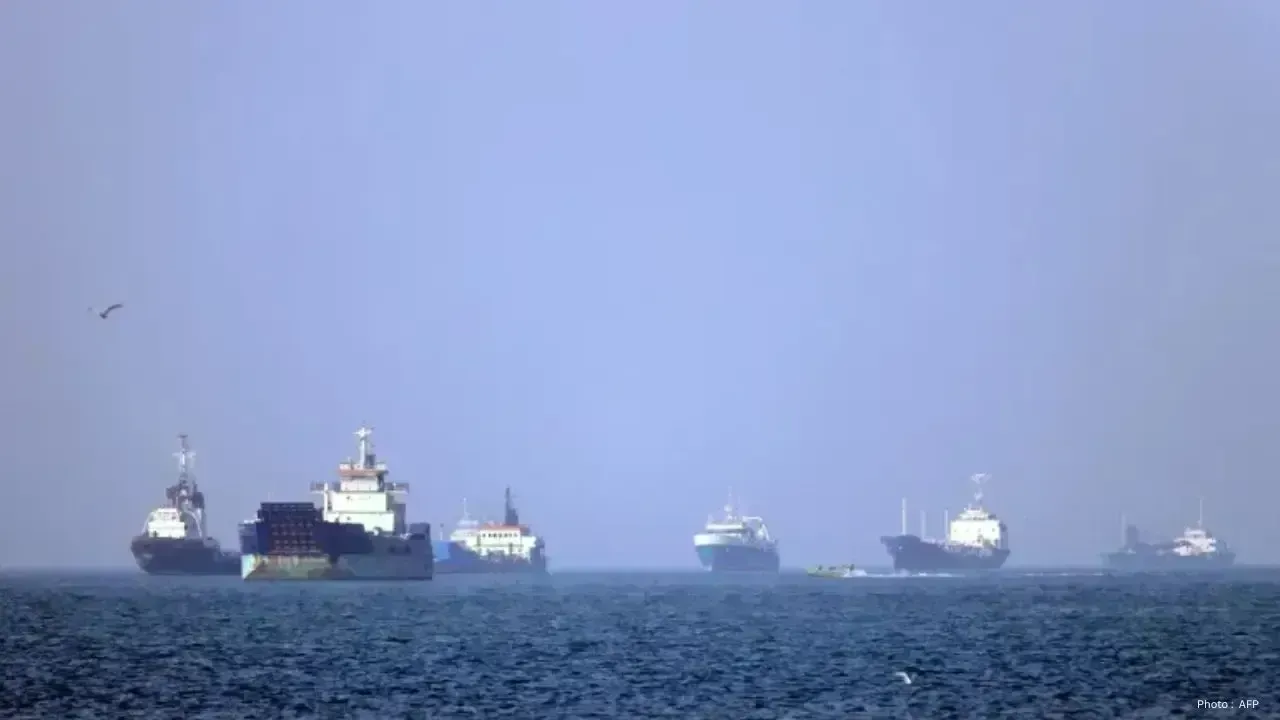
Thousands of seafarers working on cargo ships and oil tankers across the Middle East continue to face uncertainty as the United States and Iran discuss the possibility of a new peace agreement. While diplomatic talks have raised hopes of reduced tensions in the region, many sailors remain stranded at sea, unable to return home safely.
The ongoing conflict and military tensions involving Iran have severely affected international shipping routes, especially around the Strait of Hormuz, one of the world’s most important oil transport corridors. The situation has disrupted global trade, delayed shipments, and created serious challenges for maritime workers.
Many seafarers have now spent months working under stressful and dangerous conditions. Some crews are unable to dock at ports because of security concerns, while others are waiting for clearance to move through sensitive waters safely.
The current situation highlights one of the hidden human costs of geopolitical conflicts. While governments discuss diplomacy and military strategy, ordinary workers such as sailors, engineers, and cargo crews often face the biggest hardships. Many seafarers continue living in uncertainty far away from their families.
The Strait of Hormuz is extremely important for the global economy because a large percentage of the world’s oil passes through the narrow waterway every day. Any military tension in the region quickly affects shipping companies, oil prices, insurance costs, and international trade.
Since tensions between the US and Iran increased earlier this year, several shipping companies have changed routes or delayed operations to reduce risks. Some ships have faced electronic interference, security threats, and delays linked to military activity in the Gulf region.
For seafarers, these disruptions have created difficult working conditions. Long working hours, mental stress, delayed salaries, and uncertainty about safe passage have become major concerns. Maritime organizations and labor groups have repeatedly called for better protection and support for sailors operating in conflict zones.
At the same time, diplomatic discussions between the United States and Iran have created cautious optimism. Reports suggest both sides are considering measures that could reduce military tensions and improve regional stability. However, many experts believe the situation remains fragile and unpredictable.
The global shipping industry is closely watching these developments because peace in the region could help stabilize oil markets and reduce risks for commercial vessels. Lower tensions may also improve conditions for seafarers currently trapped in uncertain situations.
The crisis has also shown how deeply connected the modern global economy has become. A conflict in one region can quickly affect fuel prices, food supply chains, transportation costs, and international trade around the world.
Seafarers remain among the most important workers in the global economy, transporting oil, food, medical supplies, electronics, and industrial goods across continents. Yet their struggles often receive limited international attention unless major crises occur.
Human rights groups and maritime unions are now urging governments and international organizations to prioritize the safety and welfare of sailors during regional conflicts. Many experts believe stronger international protections are needed for maritime workers operating in dangerous areas.
As the US and Iran continue weighing a possible peace deal, thousands of stranded seafarers are still waiting for clarity, security, and a chance to return home safely. Their situation serves as a reminder that behind every geopolitical conflict are ordinary people whose lives are deeply affected by global tensions.






Anticipated Dates for UAE Eid Al Adha 2026 Unveiled by Astronomical Experts
Experts predict Eid Al Adha 2026 in the UAE to start on May 27, prompting early holiday planning amo

DAE Achieves Remarkable Growth in Q1 2026 With Record Revenue
Dubai Aerospace Enterprise announces impressive financial results for Q1 2026, reflecting a surge in

Price Increase for Sony PS5 in Southeast Asia Effective May 1
Sony announces a price increase for the PS5 across Southeast Asia starting May 1, 2026, impacting ga

Potential ‘Super El Niño’ in 2026: Understanding the Climate Risks
Could a Super El Niño emerge in 2026? Discover its implications and potential global climate impacts

Global Energy Crisis Intensifies: Markets React to Oil Supply Challenges
Markets are on edge as oil disruptions escalate, influencing prices and economic stability. Explore

Must-See Tourist Spots in London You Can't Overlook
Explore London's essential attractions, from royal landmarks to vibrant markets, ensuring an unforge




