Post by : Saif Nasser
An Italian court has ruled that the planned suspension bridge connecting Sicily to mainland Italy would violate European Union environmental and tender regulations. Despite this, Prime Minister Giorgia Meloni’s government has said it intends to continue pursuing the project, highlighting its strategic and economic importance.
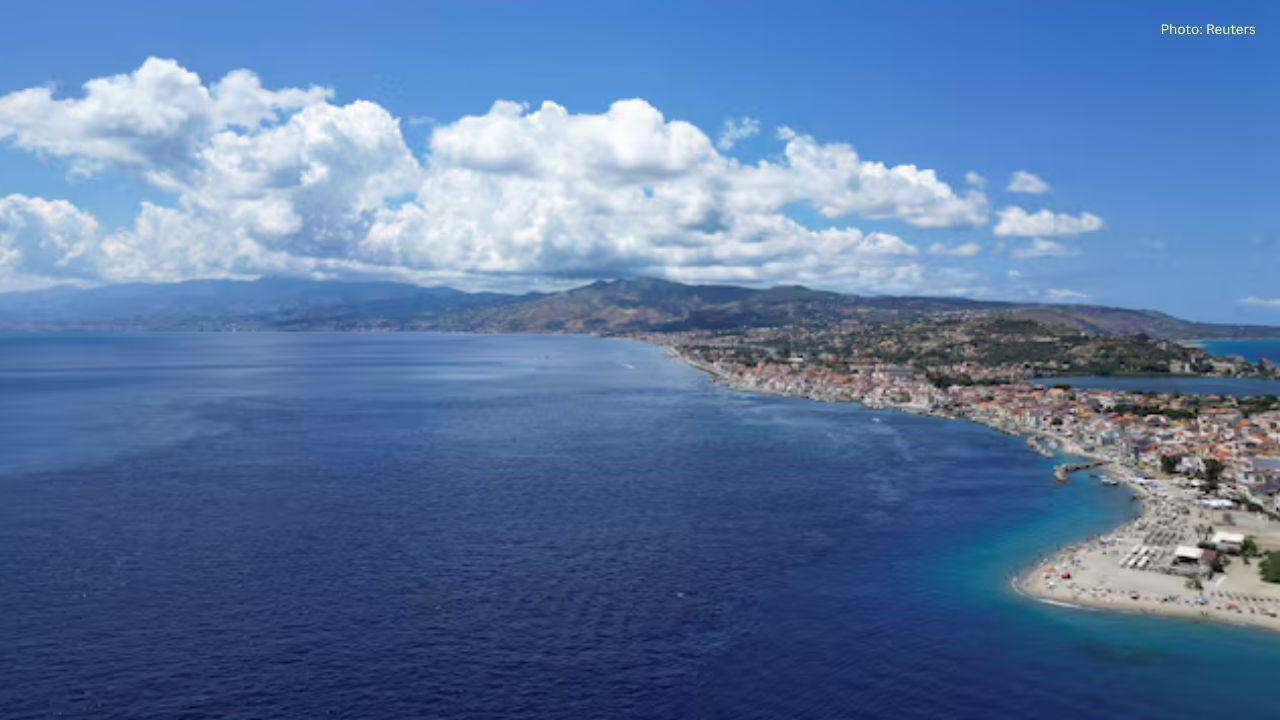
The bridge, which would span 3,666 metres over the Strait of Messina, is set to be the world’s largest suspension bridge, surpassing one in Turkey. The government argues the structure would boost the economy in southern Italy, a region historically less developed, and facilitate the movement of NATO troops across the Mediterranean.
In a detailed 33-page ruling, the Court of Auditors said the government failed to adequately justify moving forward despite environmental concerns. The court highlighted potential damage to coastal and marine areas in both Sicily and Calabria. It also criticized the government for lacking sufficient technical documentation to support claims of “public interest” for the €13.5 billion ($15.65 billion) project.
Cost uncertainties and significant changes in financing since the original 2005 plan were another point of concern. The judges noted that these variations, which make the project more than three times more expensive than initially planned, might require a new public tender to comply with EU regulations on fair bidding.
The Eurolink consortium, selected provisionally to build the bridge, includes Italy’s Webuild, Spanish construction firm Sacyr, and Japan’s IHI group. The consortium is responsible for managing the technical, financial, and logistical challenges of constructing such a large-scale infrastructure project in a seismically active region.
Critics have long argued that the bridge is economically risky and environmentally damaging. The Strait of Messina region is prone to earthquakes, and environmentalists warn that the construction could harm coastal ecosystems and marine life. Supporters, however, maintain that the bridge could transform southern Italy by boosting tourism, trade, and regional development.
Infrastructure Minister Matteo Salvini, a leading figure in the far-right League party, has called the bridge a national priority. The government stated it would carefully review the court’s decision and is confident that there is “ample room for clarification” to address the court’s concerns.
The Sicily bridge debate has been ongoing for over 50 years, reflecting a long-standing divide between development ambitions and environmental and regulatory concerns. With the government determined to press ahead, the project is likely to face further legal, technical, and political challenges before construction can begin.
In conclusion, while the court has temporarily blocked progress, Italy’s government sees the bridge as a symbol of economic growth and national strategy. Whether the project can move forward legally and practically remains a central question for the coming years.








Mattel Revives Masters of the Universe Action Figures Ahead of Film Launch
Mattel is reintroducing Masters of the Universe figures in line with its upcoming film, tapping into

China Executes 11 Members of Criminal Clan Linked to Myanmar Scam
China has executed 11 criminals associated with the Ming family, known for major scams and human tra

US Issues Alarm to Iran as Military Forces Deploy in Gulf Region
With a significant military presence in the Gulf, Trump urges Iran to negotiate a nuclear deal or fa

Copper Prices Reach Unprecedented Highs Amid Geopolitical Turmoil
Copper prices soar to all-time highs as geopolitical tensions and a weakening dollar boost investor

New Zealand Secures First Win Against India, Triumph by 50 Runs
New Zealand won the 4th T20I against India by 50 runs in Vizag. Despite Dube's impressive 65, India