Post by : Sami Jeet
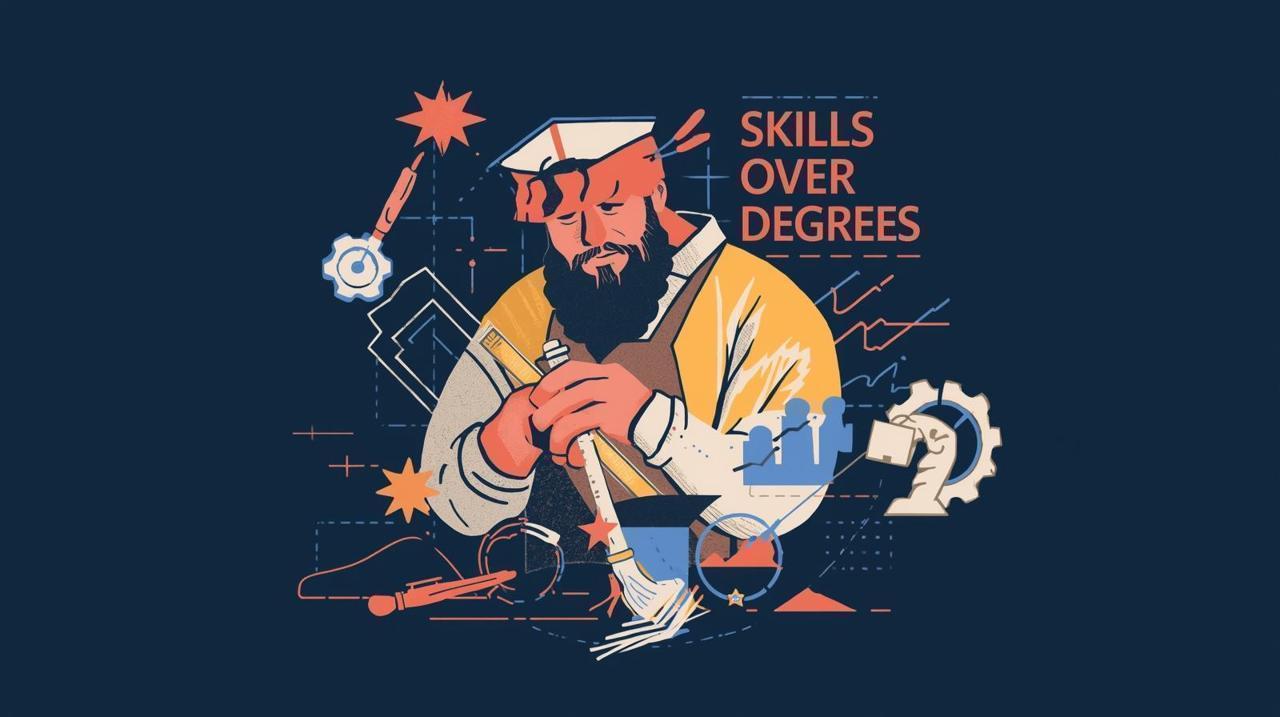
The landscape of the global job market is experiencing a transformative change. Historically, employers heavily relied on college degrees as the main criterion for recruitment. However, the advent of digital technologies, remote work options, and performance-oriented hiring practices are redefining this approach. In today’s market, organizations value problem-solving abilities, efficiency, and adaptability over mere academic qualifications. Consequently, skills-first hiring is emerging as a more accepted norm among employers in various sectors including technology, finance, marketing, logistics, healthcare, and creative industries. This article delves into the reasons behind the declining importance of degrees, the skills to focus on in the 2026 hiring landscape, and strategies for job seekers to remain competitive in this new environment.
Organizations are operating in fast-paced industries that outstrip the speed of conventional educational frameworks. A degree obtained four years ago may not align with the demands of today’s market. Companies require candidates who can immediately apply AI tools, code, manage systems, or generate content without waiting for a “perfect certificate.”
Industries are advancing too quickly for universities to adapt. Skills shortages have escalated, compelling employers to seek proficient talent. Practical skills can be assessed through tests, portfolios, and task-based interviews, which often reflect a candidate’s capability better than a degree.
This has driven companies to prioritize real-world aptitude over formal credentials.
Technology firms were pioneers in rejecting the necessity of degrees. Major global enterprises such as IBM, Google, Tesla, and Accenture have openly stated that formal qualifications are not essential for many roles.
Fields like coding, data analytics, cloud computing, cybersecurity, and AI operations demand extensive practical experience. Skills can be swiftly obtained online, far quicker than curricula can be adapted by universities. Portfolios and project samples provide a clearer demonstration of a candidate’s competence than traditional grading systems.
This mindset is gaining traction across diverse industries.
Contemporary employers are more interested in tangible evidence of work than simply certificates.
A digital portfolio that highlights real-world projects. A GitHub profile for developers. Design collections for creative roles. Case studies for marketers. Authentic performance ensures employers that the applicant can contribute from day one.
Portfolio-focused hiring is superseding degree-based evaluations, as it showcases measurable skills.
Remote work has unlocked a global talent pool, enabling companies to hire from anywhere.
Global talent includes individuals who have acquired skills beyond university settings. Organizations are now looking for effective workers rather than just degree holders. Practical competencies are prioritized in remote and distributed teams.
As businesses acknowledge that top talent can emerge from anywhere, the significance of degrees diminishes further.
Soft skills, once deemed secondary, have emerged as crucial assets. These encompass communication, time management, adaptability, problem-solving, and critical thinking.
Soft skills directly influence workplace efficiency more than academic performance. Remote teams require adept communicators who can resolve issues autonomously. Leaders must demonstrate creativity to navigate uncertain scenarios.
Such skills are typically developed through experience, not through degree programs.
AI has streamlined repetitive tasks, making “learnability” a crucial skill of the modern workforce.
The capacity to acquire new tools quickly. Adapting to changing processes. Keeping up with industry advancements.
Employers now seek candidates who can grow alongside technology rather than merely those with traditional qualifications.
Software development. Digital marketing. UI/UX design. E-commerce operations. Cybersecurity. Data analytics. Content creation. Customer support. Virtual assistance.
In these domains, demonstrable skills carry more weight than a formal degree.
While some fields still favor academic credentials, they are beginning to lean towards skill assessments.
Banking (required skills: regulatory knowledge, data analysis). Healthcare management. Educational technology roles. Engineering leadership.
These sectors are now implementing tests, simulations, and scenario-driven interviews for a more effective evaluation of candidates.
Although many sectors are diminishing the importance of degrees, specific roles still mandate them due to regulatory or technical requirements.
Medical practitioners. Legal professionals. Civil engineers. Certified accountants. Flight pilots.
These positions involve compliance, licensing, or critical responsibilities.
Instead of relying solely on academic qualifications, aspirants should emphasize skill development and demonstrable effectiveness.
Enhance your skill set through online learning, internships, and practical projects. Build a portfolio highlighting relevant work. Cultivate strong digital communication skills. Master industry-specific tools. Stay abreast of trends in AI and automation.
By adopting these strategies, job seekers can enhance their value beyond candidates who solely depend on degrees.
Organizations that adopt skills-based hiring experience expedited onboarding, improved performance, and decreased hiring risks.
Reduced time spent training new hires. Increased productivity. Broader hiring pools. Enhanced cultural alignment due to clearer expectations.
This method is both cost-effective and driven by performance.
The global hiring landscape is reshaping itself to emphasize skills, adaptability, and proven effectiveness. While degrees maintain their relevance, they no longer serve as the definitive key to employment. Employers today seek individuals who can deliver value from the onset. By honing practical skills, engaging in real-world projects, and cultivating essential soft abilities, candidates can maintain their relevance in the evolving job market. Skills-first hiring is not just a passing trend—it signifies the future of the global workforce.
This article aims to provide general information and does not constitute professional career, educational, or legal advice. Hiring methodologies differ widely across sectors, regions, and companies, so readers should evaluate their specific career aspirations or consult qualified professionals before making decisions based on this content.









Anticipated Dates for UAE Eid Al Adha 2026 Unveiled by Astronomical Experts
Experts predict Eid Al Adha 2026 in the UAE to start on May 27, prompting early holiday planning amo

DAE Achieves Remarkable Growth in Q1 2026 With Record Revenue
Dubai Aerospace Enterprise announces impressive financial results for Q1 2026, reflecting a surge in

Price Increase for Sony PS5 in Southeast Asia Effective May 1
Sony announces a price increase for the PS5 across Southeast Asia starting May 1, 2026, impacting ga

Potential ‘Super El Niño’ in 2026: Understanding the Climate Risks
Could a Super El Niño emerge in 2026? Discover its implications and potential global climate impacts

Global Energy Crisis Intensifies: Markets React to Oil Supply Challenges
Markets are on edge as oil disruptions escalate, influencing prices and economic stability. Explore

Must-See Tourist Spots in London You Can't Overlook
Explore London's essential attractions, from royal landmarks to vibrant markets, ensuring an unforge




