Post by : Saif Nasser
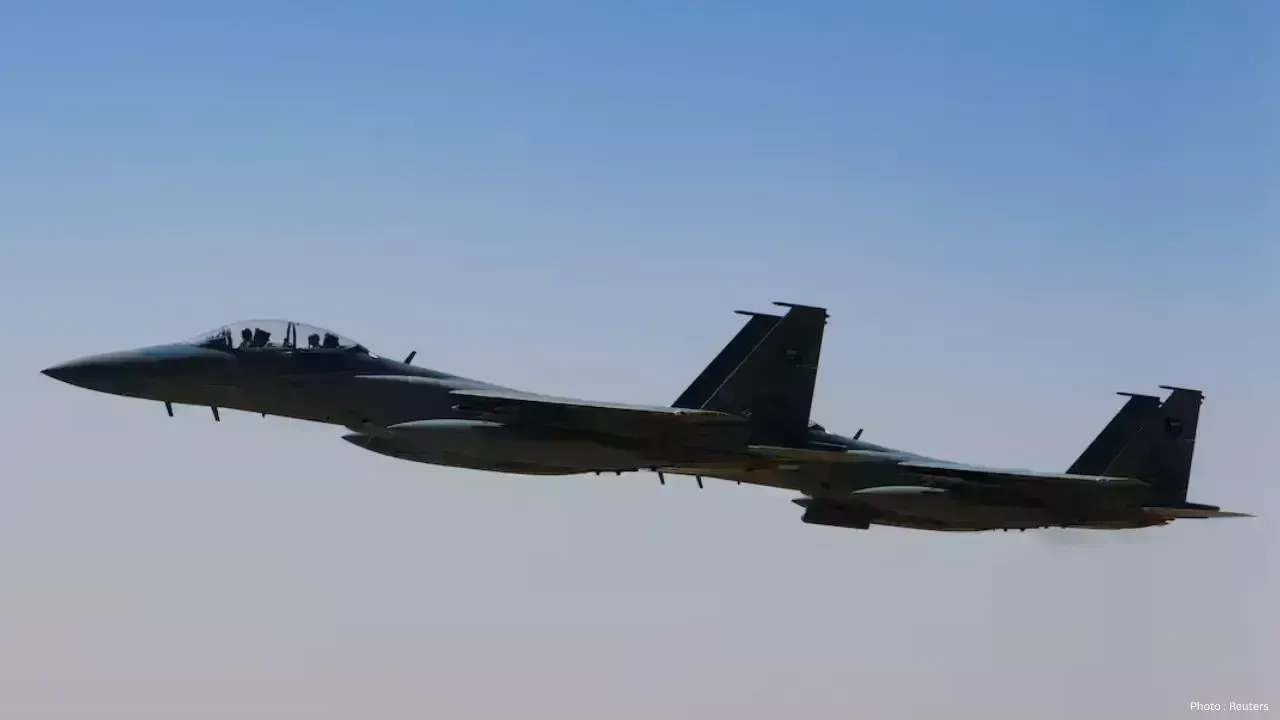
Middle East is once again facing serious tension after reports claimed that Saudi Arabia secretly launched military strikes inside Iran during the recent regional conflict.
According to reports, Saudi Arabia carried out covert attacks in late March in response to missile and drone strikes that had targeted Saudi territory during the ongoing Iran conflict. If confirmed, this would mark one of the most serious direct confrontations between the two regional powers in recent years.
Saudi Arabia and Iran are among the most influential countries in the Middle East. For decades, both nations have competed for regional influence through political pressure, support for allied groups, and indirect conflicts across countries such as Yemen, Syria, Iraq, and Lebanon. A direct military clash between Riyadh and Tehran could significantly increase instability across the region.
The reported attacks allegedly took place after repeated missile and drone strikes targeted Saudi infrastructure and security installations. While the exact locations of the strikes were not publicly disclosed, the reports suggested that Saudi military forces carried out limited operations inside Iranian territory. Neither side fully confirmed the claims publicly, adding more uncertainty to an already tense situation.
The latest developments come during a period of wider regional conflict involving several countries and armed groups. Tensions have continued to rise after recent military operations involving Iran, Israel, and allied forces. As fighting expanded across the region, concerns grew that Gulf nations could become directly involved in the conflict.
Saudi Arabia has traditionally relied heavily on support from Western allies, especially the United States, for defense and regional security. However, the recent reports suggest the kingdom may now be taking a more direct role in protecting its national interests and responding to security threats.
The Gulf region is one of the world’s most important energy hubs. Any military confrontation involving Saudi Arabia and Iran immediately raises fears about global oil supplies and shipping routes. The Strait of Hormuz, located near Iran, is especially important because a large portion of the world’s oil exports passes through the narrow waterway every day.
As tensions increased, concerns also spread through international financial markets. Rising fears of conflict in the Gulf have already affected oil prices and investor confidence. Many countries worry that a wider war could damage global trade, increase fuel costs, and create economic instability around the world.
Reports also suggested that after the alleged Saudi strikes, direct attacks against Saudi territory temporarily reduced. This raised hopes that behind-the-scenes diplomatic efforts may still be continuing between regional powers to prevent the conflict from expanding further.
Even with temporary calm, the overall situation remains dangerous. The Middle East has already experienced years of instability caused by wars, political rivalries, and armed conflicts. Any direct military confrontation between Saudi Arabia and Iran could pull other countries into the crisis and create a much larger regional war.
The humanitarian risks are also serious. Conflicts in the Middle East often lead to civilian suffering, displacement, economic hardship, and destruction of infrastructure. Oil facilities, airports, ports, and energy networks could become major targets if fighting intensifies further.
The reports also highlight how modern conflicts are increasingly being fought through covert operations, cyber activities, drones, and limited military strikes that are not always officially acknowledged. This creates uncertainty because the public often receives incomplete information while tensions continue to rise behind the scenes.
Diplomatic efforts are now more important than ever. Many international leaders are expected to push for restraint and dialogue to avoid a wider regional conflict. Peace talks and negotiations may become critical in preventing further escalation between rival powers in the Gulf.
At the same time, deep mistrust between Iran and several Gulf nations continues to make long-term peace difficult. Years of political rivalry and regional competition have created tensions that cannot be solved quickly.
The latest developments serve as another reminder that peace in the Middle East remains fragile. A single military incident or miscalculation could rapidly increase tensions and push the region toward a larger conflict with global consequences.






Anticipated Dates for UAE Eid Al Adha 2026 Unveiled by Astronomical Experts
Experts predict Eid Al Adha 2026 in the UAE to start on May 27, prompting early holiday planning amo

DAE Achieves Remarkable Growth in Q1 2026 With Record Revenue
Dubai Aerospace Enterprise announces impressive financial results for Q1 2026, reflecting a surge in

Price Increase for Sony PS5 in Southeast Asia Effective May 1
Sony announces a price increase for the PS5 across Southeast Asia starting May 1, 2026, impacting ga

Potential ‘Super El Niño’ in 2026: Understanding the Climate Risks
Could a Super El Niño emerge in 2026? Discover its implications and potential global climate impacts

Global Energy Crisis Intensifies: Markets React to Oil Supply Challenges
Markets are on edge as oil disruptions escalate, influencing prices and economic stability. Explore

Must-See Tourist Spots in London You Can't Overlook
Explore London's essential attractions, from royal landmarks to vibrant markets, ensuring an unforge




