Post by : Shakul
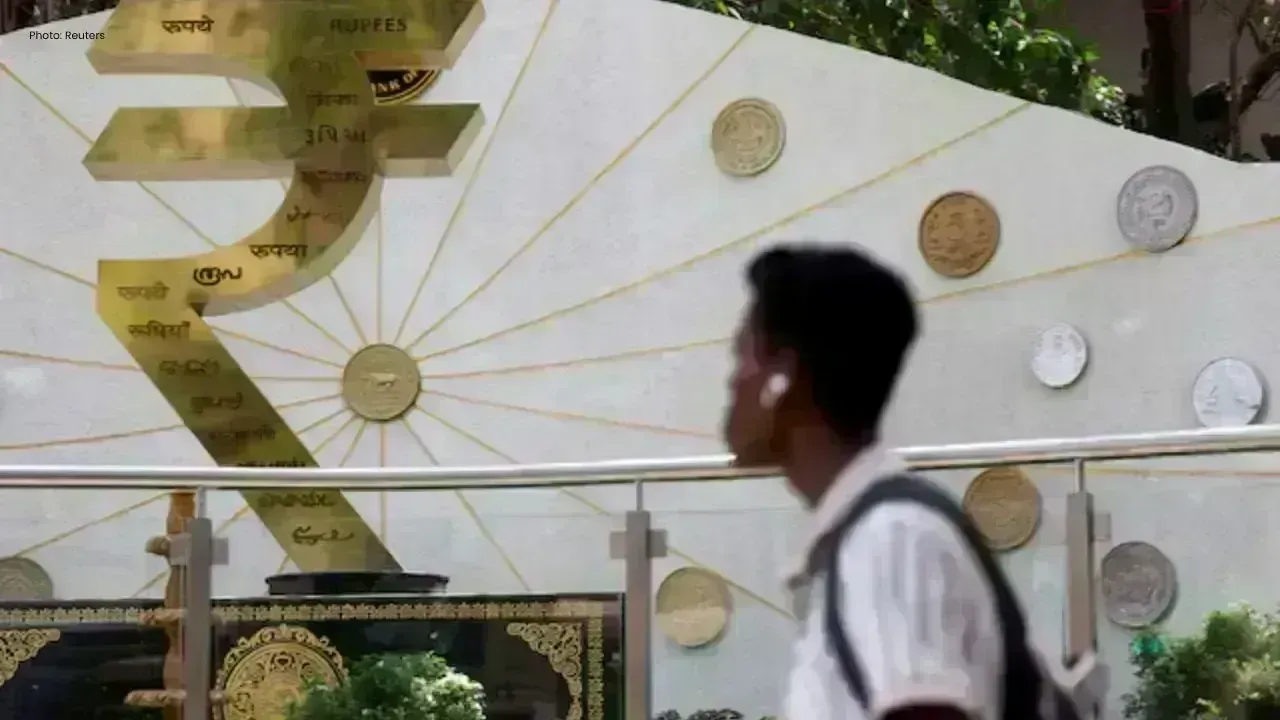
India’s central bank is actively examining various strategies to counter the depreciation of the rupee, including the potential of raising interest rates. A confidential Bloomberg News report has revealed that senior officials at the Reserve Bank of India (RBI) are engaged in discussions following the recent swift drop in the Indian currency.
The report highlighted that RBI Governor Sanjay Malhotra and other high-ranking officials have convened multiple meetings to evaluate the market landscape and deliberate on feasible monetary policy actions. These talks arise as the rupee continues to face intense pressure amid global economic unrest and heightened anxieties in financial markets.
Market observers speculate that the RBI may contemplate tightening its monetary policy if the currency continues its downward trend. Typically, a rate increase is employed to attract foreign investment and manage inflation, though it might also have repercussions on borrowing expenses and economic expansion.
The declining rupee has triggered worries for importers and businesses reliant on international trade. A weaker currency escalates the expenses of imported commodities such as crude oil, electronics, and manufacturing materials, potentially exerting further inflationary pressure domestically.
Financial analysts suggest that the RBI might also use its foreign currency reserves and market intervention techniques to regulate currency instability before opting for more drastic measures like hiking interest rates. Historically, India’s central bank has intervened in the currency markets to inhibit excessive volatility in the rupee.
This situation emerges as many emerging market currencies are subjected to strain due to global economic unpredictability, elevated US interest rates, and fluctuating investor sentiment. Recent weeks have witnessed a surge in currency market volatility throughout Asia due to shifting global financial circumstances.
Notwithstanding these trials, economists assert that India’s economic fundamentals are comparatively robust next to a number of other developing economies. However, sustained pressure on the rupee may compel policymakers to adopt more stringent measures to uphold financial stability and investor confidence.
Investors and market participants are vigilantly observing forthcoming RBI policy indicators and government measures as apprehensions surrounding inflation, capital inflows, and currency stability take center stage in India's economic discourse.










Anticipated Dates for UAE Eid Al Adha 2026 Unveiled by Astronomical Experts
Experts predict Eid Al Adha 2026 in the UAE to start on May 27, prompting early holiday planning amo

DAE Achieves Remarkable Growth in Q1 2026 With Record Revenue
Dubai Aerospace Enterprise announces impressive financial results for Q1 2026, reflecting a surge in

Price Increase for Sony PS5 in Southeast Asia Effective May 1
Sony announces a price increase for the PS5 across Southeast Asia starting May 1, 2026, impacting ga

Potential ‘Super El Niño’ in 2026: Understanding the Climate Risks
Could a Super El Niño emerge in 2026? Discover its implications and potential global climate impacts

Global Energy Crisis Intensifies: Markets React to Oil Supply Challenges
Markets are on edge as oil disruptions escalate, influencing prices and economic stability. Explore

Must-See Tourist Spots in London You Can't Overlook
Explore London's essential attractions, from royal landmarks to vibrant markets, ensuring an unforge




