Post by : Monika
On September 29, 2025, the United Nations introduced a comprehensive plan aimed at resolving the Israeli-Palestinian conflict through a two-state solution. This plan, developed from a July conference hosted by Saudi Arabia and France, outlines a series of "tangible, timebound, and irreversible steps" to establish peace between Israel and Palestine. Notably, the plan envisions a significant role for the Palestinian Authority (PA) in the governance and reconstruction of Gaza, contingent upon substantial reforms.
Background of the UN Plan
The UN-backed initiative emerged from an international conference held at the United Nations in July 2025, co-hosted by Saudi Arabia and France. The conference aimed to address the ongoing Israeli-Palestinian conflict and explore pathways toward a peaceful resolution. Despite the absence of the United States and Israel from the conference, the plan garnered widespread international support.
On September 12, 2025, the UN General Assembly adopted a resolution endorsing the two-state plan, with 142 votes in favor, 10 against, and 12 abstentions. The plan outlines a framework for the establishment of a Palestinian state alongside Israel, emphasizing the need for immediate cessation of hostilities, humanitarian aid, and the implementation of democratic reforms within Palestinian governance structures.
Role of the Palestinian Authority
Under the UN-backed plan, the Palestinian Authority is envisioned to play a central role in the governance of Gaza and the broader peace process. The plan proposes the formation of a transitional administrative committee, composed of qualified Palestinians and international experts, to oversee the day-to-day operations in Gaza.
This committee would be responsible for implementing reconstruction efforts, ensuring the delivery of humanitarian aid, and establishing the foundations for democratic governance. The Palestinian Authority's involvement is contingent upon its commitment to comprehensive reforms, including the disarmament of militant groups and the establishment of a transparent and accountable political system.
International Oversight and Support
The plan emphasizes the importance of international oversight to ensure the successful implementation of the proposed measures. A transitional governing body, under the supervision of international entities, would manage the reconstruction and stabilization efforts in Gaza. This body would work closely with the Palestinian Authority to facilitate the transition towards self-governance and statehood. The involvement of international experts and organizations is deemed crucial to provide technical assistance, monitor progress, and address challenges that may arise during the implementation phase.
Challenges and Considerations
While the UN-backed plan offers a structured approach to achieving a two-state solution, several challenges must be addressed to ensure its success. The Palestinian Authority faces internal divisions, with factions such as Hamas exerting significant influence in Gaza.
The plan's success hinges on the PA's ability to unify Palestinian political factions and establish a cohesive leadership that can effectively govern and implement the proposed reforms. Additionally, the plan requires the cessation of hostilities and the establishment of a secure environment conducive to reconstruction and development. The cooperation of Israel and other regional actors is also essential to facilitate the implementation of the plan's provisions.
Humanitarian and Reconstruction Efforts
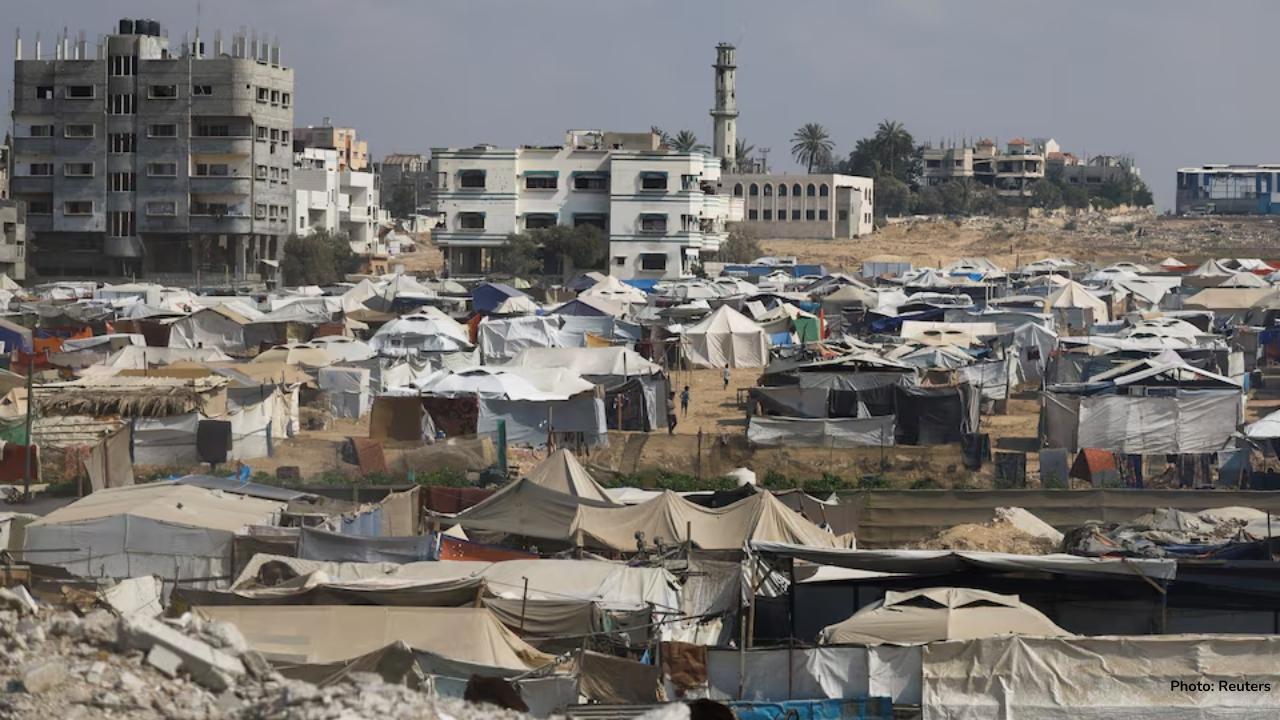
The plan also addresses urgent humanitarian needs in Gaza. Years of conflict have left infrastructure, hospitals, schools, and utilities severely damaged. The transitional committee, along with the Palestinian Authority, would coordinate the delivery of essential services, reconstruction projects, and social support programs. International oversight is expected to ensure transparency, efficiency, and fair allocation of aid, while preventing corruption and mismanagement.
Political Implications
The success of the plan depends on the willingness of Palestinian and Israeli leaders to compromise and implement reforms. For the Palestinian Authority, this involves taking responsibility for governance, maintaining law and order, and demonstrating accountability to the population.
For Israel, it involves allowing the Palestinian Authority the space and support needed to govern effectively while addressing security concerns. The plan also emphasizes collaboration with the international community to maintain trust and prevent renewed violence.
Regional and International Support
The plan has received strong support from key regional players, including Saudi Arabia, France, and other members of the Arab League. They view a stable and functional Palestinian Authority as critical to achieving long-term peace and stability in the Middle East. International support includes financial aid, technical assistance, and diplomatic backing to strengthen the Palestinian Authority and ensure effective implementation of the plan.
The UN-backed two-state plan represents a major effort by the international community to resolve the Israeli-Palestinian conflict and create a framework for peaceful coexistence. The Palestinian Authority's role is central, requiring significant reforms, effective governance, and the ability to manage Gaza’s reconstruction and humanitarian needs.
The success of the plan depends on cooperation among the Palestinian Authority, Israel, and the international community. If successfully implemented, it could pave the way for a sustainable peace and the establishment of a recognized Palestinian state alongside Israel, fulfilling decades-long aspirations for stability in the region.








Anticipated Dates for UAE Eid Al Adha 2026 Unveiled by Astronomical Experts
Experts predict Eid Al Adha 2026 in the UAE to start on May 27, prompting early holiday planning amo

DAE Achieves Remarkable Growth in Q1 2026 With Record Revenue
Dubai Aerospace Enterprise announces impressive financial results for Q1 2026, reflecting a surge in

Price Increase for Sony PS5 in Southeast Asia Effective May 1
Sony announces a price increase for the PS5 across Southeast Asia starting May 1, 2026, impacting ga

Potential ‘Super El Niño’ in 2026: Understanding the Climate Risks
Could a Super El Niño emerge in 2026? Discover its implications and potential global climate impacts

Global Energy Crisis Intensifies: Markets React to Oil Supply Challenges
Markets are on edge as oil disruptions escalate, influencing prices and economic stability. Explore

Must-See Tourist Spots in London You Can't Overlook
Explore London's essential attractions, from royal landmarks to vibrant markets, ensuring an unforge




