Post by : Priya
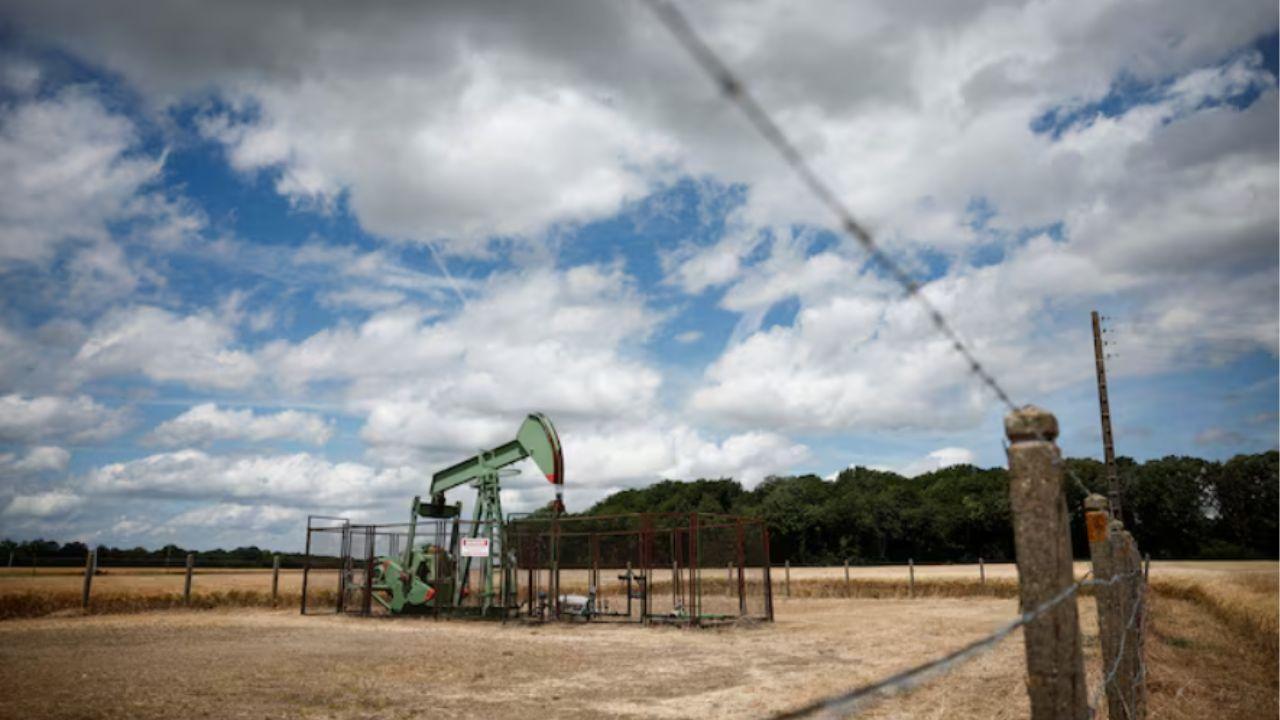
Photo:Reuters
Global oil markets have seen a notable downturn in prices, driven by a combination of increased supply from the OPEC+ alliance and a significant reduction in geopolitical tensions in the Middle East. These developments have shifted the outlook for crude, with both immediate and longer-term implications for producers, consumers, and the broader global economy.
OPEC+ Accelerates Output Increases
The Organization of the Petroleum Exporting Countries and its allies, collectively known as OPEC+, have been at the center of the recent oil market movements. In July 2025, eight OPEC+ countries, including major players such as Saudi Arabia, Russia, Iraq, the UAE, Kuwait, Kazakhstan, Algeria, and Oman, announced a substantial production hike of 411,000 barrels per day (bpd). This increase is notably larger than the initially planned boost of 134,000 bpd for the same period.
This July increase follows similar output adjustments in the preceding months—May and June—each seeing a comparable rise of 411,000 bpd. The move is part of a broader strategy to gradually unwind the voluntary output cuts of 2.2 million bpd that had been in place since late 2023, originally intended to support prices amid market uncertainty. The unwinding process is scheduled to continue through September 2026, reflecting a deliberate, phased approach to restoring supply.
OPEC+ is set to convene again on July 6, where another output hike for August is expected to be formalized, which would mark the fifth consecutive monthly increase since the group began reversing its cuts in April. If the planned August increase proceeds, OPEC+ will have added a total of 1.78 million bpd to global supply in 2025, accounting for more than 1.5% of worldwide oil demand.
Oil Price Movements and Market Reactions
The immediate market response to these supply developments has been a decline in oil prices. Brent crude futures for August delivery dropped by 66 cents (0.97%) to $67.11 per barrel, while the more active September contract fell to $65.97. U.S. West Texas Intermediate (WTI) crude also saw a decrease, down 94 cents (1.43%) to $64.58 per barrel.
These declines followed a period of heightened volatility. In June, oil benchmarks posted their largest weekly drop since March 2023, yet prices managed to finish the month with a second consecutive monthly gain of over 5%. This underscores the dynamic interplay between supply-side decisions and broader market sentiment.
Middle East Peace Reduces Geopolitical Risk Premium
A major factor behind the recent price drop has been the easing of geopolitical risks in the Middle East. Tensions had escalated sharply in mid-June after Israel targeted Iranian nuclear facilities, prompting a brief but intense conflict that saw Brent crude surge above $80 per barrel following U.S. military strikes on Iran. However, the announcement of a ceasefire between Iran and Israel by U.S. President Donald Trump led to a rapid unwinding of the geopolitical risk premium, with prices slumping back to the $67 range.
Analysts note that the market has now largely stripped out the additional risk pricing that had been factored in during the conflict. As Tony Sycamore of IG Markets observed, the ceasefire has removed much of the uncertainty that had been supporting higher prices, allowing fundamentals such as supply and demand to reassert themselves.
Demand Uncertainty and Economic Headwinds
While increased supply and geopolitical stability have weighed on prices, demand-side uncertainties remain a concern. The prospect of higher U.S. tariffs, with a temporary suspension set to expire on July 9, has raised questions about the potential impact on global economic growth and, by extension, oil demand. U.S. Treasury Secretary Scott Bessent has warned that countries could face significantly higher tariffs if trade negotiations are not concluded in time, adding another layer of uncertainty to the demand outlook.
In the U.S., the number of active oil rigs—a key indicator of future production—fell to its lowest level since October 2021, suggesting that domestic output may not keep pace with OPEC+ increases in the near term.










DAE Achieves Remarkable Growth in Q1 2026 With Record Revenue
Dubai Aerospace Enterprise announces impressive financial results for Q1 2026, reflecting a surge in

Price Increase for Sony PS5 in Southeast Asia Effective May 1
Sony announces a price increase for the PS5 across Southeast Asia starting May 1, 2026, impacting ga

Potential ‘Super El Niño’ in 2026: Understanding the Climate Risks
Could a Super El Niño emerge in 2026? Discover its implications and potential global climate impacts

Global Energy Crisis Intensifies: Markets React to Oil Supply Challenges
Markets are on edge as oil disruptions escalate, influencing prices and economic stability. Explore

Must-See Tourist Spots in London You Can't Overlook
Explore London's essential attractions, from royal landmarks to vibrant markets, ensuring an unforge

Ultimate Guide to Snagging Cheap Flights in 2026
Unlock the secrets to booking affordable flights in 2026 with insightful tips and strategies tailore




