Post by : Shakul
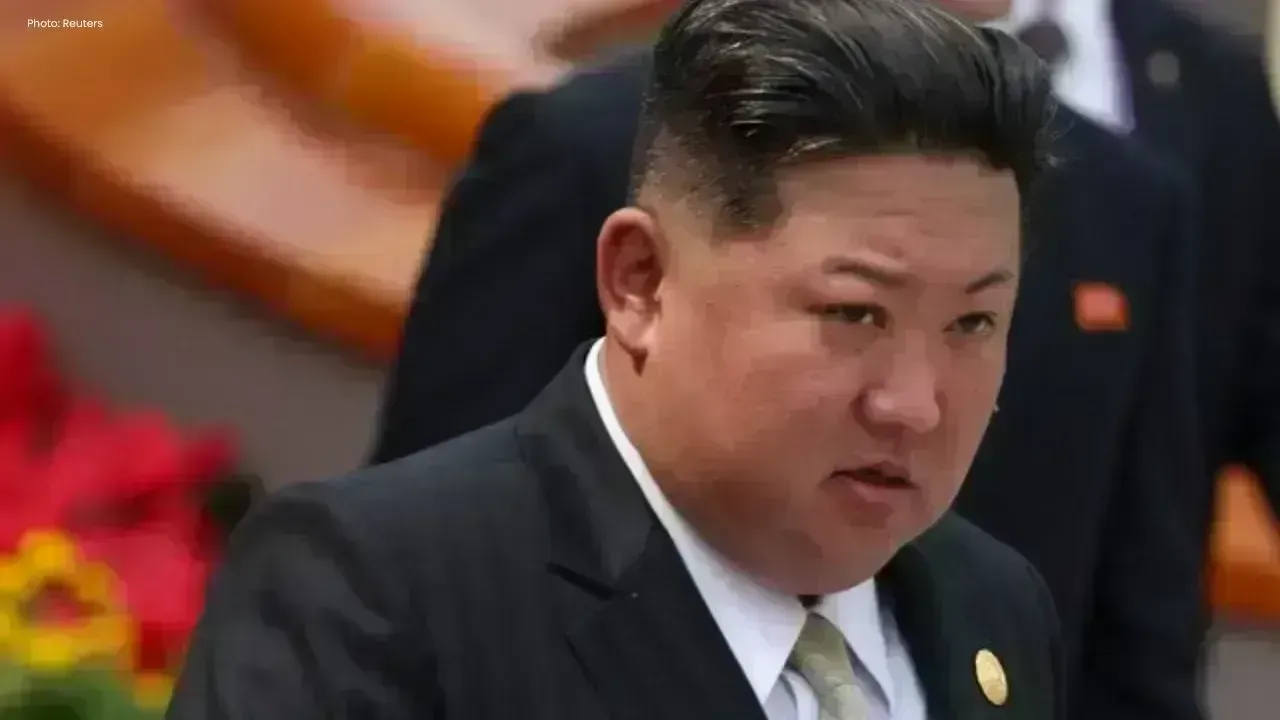
North Korea is said to have enacted a new nuclear policy permitting an automatic nuclear strike should there be an attempt on the life of its leader, Kim Jong Un, or if he is severely incapacitated during a foreign aggression. International media sources reported that this constitutional change was ratified during the initial session of North Korea’s 15th Supreme People’s Assembly on March 22 in Pyongyang. This development raises significant global alarm regarding security in the region and potential rises in military hostilities on the Korean Peninsula.
The adjustment to the policy is understood to enhance North Korea’s nuclear command framework by clearly defining reaction protocols in the face of attacks on the nation's leadership. Kim Jong Un continues to hold the position of supreme commander of the nation’s nuclear forces; however, the new provisions indicate that if the command-and-control structure for nuclear operations is jeopardized by external threats, a nuclear attack would be executed automatically and without delay.
Reports also reveal that senior South Korean officials were briefed on the constitutional modifications by the National Intelligence Service. Analysts believe that this revised policy is reflective of increasing anxieties within North Korea about the survival of its leadership amid military threats. This change reportedly follows months after high-profile Iranian leaders, such as Supreme Leader Ayatollah Ali Khamenei, faced alleged assassinations during U.S. and Israeli military initiatives.
Experts assert that events in Iran may have played a role in shaping North Korea's strategic decisions. Professor Andrei Lankov from Kookmin University noted that while North Korea may have previously held a similar military doctrine internally, this constitutional adjustment assigns it greater legal and political weight. Many observers speculate that Pyongyang is particularly wary of potential "decapitation strikes" aimed at its leadership in any forthcoming conflicts.
In contrast to many global nations, North Korea ranks as one of the most isolated countries, characterized by stringent security measures. Foreign visitors, including diplomats, humanitarian workers, and business personnel, face intense scrutiny from government authorities. Analysts highlight that carrying out intelligence operations akin to those seen in Iran would considerably more challenging in North Korea, given the limited monitoring frameworks, restricted internet availability, and stringent state control over communications.
Additionally, reports indicate that Kim Jong Un continues to enforce exceptionally rigorous personal security protocols. He is well-known for traveling under heavy protection and typically opts for armored trains over air travel. Analysts contend that North Korea's principal concern now revolves around the potential for satellite tracking technologies and advanced military intelligence systems that could observe leadership movements in conflict scenarios.
Beyond the nuclear policy changes, North Korea also appears poised to deploy a novel long-range artillery system near its border with South Korea later this year. State media have reported that Kim recently examined a newly crafted 155-millimeter self-propelled gun-howitzer, capable of striking targets up to 37 miles away. Given that central Seoul lies in close proximity to the border, military analysts suggest that the introduction of this artillery may significantly amplify regional security concerns and further elevate tensions between the North and South.






Anticipated Dates for UAE Eid Al Adha 2026 Unveiled by Astronomical Experts
Experts predict Eid Al Adha 2026 in the UAE to start on May 27, prompting early holiday planning amo

DAE Achieves Remarkable Growth in Q1 2026 With Record Revenue
Dubai Aerospace Enterprise announces impressive financial results for Q1 2026, reflecting a surge in

Price Increase for Sony PS5 in Southeast Asia Effective May 1
Sony announces a price increase for the PS5 across Southeast Asia starting May 1, 2026, impacting ga

Potential ‘Super El Niño’ in 2026: Understanding the Climate Risks
Could a Super El Niño emerge in 2026? Discover its implications and potential global climate impacts

Global Energy Crisis Intensifies: Markets React to Oil Supply Challenges
Markets are on edge as oil disruptions escalate, influencing prices and economic stability. Explore

Must-See Tourist Spots in London You Can't Overlook
Explore London's essential attractions, from royal landmarks to vibrant markets, ensuring an unforge




