Post by : Anees Nasser
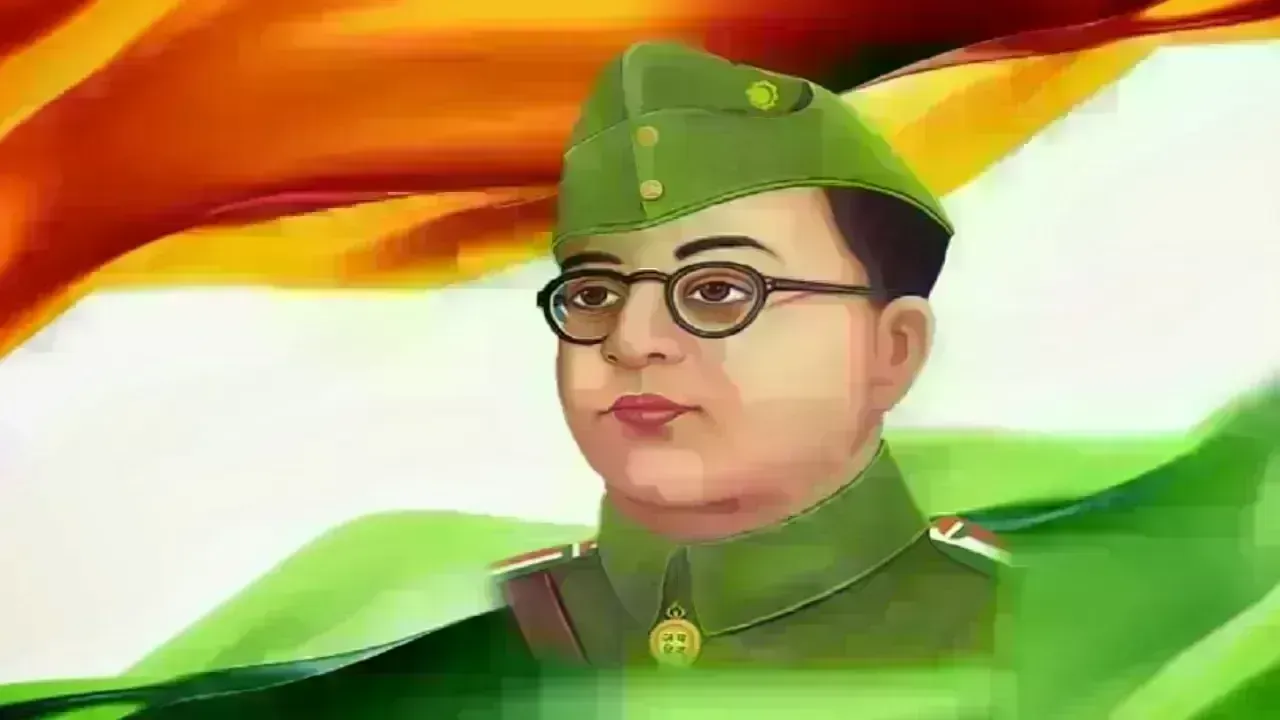
Each year on 23 January, India commemorates Netaji Subhas Chandra Bose, a pivotal figure in the nation’s quest for freedom. In 2021, this day was designated Parakram Diwas by the Government of India, as a homage to his exceptional bravery, vision, and selfless dedication to the nation. The observance of his birth anniversary in 2026 marks the 129th anniversary of his birth and carries immense significance as the nation reflects on his enduring legacy in modern times.
Netaji Subhas Chandra Bose was born on 23 January 1897 in Cuttack, in the present-day Indian state of Odisha. Coming from a well-educated household, Bose exhibited exceptional academic talent from a young age. He completed his initial schooling in India before proceeding to England to prepare for the Indian Civil Services (ICS) examination. Despite excelling in the early stages, he chose to forsake a promising career in civil services to return to India and advocate for independence.
Upon his return to India, Bose joined the Indian National Congress, rapidly rising through its ranks due to his fervent nationalism, compelling speeches, and steadfast commitment to India’s freedom. His ideology favored active resistance over passive methods. He famously asserted that freedom and dignity should be claimed through collective effort, a principle that guided his entire political career.
Bose held the Presidency of the Indian National Congress twice, in 1938 and 1939. However, differing opinions with senior leaders regarding non-violence led him to step down from the Congress presidency. His unwavering commitment to assertive strategies against British rule distinguished him within the struggle for freedom.
Following his departure from Congress leadership, Netaji established the Forward Bloc in 1939—a political entity aimed at uniting all anti-British forces to intensify the independence struggle. The Forward Bloc played a significant role in mobilizing youth and revitalizing nationalist sentiments throughout the country.
Bose’s most significant legacy may well be his leadership of the Indian National Army (Azad Hind Fauj), which he reorganized with the backing of Indian expatriates and World War II captives. The INA fought alongside Japan against British forces, propelled by Bose’s rallying call: “Give me blood, and I shall give you freedom.” This audacious approach underscored his commitment to gaining independence at any cost, inspiring countless Indians in the process.
The Indian government officially designated Netaji’s birth anniversary as Parakram Diwas in 2021, underscoring values such as courage, resilience, and selfless service. This recognition transcends ceremonial tribute; it aims to inspire succeeding generations with Netaji’s spirit of fearless leadership. The observance reinforces the idea that the pursuit of national objectives demands unwavering determination.
In 2026, Parakram Diwas ceremonies are planned nationwide to honor Netaji’s 129th birth anniversary, featuring events organized by the Ministry of Culture at prominent locations, with the main function set to take place at Sri Vijaya Puram in the Andaman and Nicobar Islands.
On this occasion, government institutions, cultural organizations, educational bodies, and citizens nationwide host events to honor Netaji’s contributions. Flag hoisting, patriotic performances, essay competitions, and exhibitions presenting his life story are prevalent in schools and universities. These activities aim to cultivate a sense of patriotism and commitment to national progress among the young.
Political leaders, including the Vice-President of India, perform special visits across states to engage in commemorative events and pay homage to Netaji. In 2026, the Vice-President will visit Odisha and West Bengal—regions deeply connected to Bose—to partake in Parakram Diwas festivities.
Netaji Subhas Chandra Bose’s legacy extends far beyond India’s freedom struggle. His emphasis on self-belief, strategic thinking, and collective sacrifice resonates in ongoing discussions about national rejuvenation today. His life continues to inspire leadership paradigms that prioritize courage, strategic boldness, and collective discipline over individual gains.
Bose’s narrative is widely integrated into educational curriculums, cultural discussions, and patriotic celebrations. Literature, documentaries, biographies, and public dialogues frequently revisit his sacrifices, articulate methods, and tenacious spirit, ensuring that his legacy remains a beacon for those valuing courage and service to the nation.
Even after nearly eight decades since his disappearance in 1945, the discussions surrounding Netaji’s final days generate extensive historical debates. Various inquiries and historians present conflicting views on his death, with recent calls from family members urging the Indian government to repatriate his remains from Japan. These historical intricacies exemplify the nation’s enduring interest and reverence for him.
The designation of his birth anniversary as Parakram Diwas has also incited political discourse, with some advocating for alternative commemorative titles that embody broader ideas of patriotism and heroism. These discussions signify how historical narratives evolve, contributing to a shared collective memory.
Netaji’s life exemplifies the impact of unwavering determination, strategic action, and principled leadership on history's trajectory. His famous slogan and efforts to galvanize disciplined, organized resistance in the freedom movement continue to serve as motivational elements for youth and emerging leaders. Various educational initiatives and civic bodies utilize his story to instill values of courage, unity, and national dedication.
The 129th birth anniversary of Netaji Subhas Chandra Bose, marked as Parakram Diwas on 23 January 2026, represents more than a commemoration day; it is a reminder of the values that molded India’s fight for freedom. As the nation pays homage to his legacy, it also reaffirms its commitment to the principles he championed: fearless leadership, visionary strategy, and profound patriotism. By celebrating his life, India not only recalls its past but also inspires its future.
Disclaimer: This article serves informational and educational purposes and reflects historical accounts about Netaji Subhas Chandra Bose, without political endorsement or personal opinion.







Anticipated Dates for UAE Eid Al Adha 2026 Unveiled by Astronomical Experts
Experts predict Eid Al Adha 2026 in the UAE to start on May 27, prompting early holiday planning amo

DAE Achieves Remarkable Growth in Q1 2026 With Record Revenue
Dubai Aerospace Enterprise announces impressive financial results for Q1 2026, reflecting a surge in

Price Increase for Sony PS5 in Southeast Asia Effective May 1
Sony announces a price increase for the PS5 across Southeast Asia starting May 1, 2026, impacting ga

Potential ‘Super El Niño’ in 2026: Understanding the Climate Risks
Could a Super El Niño emerge in 2026? Discover its implications and potential global climate impacts

Global Energy Crisis Intensifies: Markets React to Oil Supply Challenges
Markets are on edge as oil disruptions escalate, influencing prices and economic stability. Explore

Must-See Tourist Spots in London You Can't Overlook
Explore London's essential attractions, from royal landmarks to vibrant markets, ensuring an unforge




