Post by :
Photo:PTI
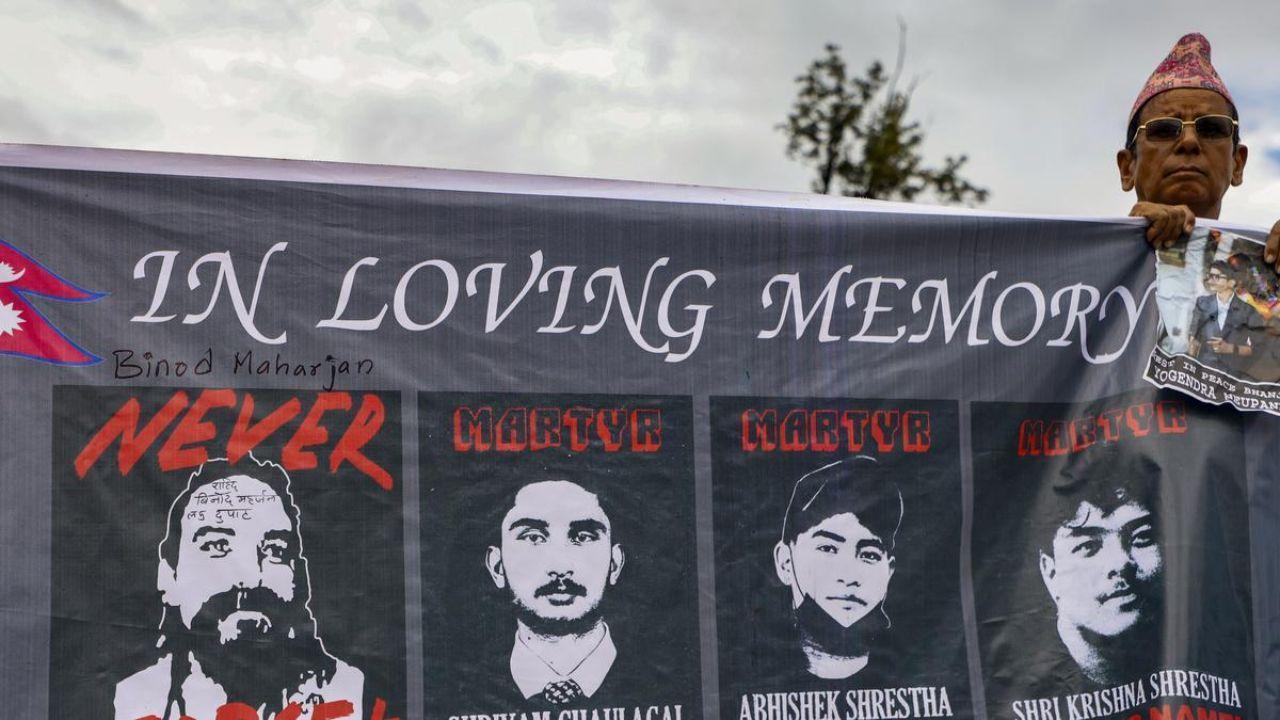
Nepal is witnessing one of the most dramatic political and social shifts in its recent history. On Wednesday, September 17, 2025, the entire country observed a national day of mourning in memory of those killed during the massive Gen Z-led protests earlier this month.
All government offices, schools, and universities remained closed throughout the country. Nepali embassies and missions abroad also shut their doors for the day. Flags were flown at half-mast in Kathmandu and across provinces, showing solidarity with the families of those who lost their lives.
The Ministry of Home Affairs announced that this day would serve as a national moment of reflection. The protests of September 8 and 9 have left deep wounds in Nepalese society, with 72 people dead, including three policemen.
The protests began as a peaceful demonstration by young Nepalis, mostly students and first-time workers, who were frustrated with unemployment, inflation, and corruption. But when police opened fire on September 8, killing at least 19 people, the situation exploded.
Crowds stormed government buildings, torched vehicles, and even entered the Prime Minister’s office. Within hours, Prime Minister K.P. Sharma Oli announced his resignation on September 9. His fall marked a historic moment — a generation-led uprising forcing a change in leadership.
On September 14, Prime Minister Sushila Karki, who recently took office, declared those killed as “martyrs,” promising their families state support and recognition.
Despite the grief, life in the capital is slowly returning to normal. On Wednesday, the streets of Kathmandu were busy again with cars, buses, and pedestrians. Shops, supermarkets, and shopping malls reopened as the festive season of Vijaya Dashami and Deepawali approached.
Markets were filled with people buying clothes, sweets, and household goods, showing resilience after weeks of chaos.
The protests left behind visible scars. According to police reports, 121 four-wheelers and 158 motorcycles were set on fire in the capital alone. Business complexes, government offices, and even some political leaders’ homes were damaged.
Several ministries have started assessing the financial losses caused by the unrest. Experts say rebuilding may take months, if not longer.
The protests were not just about a single incident. They were the result of long-standing frustration among young Nepalis. Gen Z, the generation born between the late 1990s and early 2010s, makes up a large share of Nepal’s population. Many of them feel ignored by traditional politics.
They complain about:
For many, the protests were about demanding a new Nepal where youth have a stronger voice in shaping the future.
The new government under Sushila Karki now faces the tough task of stabilizing the country. Public trust is fragile, and the younger generation wants fast reforms.
Analysts believe this movement will permanently change Nepal’s politics. It has shown that youth power can topple governments and force accountability. The coming months will decide whether Nepal heads toward stability or further unrest.








Achieve Radiant Skin with This Simple Rice Flour Treatment
Transform your skincare routine! Discover how a rice flour mix can restore your skin's glow without

Meta Unveils Subscription Plans for Instagram, Facebook, and WhatsApp
Meta introduces new subscription plans for users of Instagram, Facebook, and WhatsApp, featuring enh

Suvarna Joy on Education Leadership, Resilience, and Building Purpose Through Adversity in the UAE
Suvarna Joy shares her journey of education leadership, motherhood, faith, and resilience within the

Anticipated Dates for UAE Eid Al Adha 2026 Unveiled by Astronomical Experts
Experts predict Eid Al Adha 2026 in the UAE to start on May 27, prompting early holiday planning amo

DAE Achieves Remarkable Growth in Q1 2026 With Record Revenue
Dubai Aerospace Enterprise announces impressive financial results for Q1 2026, reflecting a surge in

Price Increase for Sony PS5 in Southeast Asia Effective May 1
Sony announces a price increase for the PS5 across Southeast Asia starting May 1, 2026, impacting ga




