Post by : Shweta
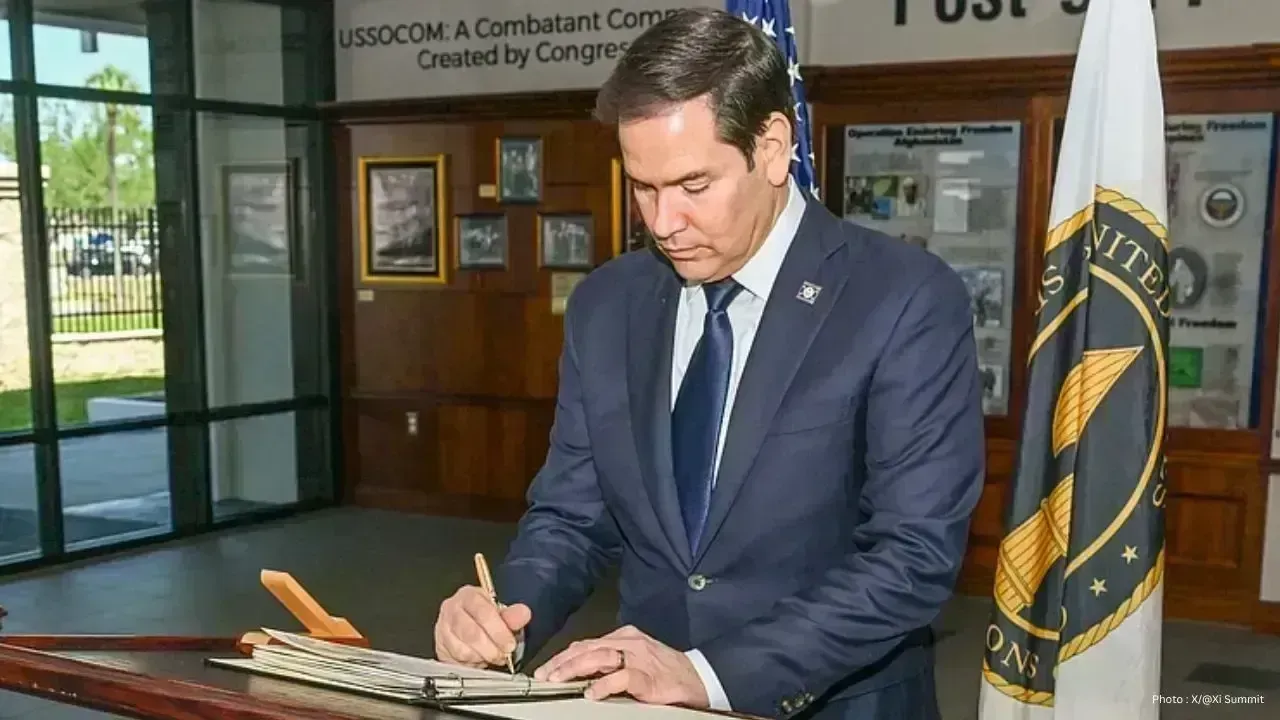
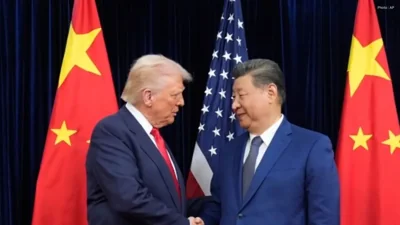
As President Donald Trump and Chinese President Xi Jinping gear up for their upcoming summit, Senator Marco Rubio’s staunch stance on China is back in the limelight. With Washington set for pivotal talks with Beijing, Rubio's perspectives on trade, security, technology, and human rights are once again being woven into the national conversation surrounding America's strategic approach to China.
Marco Rubio has distinguished himself as one of the most vocal critics of the Chinese regime within U.S. political circles. The senator from Florida has consistently voiced concerns over China's amplifying global footprint, military advancements, technological aspirations, and supposed espionage efforts. He advocates for more stringent economic measures, robust security alliances in Asia, and increased oversight of Chinese enterprises entering sensitive sectors.
This renewed focus coincides with the anticipated discussions set to cover trade disputes, tariffs, Taiwan, cybersecurity, artificial intelligence, and the intricate web of global supply chains. Analysts suggest Rubio's assertive stance echoes an escalating bipartisan consensus in Congress where many view China as America's foremost strategic adversary.
Rubio has particularly emphasized technology and national security issues. In recent years, he has strongly pushed for limits on Chinese tech companies and advocated for stricter regulations around semiconductor exports, telecommunications infrastructure, and collaborative efforts in artificial intelligence. He warns that China's technological expansion could potentially jeopardize U.S. economic and militaristic supremacy.
Human rights concerns have also been pivotal in shaping Rubio’s stance on China. He has openly criticized Beijing for its policies concerning Hong Kong, Xinjiang, censorship practices, religious persecutions, and criminalization of political dissent. Rubio has previously backed sanctions and legislation directed at Chinese officials implicated in human rights violations.
As the Trump-Xi summit approaches, its outcomes will likely reveal how robustly the U.S. plans to confront China while striving to prevent excessive economic conflict. Some experts argue that Trump might explore limited economic cooperation with Beijing to alleviate market uncertainties and rehabilitate trade ties. Others caution that intense political pressures in Washington could hinder any substantial easing of relations with China.
Rubio's viewpoints often parallel those of hardline national security advisors who argue for a reduction of dependency on Chinese manufacturing and a reinforcement of ties with allies like Japan, India, South Korea, and the Philippines. Proponents of this strategy believe that China’s expanding influence necessitates a comprehensive response rather than transient diplomatic agreements.
Conversely, detractors of aggressive policies toward China warn that escalating tensions could hamper global trade, escalate military hazards, and trigger economic instability. U.S. business entities continue to express unease over tariffs, supply chain interruptions, and the unpredictability of future U.S.-China relations.
Rubio's policies and remarks have periodically elicited ire from Chinese officials. Previously, Beijing responded to his criticisms with sanctions directed at him and others charged with meddling in its internal matters. Chinese state media consistently depict Rubio as a leading adversary of Chinese interests within the political arena.
This summit occurs against the backdrop of intensifying global competition between the U.S. and China across technology, energy, military power, and diplomatic influence. Both nations are seeking to fortify alliances and economic collaborations while vying for dominance in regions such as Asia, Africa, and the Middle East.
Political analysts argue that Rubio's opposition to China mirrors a larger shift in U.S. politics, with skepticism toward Beijing reaching new heights across both parties. Even those who differ on domestic matters often converge on the need for stringent trade barriers, security initiatives, and technological limitations regarding China.
As the Trump-Xi meeting draws near, Rubio's prominence underscores how vital China policy has become in framing contemporary American foreign relations. Regardless of whether the summit fosters cooperation or propels deeper rivalry, the discourse surrounding U.S.-China interactions is set to remain one of Washington’s foremost strategic concerns.






Anticipated Dates for UAE Eid Al Adha 2026 Unveiled by Astronomical Experts
Experts predict Eid Al Adha 2026 in the UAE to start on May 27, prompting early holiday planning amo

DAE Achieves Remarkable Growth in Q1 2026 With Record Revenue
Dubai Aerospace Enterprise announces impressive financial results for Q1 2026, reflecting a surge in

Price Increase for Sony PS5 in Southeast Asia Effective May 1
Sony announces a price increase for the PS5 across Southeast Asia starting May 1, 2026, impacting ga

Potential ‘Super El Niño’ in 2026: Understanding the Climate Risks
Could a Super El Niño emerge in 2026? Discover its implications and potential global climate impacts

Global Energy Crisis Intensifies: Markets React to Oil Supply Challenges
Markets are on edge as oil disruptions escalate, influencing prices and economic stability. Explore

Must-See Tourist Spots in London You Can't Overlook
Explore London's essential attractions, from royal landmarks to vibrant markets, ensuring an unforge




