Post by : Saif Nasser
Escalating violence along the Israel-Lebanon border has entered a new and dangerous stage following a deadly drone attack and the capture of a strategically important position in southern Lebanon. The developments underscore the continuing instability in the region and raise concerns about the possibility of a wider conflict that could affect both countries and the broader Middle East.
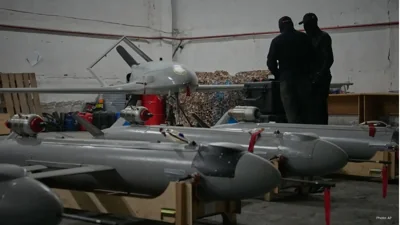
The latest confrontation involved a Hezbollah drone strike that resulted in the death of an Israeli soldier operating in southern Lebanon. The attack highlighted the growing role of unmanned aerial systems in modern warfare and demonstrated the ability of armed groups to target military personnel beyond traditional battlefield methods. The incident also served as a reminder of the evolving nature of regional conflicts, where technology increasingly shapes military operations.
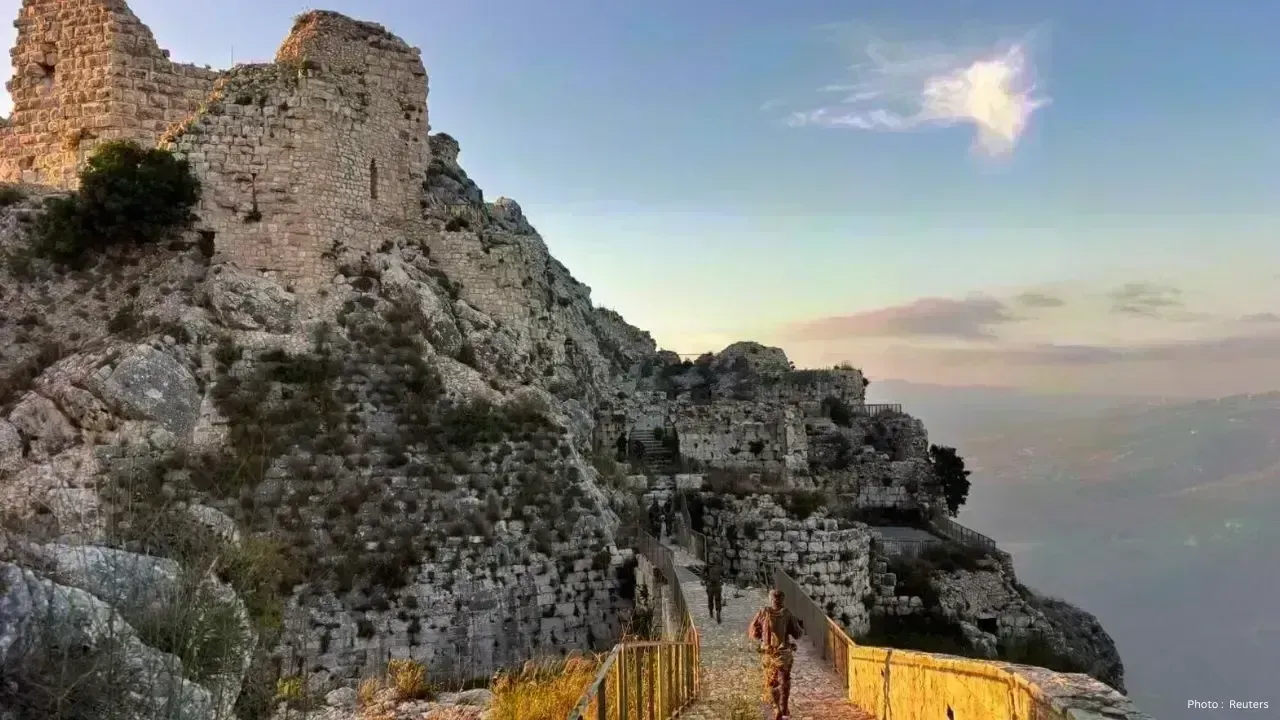
At nearly the same time, Israeli forces announced the capture of Beaufort Castle, a historic hilltop fortress that holds both symbolic and strategic value. Located in southern Lebanon, the site overlooks key areas of the surrounding region and has long been viewed as an important military position due to its elevated location. Control of such terrain can provide tactical advantages, including improved observation and operational planning.
The combination of a deadly drone strike and the seizure of a prominent position reflects the intensifying nature of the confrontation. Military activities on both sides have increased in recent months, with exchanges of fire becoming more frequent and more sophisticated. These developments suggest that the conflict is evolving beyond limited border incidents and moving toward a broader and more complex security challenge.
The use of drone technology has become one of the most significant changes in modern conflict. Armed groups and national militaries alike are investing heavily in unmanned systems capable of reconnaissance, surveillance, and offensive operations. Such technology can increase operational reach while reducing risks to personnel. However, it also creates new challenges for defense systems and security planners attempting to protect military positions and civilian areas.
The death of a soldier in the latest attack highlights the human cost of the ongoing confrontation. Every casualty affects families, communities, and military organizations. Beyond the immediate loss of life, such incidents often increase tensions and create pressure for stronger responses, making diplomatic efforts more difficult.
The capture of Beaufort Castle carries importance beyond its military value. The fortress has historical significance and has played a role in previous conflicts involving southern Lebanon. Control of the location may influence future operations in the area and could become a symbol of broader strategic objectives pursued by the parties involved.
Regional observers are increasingly concerned that continued escalation could lead to a larger conflict. The border area has experienced repeated exchanges of fire, air operations, and security incidents over an extended period. As military actions become more intense, the possibility of miscalculation or unintended escalation grows significantly.
Civilian populations remain among the most affected by ongoing instability. Communities near the border often face displacement, disruptions to daily life, and concerns about personal safety. Economic activity can also suffer as businesses, schools, and public services struggle to operate under uncertain conditions. Prolonged insecurity creates long-term challenges that extend well beyond military considerations.
International attention remains focused on efforts to prevent further escalation. Governments and diplomatic organizations continue to call for restraint and encourage dialogue aimed at reducing tensions. While military developments often dominate headlines, many observers believe that political engagement remains the most effective path toward achieving lasting stability.
The broader regional environment adds another layer of complexity to the situation. The Middle East continues to face multiple security challenges, and developments in one area can quickly influence events elsewhere. As a result, policymakers closely monitor border incidents and their potential impact on regional dynamics.
Military analysts note that control of strategic terrain and the increasing use of advanced technologies are becoming defining features of modern conflicts. These factors influence operational decisions, strategic planning, and the balance of power on the ground. The latest events in southern Lebanon reflect these wider trends and demonstrate how rapidly battlefield conditions can change.
The ongoing confrontation also raises questions about future security arrangements in the border region. Sustainable stability requires more than military action alone. Long-term peace depends on political solutions, effective communication, and efforts to address underlying sources of tension that contribute to recurring conflict.
As developments continue to unfold, the region faces a period of uncertainty. The combination of battlefield losses, strategic territorial gains, and evolving military technology has created a situation that demands careful management from all sides. Decisions made in the coming weeks may influence not only immediate security conditions but also the broader trajectory of the conflict.
The recent drone strike and the capture of Beaufort Castle illustrate how quickly events can reshape the security landscape. While military objectives remain important to those involved, the wider goal of reducing violence and protecting civilian lives remains essential. Achieving lasting stability will require restraint, diplomacy, and a commitment to preventing further escalation in a region that has already experienced decades of conflict.






Achieve Radiant Skin with This Simple Rice Flour Treatment
Transform your skincare routine! Discover how a rice flour mix can restore your skin's glow without

Meta Unveils Subscription Plans for Instagram, Facebook, and WhatsApp
Meta introduces new subscription plans for users of Instagram, Facebook, and WhatsApp, featuring enh

Suvarna Joy on Education Leadership, Resilience, and Building Purpose Through Adversity in the UAE
Suvarna Joy shares her journey of education leadership, motherhood, faith, and resilience within the

Anticipated Dates for UAE Eid Al Adha 2026 Unveiled by Astronomical Experts
Experts predict Eid Al Adha 2026 in the UAE to start on May 27, prompting early holiday planning amo

DAE Achieves Remarkable Growth in Q1 2026 With Record Revenue
Dubai Aerospace Enterprise announces impressive financial results for Q1 2026, reflecting a surge in

Price Increase for Sony PS5 in Southeast Asia Effective May 1
Sony announces a price increase for the PS5 across Southeast Asia starting May 1, 2026, impacting ga




