Post by : Priya
Photo:AFP
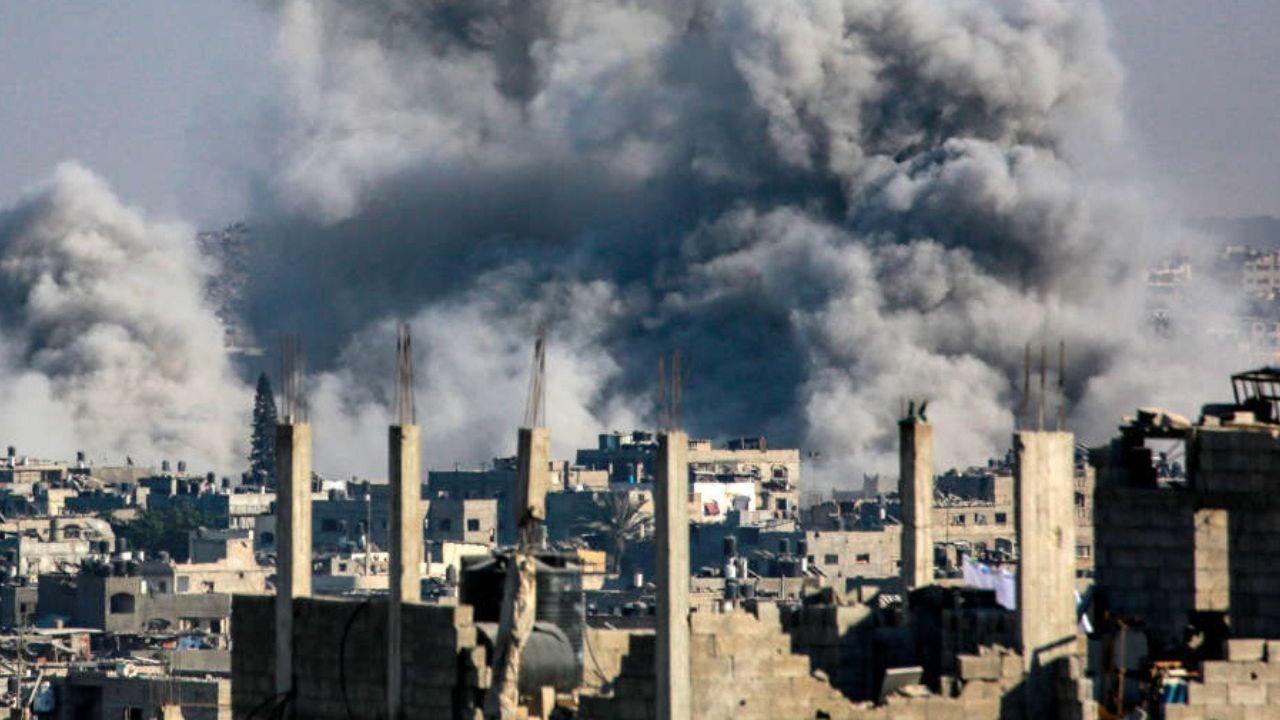
On Wednesday, a tense situation in the Gaza Strip took a dramatic turn when an Israeli airstrike hit an area near a major medical center. The incident happened while international talks were underway to reach a ceasefire between Israel and Hamas. Although the hospital itself was not directly struck, the blast caused panic and serious concern among medical staff, patients, and civilians nearby. The event has raised questions about the protection of healthcare services during armed conflict and could influence the fragile progress in ongoing peace talks.
The Airstrike and Immediate Impact
The airstrike occurred in central Gaza, very close to a hospital that serves hundreds of patients every day. Eyewitnesses described a loud explosion that shook buildings and filled the air with dust and smoke. The medical center was not directly hit, but nearby structures suffered damage, and windows in the hospital shattered.
Panic quickly spread through the hospital. Doctors paused surgeries and moved patients to safer areas within the building. Mothers cradled newborns while nurses tried to calm frightened children.
A local doctor, speaking under anonymity for safety reasons, said, “We’ve seen many things during this conflict, but a strike so close to a hospital is terrifying. It could have been much worse.”
Fortunately, there were no immediate reports of casualties from the strike, but the psychological impact on both patients and staff was severe.
The Timing: Peace Talks in Progress
The airstrike happened at a sensitive moment. Peace negotiations, backed by Egypt, Qatar, and the United States, are currently ongoing to bring about a long-term truce in the Gaza region. These indirect talks are focusing on several key issues:
The release of Israeli hostages held by Hamas
A full ceasefire agreement
The reopening of border crossings for humanitarian aid and trade
Rebuilding war-torn areas in Gaza
While both sides have expressed willingness to negotiate, deep mistrust remains. The recent airstrike has added new complications, with Palestinian officials accusing Israel of undermining the peace process.
A Hamas spokesperson condemned the attack, calling it “a dangerous escalation.” Israeli officials, however, claimed the strike targeted a suspected weapons storage facility used by militants, not civilians.
An Israeli Defense Forces (IDF) statement said, “Our operations are precise and aimed only at preventing terror threats. We regret any harm caused to civilian infrastructure and continue to follow international law.”
Still, the strike’s proximity to a hospital is being criticized globally, especially by humanitarian agencies.
Gaza’s Fragile Health System Under Pressure
Gaza's healthcare system is already struggling due to years of conflict, blockade, and economic hardship. Hospitals lack sufficient medicine, electricity, and medical equipment. The ongoing war has only worsened the situation.
Most hospitals in Gaza operate with limited resources. Electricity is unreliable, and many facilities depend on fuel-powered generators to keep life-saving machines running. A strike—even one nearby—can disrupt services by damaging infrastructure or cutting off power supplies.
The World Health Organization (WHO) has repeatedly warned that healthcare centers must be protected during conflicts. In a recent statement, a WHO official said, “Targeting or endangering medical facilities is not only against international law—it endangers lives and the health of entire communities.”
According to Gaza’s Health Ministry, several hospitals and clinics have been damaged or forced to close in recent months due to the ongoing violence.
Civilian Life in Crisis
Life for civilians in Gaza remains extremely difficult. Families are often forced to move from one place to another in search of safety. Many live in overcrowded shelters provided by the United Nations or in damaged homes with limited access to food, clean water, and electricity.
Parents struggle to keep their children safe and calm. Schooling has been disrupted, and the sound of explosions is a daily occurrence. Mental health experts warn that the trauma caused by repeated airstrikes and displacement can have long-lasting effects, especially on children.
One mother said, “My daughter asks me every day, ‘Will we die today?’ No child should have to live like this.”
On the Israeli side, residents of southern towns face rocket attacks and sirens, which send them running to shelters multiple times a day. Many businesses have shut down temporarily, and families live in fear of incoming fire.
The human cost of the conflict affects both sides of the border.
International Reaction and Calls for Peace
Following the strike, several countries and humanitarian organizations expressed concern. The United Nations, European Union, and the International Red Cross called on both parties to respect civilian lives and infrastructure.
In a joint statement, international mediators urged both Israel and Hamas to show restraint and avoid actions that could derail the ongoing peace talks. They emphasized the importance of securing a lasting truce that allows humanitarian aid to reach those in need.
U.S. Secretary of State issued a statement saying, “We are deeply concerned by the recent escalation and are working closely with our partners to support a sustainable ceasefire agreement.”
A Long Road to Peace
The Israel-Gaza conflict has a long and complex history, filled with failed ceasefires, mistrust, and repeated cycles of violence. Each time talks begin, hopes rise—but they are often quickly dashed by fresh attacks or political disagreements.
For now, both sides remain far apart on several key issues. But pressure is mounting from the international community to reach a deal, especially as the humanitarian crisis in Gaza worsens by the day.
Some analysts believe that a ceasefire is still possible if both parties make concessions. These may include temporary security guarantees, international monitoring, and gradual rebuilding efforts.
However, without mutual trust and commitment, any agreement may only be temporary.










DAE Achieves Remarkable Growth in Q1 2026 With Record Revenue
Dubai Aerospace Enterprise announces impressive financial results for Q1 2026, reflecting a surge in

Price Increase for Sony PS5 in Southeast Asia Effective May 1
Sony announces a price increase for the PS5 across Southeast Asia starting May 1, 2026, impacting ga

Potential ‘Super El Niño’ in 2026: Understanding the Climate Risks
Could a Super El Niño emerge in 2026? Discover its implications and potential global climate impacts

Global Energy Crisis Intensifies: Markets React to Oil Supply Challenges
Markets are on edge as oil disruptions escalate, influencing prices and economic stability. Explore

Must-See Tourist Spots in London You Can't Overlook
Explore London's essential attractions, from royal landmarks to vibrant markets, ensuring an unforge

Ultimate Guide to Snagging Cheap Flights in 2026
Unlock the secrets to booking affordable flights in 2026 with insightful tips and strategies tailore




