Post by : Saif Nasser
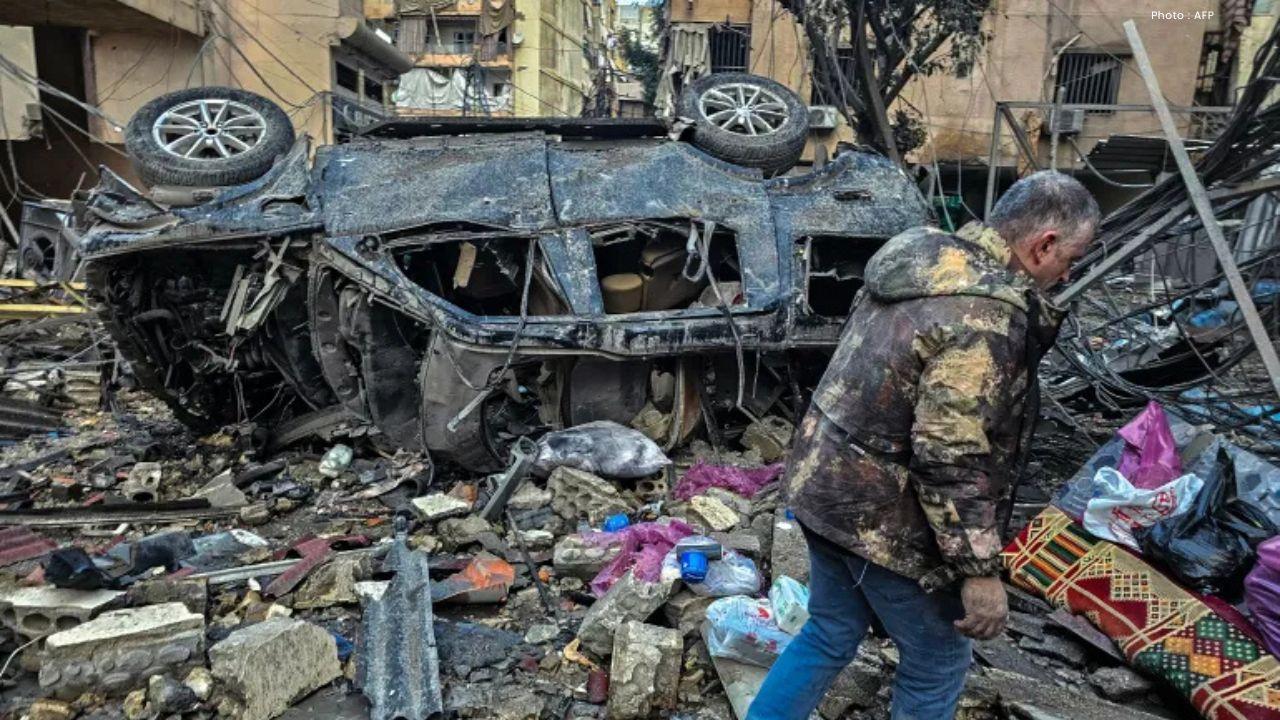
The situation in Lebanon has become extremely serious as heavy Israeli air strikes continue to hit Beirut and southern parts of the country. The attacks have forced more than one million people to leave their homes, creating one of the largest displacement crises in the region in recent years.
Reports show that entire neighborhoods in southern Lebanon and parts of Beirut have been targeted. Many families were told to leave quickly, often with little time to gather their belongings. As a result, roads have been filled with people trying to escape, while others have taken shelter in schools, public buildings, or open areas.
According to Lebanese authorities, the number of displaced people has now crossed one million, including many women and children. This number shows how fast the crisis is growing and how deeply it is affecting daily life in the country.
The air strikes are part of a wider conflict involving and the armed group Hezbollah, which is based in Lebanon and supported by Iran. The fighting began earlier this month after exchanges of attacks between both sides. Since then, the situation has worsened quickly, with repeated strikes and counterattacks.
In Beirut, especially in the southern suburbs, explosions have been reported regularly. These areas are known to be strongholds of Hezbollah, but they are also home to many civilians. This has raised concerns about the safety of ordinary people who are caught in the middle of the conflict.
Casualty numbers continue to rise as well. Hundreds of people have been killed since the attacks began, including children and women. Many more have been injured, and hospitals are struggling to handle the large number of patients.
The damage to infrastructure has made the situation even worse. Homes, roads, and public services have been destroyed in many areas. Some hospitals have also been hit or forced to close, making it harder for injured people to receive treatment. This has increased fear among residents who are already dealing with the stress of war.
The humanitarian crisis is becoming more severe each day. Shelters are overcrowded, and many people lack basic needs such as clean water, food, and medical care. Aid groups have warned that conditions could worsen if the fighting continues.
One of the most troubling aspects of the conflict is the impact on civilians. In some cases, strikes have hit areas where displaced families had gathered for safety. For example, an air strike in Beirut earlier this month killed several people who had already fled their homes, showing that even safe zones are not always protected.
From an editorial point of view, this crisis highlights the heavy human cost of war. While military goals are often discussed, it is ordinary people who suffer the most. Families are losing their homes, children are missing school, and communities are being broken apart.
The scale of displacement is especially worrying. When such a large number of people are forced to move in a short time, it puts pressure on the country’s resources. Lebanon is already facing economic problems, and this crisis could make the situation even harder.
The conflict also raises concerns about regional stability. As fighting continues between Israel and Hezbollah, there is a risk that other countries could become involved. This could turn a local conflict into a wider regional war, affecting many more people.
International reactions have been growing, with calls for calm and efforts to reduce tensions. However, so far, there has been no clear sign that the fighting will stop soon. Both sides appear determined to continue their actions, which increases the danger for civilians.
Another important issue is the long-term impact. Even if the conflict ends, rebuilding homes and infrastructure will take time. Displaced families may struggle to return to normal life, especially if their homes have been destroyed.
In conclusion, the ongoing strikes in Lebanon are not just a military issue but a humanitarian emergency. With over one million people displaced and many lives lost, the need for peace has become more urgent than ever. The world is watching closely, hoping for steps that can bring safety and stability back to the region.





DAE Achieves Remarkable Growth in Q1 2026 With Record Revenue
Dubai Aerospace Enterprise announces impressive financial results for Q1 2026, reflecting a surge in

Price Increase for Sony PS5 in Southeast Asia Effective May 1
Sony announces a price increase for the PS5 across Southeast Asia starting May 1, 2026, impacting ga

Potential ‘Super El Niño’ in 2026: Understanding the Climate Risks
Could a Super El Niño emerge in 2026? Discover its implications and potential global climate impacts

Global Energy Crisis Intensifies: Markets React to Oil Supply Challenges
Markets are on edge as oil disruptions escalate, influencing prices and economic stability. Explore

Must-See Tourist Spots in London You Can't Overlook
Explore London's essential attractions, from royal landmarks to vibrant markets, ensuring an unforge

Ultimate Guide to Snagging Cheap Flights in 2026
Unlock the secrets to booking affordable flights in 2026 with insightful tips and strategies tailore




