Post by : Priya
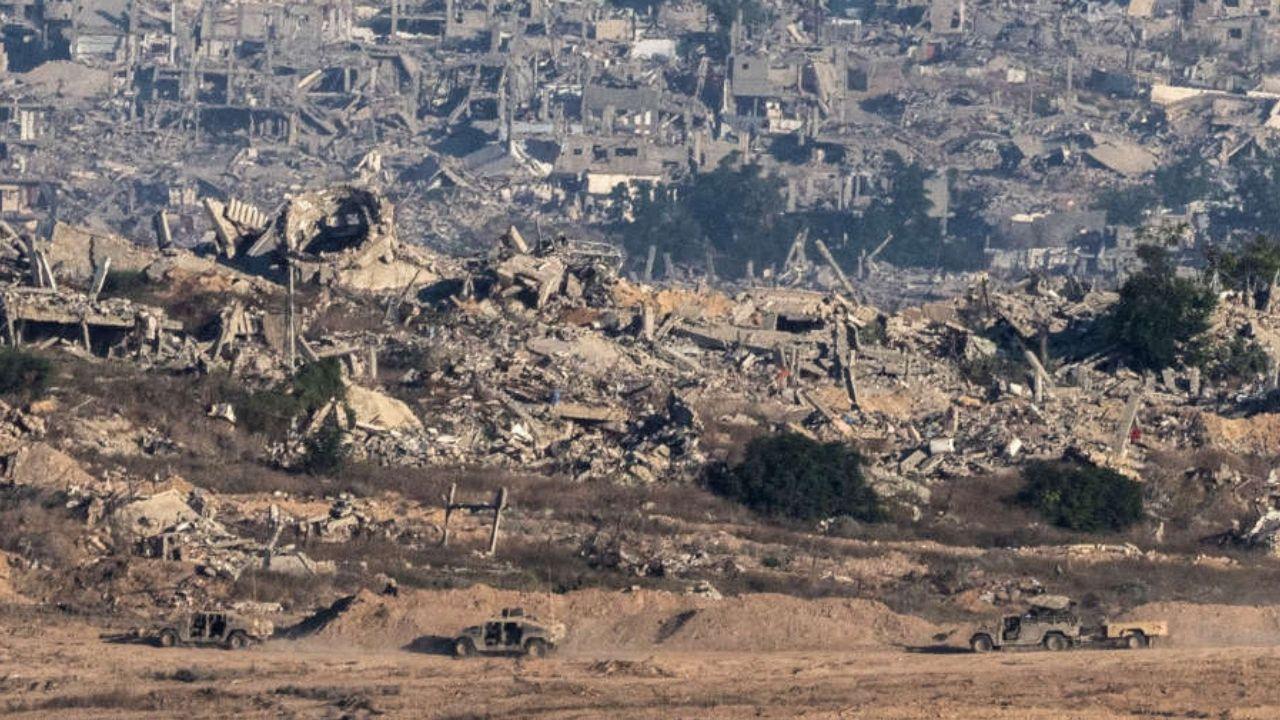
Photo:AFP
As the conflict in Gaza continues to wreak havoc on civilian lives and regional stability, a glimmer of hope has emerged in the form of renewed diplomatic efforts. Over the weekend, Israel quietly sent a senior delegation to Qatar, marking the beginning of another round of indirect negotiations with Hamas.
The talks—facilitated by Qatari officials and supported by both Egypt and the United States—aim to revive discussions for a temporary ceasefire, secure the release of Israeli hostages held in Gaza, and establish the framework for broader political engagement in the region.
The move is seen as particularly significant as it comes just ahead of Israeli Prime Minister Benjamin Netanyahu’s planned visit to Washington. With global eyes focused on both Doha and Washington, the outcome of this week’s diplomatic efforts could shape the next phase of the Gaza conflict.
The Delegation: Mission and Composition
Israel’s delegation reportedly includes high-ranking officials from Mossad (the intelligence agency), the Israel Defense Forces (IDF), and the National Security Council. These officials are tasked with coordinating indirect talks with Hamas representatives, using Qatari mediation as the main channel of communication.
The delegation’s mission has been clearly outlined:
Negotiate the terms of a phased ceasefire
Work out details of a hostage release deal
Secure guarantees for the flow of humanitarian aid
Explore long-term political arrangements for Gaza
These objectives are in line with Israel’s broader goal of ending the conflict on favorable terms without giving Hamas undue legitimacy or freedom to rebuild militarily.
A senior Israeli source told DXB News Network, “We’re approaching the talks with seriousness, but also caution. Any agreement must guarantee Israel’s security and the safe return of our citizens.”
Why Qatar? The Role of the Gulf Mediator
Qatar’s capital, Doha, has become a central hub for sensitive backchannel diplomacy in the Middle East. With its unique ties to both Western governments and groups like Hamas, Qatar is well-placed to serve as a bridge between conflicting parties.
Qatar has previously played a key role in arranging humanitarian truces, hostage negotiations, and aid packages for Gaza. In this latest round of talks, Qatari officials are serving as intermediaries, delivering messages, proposals, and responses between Israel and Hamas.
A Qatari foreign ministry spokesperson said, “Qatar is committed to supporting peaceful outcomes in the region. We are in regular contact with both sides and our goal is to end the bloodshed.”
Pressure Mounts at Home: Netanyahu Faces Domestic Crisis
The Israeli government has been under increasing pressure to act decisively on two major issues:
The hostage crisis – Dozens of Israelis, including women, children, and military personnel, remain in Hamas custody. The emotional weight of their captivity has triggered daily protests by families and supporters.
The prolonged war – With no clear end in sight and rising military and civilian casualties, public patience is wearing thin.
Netanyahu’s critics argue that his government has failed to present a clear exit strategy or diplomatic roadmap. Even members of his own right-wing coalition are divided—some favor an all-out military offensive, while others push for diplomacy.
With this in mind, Netanyahu’s decision to send a delegation to Qatar signals a potential shift in strategy, likely influenced by the looming visit to Washington.
The Washington Trip: Stakes Could Not Be Higher
Netanyahu is set to arrive in Washington later this week for high-level meetings with U.S. President Joe Biden and senior American officials. This visit carries immense strategic weight for several reasons:
The Biden administration has been pressing Israel to de-escalate the conflict, facilitate humanitarian access, and focus on a long-term two-state framework.
Netanyahu wants to ensure continued U.S. military aid, intelligence sharing, and diplomatic cover in international forums like the United Nations.
Both leaders will also discuss Iran’s expanding influence, the future of normalization deals with Arab countries, and Israel’s internal political stability.
Israeli sources suggest that Netanyahu is hoping to bring some form of progress report from the Qatar talks to Washington, which could help bolster his position both at home and abroad.
The Hostage Dilemma: A Deal or a Delay?
At the heart of the current talks is the issue of hostages—a painful and politically charged subject in Israel. According to Israeli military intelligence, many of the hostages are being held in underground tunnels or civilian areas, making a military rescue extremely risky.
Hamas has reportedly offered a phased release in exchange for:
A pause in airstrikes and ground operations
Release of Palestinian prisoners from Israeli jails
Guarantees that Israel will not resume attacks during the pause
Israel, while interested in the return of hostages, is cautious about agreeing to conditions that may be seen as giving Hamas political leverage. A “humanitarian swap” under international oversight may be the only acceptable formula for both sides.
The Humanitarian Crisis in Gaza
While diplomatic negotiations are underway, the humanitarian situation in Gaza is deteriorating rapidly:
Over 25,000 people are reported dead or missing since the start of the recent escalation
Nearly 70% of Gaza’s population has been displaced
Hospitals are overwhelmed, and access to medicine and electricity is nearly impossible
Aid convoys are stuck at border crossings due to lack of ceasefire guarantees
International organizations, including the United Nations, Red Cross, and Médecins Sans Frontières, have issued urgent appeals for a pause in fighting to allow food, medical supplies, and fuel into Gaza.
UN Secretary-General António Guterres said in a recent statement, “Civilians are not targets. Humanitarian aid must reach those in need. Ceasefire negotiations must prioritize the lives of the innocent.”
Egypt and the United States: Quiet Architects of Peace
Behind the scenes, both Egyptian and American diplomats are deeply involved in the Doha talks. Egypt, which has long served as a mediator in the Gaza file, maintains communication lines with Hamas leaders and controls key access points into Gaza.
Meanwhile, the U.S. has dispatched special envoys and security advisers to help bridge the gap between Israeli and Palestinian demands. American officials are believed to be working on a “confidence-building framework” that could:
Start with a temporary truce
Lead to a hostage-for-prisoner exchange
Open Gaza to UN-supervised humanitarian corridors
End with a longer-term political roadmap
Challenges and Risks Ahead
While the current talks offer hope, the path forward is anything but smooth. Several challenges threaten to derail progress:
Deep mistrust – Years of failed ceasefires have left both sides skeptical of each other’s promises.
Hardliners – On both the Israeli and Palestinian sides, influential factions oppose any negotiation with the enemy.
Media pressure – Public opinion in Israel and Gaza is being shaped in real-time by social media, protests, and partisan coverage.
Unclear outcomes – Without a broader peace strategy, a temporary truce may only delay further violence.
International Reactions
Several countries and global organizations have welcomed the resumption of talks:
European Union diplomats called the negotiations a “step in the right direction” but stressed the need for international monitoring.
Arab League leaders praised Qatar’s mediation role and urged all factions to focus on diplomacy over violence.
China and Russia, while more reserved in tone, have also expressed hope that regional peace can be restored.
Global financial markets, particularly in the energy and defense sectors, have reacted cautiously, with investors watching for signs of escalation or resolution.









DAE Achieves Remarkable Growth in Q1 2026 With Record Revenue
Dubai Aerospace Enterprise announces impressive financial results for Q1 2026, reflecting a surge in

Price Increase for Sony PS5 in Southeast Asia Effective May 1
Sony announces a price increase for the PS5 across Southeast Asia starting May 1, 2026, impacting ga

Potential ‘Super El Niño’ in 2026: Understanding the Climate Risks
Could a Super El Niño emerge in 2026? Discover its implications and potential global climate impacts

Global Energy Crisis Intensifies: Markets React to Oil Supply Challenges
Markets are on edge as oil disruptions escalate, influencing prices and economic stability. Explore

Must-See Tourist Spots in London You Can't Overlook
Explore London's essential attractions, from royal landmarks to vibrant markets, ensuring an unforge

Ultimate Guide to Snagging Cheap Flights in 2026
Unlock the secrets to booking affordable flights in 2026 with insightful tips and strategies tailore




