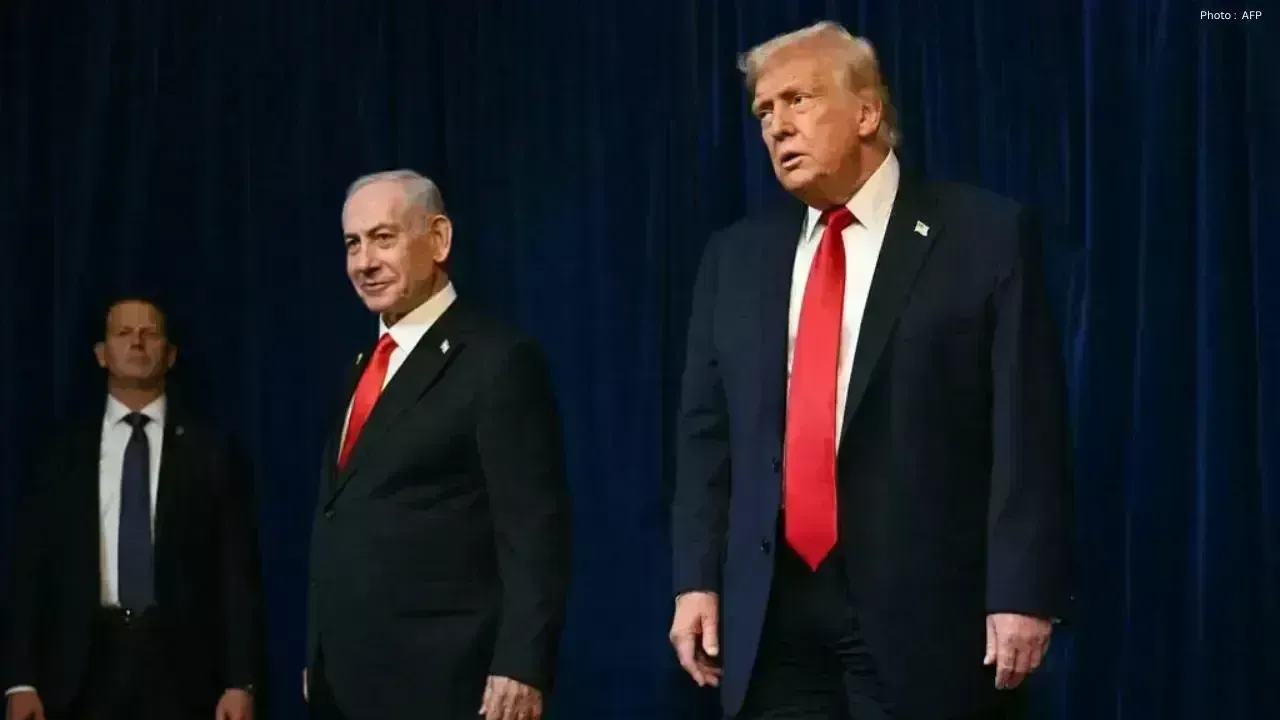
Post by : Saif Nasser
Israel’s strategic position in the ongoing tension surrounding Iran is facing renewed discussion as diplomatic engagement between Washington and Tehran continues gaining attention. The changing political atmosphere has created debate among regional observers about how future agreements could influence security policy alliances and Middle East stability.
During earlier phases of confrontation the United States and Israel appeared strongly aligned in their approach toward Iran’s nuclear activities and regional influence. Cooperation between the two allies included diplomatic coordination intelligence sharing and joint concern regarding Tehran’s growing strategic reach.
Recent diplomatic developments however have introduced a more complicated situation. As negotiations involving American and Iranian officials continue progressing discussions inside Israel have intensified over how potential agreements might affect regional balance and long-term security planning.
Israeli leaders have consistently viewed Iran’s nuclear program as one of the country’s most serious national security concerns. Officials across multiple administrations repeatedly warned that any agreement allowing Tehran to preserve advanced nuclear capabilities could create future risks for the region.
At the same time policymakers in Washington appear increasingly focused on reducing the possibility of broader military escalation. Supporters of diplomacy argue that continued dialogue offers a better path toward lowering tension and avoiding another major conflict in the Middle East.
Political analysts believe the current moment highlights the complexity of international alliances where strategic partners may share long-term goals while differing on negotiation tactics and diplomatic priorities.
The discussions linked to sanctions uranium enrichment and security guarantees have therefore attracted significant attention within Israeli political circles. Opposition leaders security experts and commentators continue debating how the government should respond if diplomatic progress between Washington and Tehran accelerates further.
Iranian officials meanwhile continue insisting that their nuclear activities are intended for peaceful purposes connected to energy production scientific research and civilian development. Western governments however remain cautious regarding enrichment levels monitoring procedures and long-term compliance measures.
Several regional governments are also carefully monitoring the negotiations because the outcome may influence defense coordination economic cooperation and political relationships throughout the Middle East. Gulf nations energy markets and international investors all remain sensitive to developments connected to the talks.
The latest diplomatic movement follows years of confrontation sanctions disputes regional rivalry and military incidents involving multiple actors across the Middle East. Earlier attempts to revive broader understandings repeatedly failed due to political disagreements mistrust and conflicting strategic interests.
Inside Israel the debate has become increasingly political as different groups discuss how the country should protect its security interests during a period of changing regional diplomacy. Some voices support stronger independent action while others favor maintaining close coordination with Washington despite differences over negotiation strategy.
Security observers believe any future agreement involving Tehran could reshape military planning alliance structures and geopolitical calculations across the region. Changes in diplomatic relations may also affect future cooperation between regional powers on issues linked to defense trade and energy security.
Economic considerations are also becoming part of the broader discussion. Reduced tension could improve investment activity shipping stability and energy market confidence while prolonged uncertainty may continue affecting global economic conditions.
The evolving situation demonstrates how quickly political dynamics can change in the Middle East. Diplomatic engagement that once appeared unlikely is now influencing strategic conversations throughout the region and forcing governments to reconsider future policy choices.
Whether current negotiations eventually produce a long-term agreement remains uncertain. Even so the latest developments have already increased international attention on regional security diplomacy and the shifting balance of power connected to relations between Washington Tehran and Jerusalem.





Anticipated Dates for UAE Eid Al Adha 2026 Unveiled by Astronomical Experts
Experts predict Eid Al Adha 2026 in the UAE to start on May 27, prompting early holiday planning amo

DAE Achieves Remarkable Growth in Q1 2026 With Record Revenue
Dubai Aerospace Enterprise announces impressive financial results for Q1 2026, reflecting a surge in

Price Increase for Sony PS5 in Southeast Asia Effective May 1
Sony announces a price increase for the PS5 across Southeast Asia starting May 1, 2026, impacting ga

Potential ‘Super El Niño’ in 2026: Understanding the Climate Risks
Could a Super El Niño emerge in 2026? Discover its implications and potential global climate impacts

Global Energy Crisis Intensifies: Markets React to Oil Supply Challenges
Markets are on edge as oil disruptions escalate, influencing prices and economic stability. Explore

Must-See Tourist Spots in London You Can't Overlook
Explore London's essential attractions, from royal landmarks to vibrant markets, ensuring an unforge




