Post by : Priya
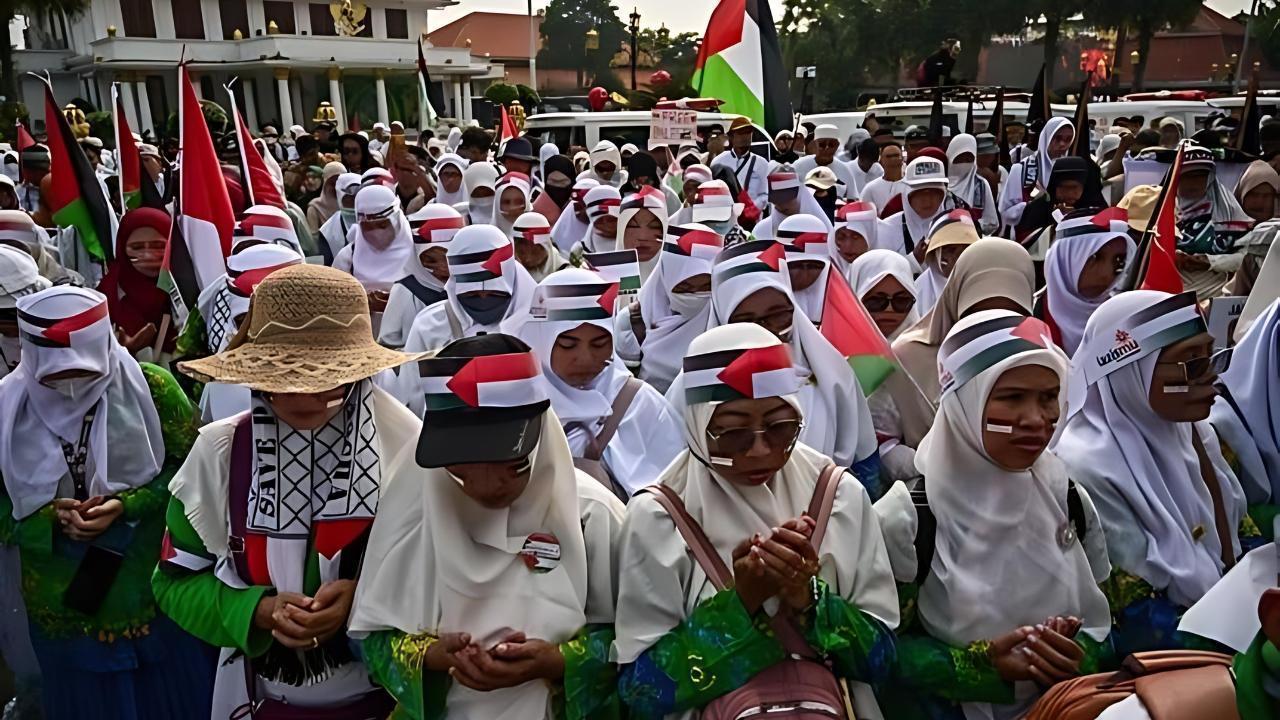
Photo:AFP
Indonesia’s decision to convert a medical facility on the uninhabited island of Galang to treat about 2,000 wounded Palestinians from Gaza marks a significant humanitarian step in response to the ongoing conflict in the Middle East. This comprehensive editorial explores the background, context, and implications of Indonesia’s initiative, emphasizing the country’s historic stance on international solidarity, its role in humanitarian aid, and the complex dynamics of the Gaza crisis.
Background of the Gaza Conflict and Its Humanitarian Crisis
Since October 2023, the Gaza Strip has been engulfed in intense conflict following an Israeli military offensive. According to Gaza health officials, this conflict has resulted in over 60,000 fatalities that include fighters and civilians caught in the crossfire. The humanitarian situation in Gaza is dire, characterized by widespread destruction, severe shortages of medical supplies, and collapse of healthcare infrastructure.
The Palestinian people have endured years of hardship due to the ongoing Israeli-Palestinian conflict. Gaza, a densely populated coastal enclave, faces economic blockade and restricted movement, exacerbating health crises and limiting access to essential services. The most recent escalation has overwhelmingly strained the already fragile healthcare system, leaving thousands wounded and in urgent need of medical assistance outside local capabilities.
Indonesia’s Role and Historical Perspective
Indonesia, the world’s largest Muslim-majority country, has expressed consistent support for Palestinian rights and advocated for a peaceful resolution of the Israeli-Palestinian dispute based on a two-state solution. It has historically provided humanitarian aid to Gaza and the Palestinian territories.
The announcement of converting the medical facility on Galang Island into a treatment center for wounded Gazans aligns with Indonesia’s humanitarian tradition and strategic foreign policy centered on peace and solidarity with oppressed populations. Galang Island, located off Sumatra and south of Singapore, carries historical significance as it served as a refugee camp for Vietnamese refugees from 1979 to 1996. In recent years, it was repurposed as a hospital for COVID-19 patients during the global pandemic.
The Galang Island Medical Facility Plan
According to Indonesian presidential spokesperson Hasan Nasbi, the plan is to offer medical aid to around 2,000 Gaza residents injured in the conflict. The facility on Galang, currently uninhabited, will provide treatment for these patients and temporary shelter for their accompanying family members. Importantly, officials emphasize this is not an evacuation or relocation. Once patients recover, they will be returned to Gaza.
This operation symbolizes a targeted and temporary humanitarian intervention. Indonesia’s foreign ministry has reiterated its position strongly rejecting any forced displacement of Palestinians, underscoring its commitment to respecting Palestinian sovereignty and human rights.
Humanitarian and Political Considerations
Indonesia’s gesture is both symbolic and practical. On the humanitarian front, it alleviates immediate suffering by offering critical medical treatment outside Gaza’s embattled infrastructure. It also highlights the power of international solidarity in crises where local systems are overwhelmed.
Politically, Indonesia’s move navigates complex regional and global sensitivities. Previous proposals by Indonesia’s President Prabowo Subianto to shelter wounded Palestinians faced domestic criticism, partly due to similarities drawn with controversial international proposals perceived as advocating long-term displacement. Indonesia’s steadfast opposition to these displacements reflects its diplomatic stance supporting a just and lasting Middle Eastern peace based on the United Nations framework.
Operational Challenges and Future Prospects
Details regarding the timeline, capacity, and logistics are yet to be fully disclosed by Indonesian authorities. The coordination between Indonesia’s ministries of foreign affairs, defense, and health will be key to effective execution. Challenges include transporting injured Gazans safely through a volatile geopolitical environment and managing medical needs on the island with adequate infrastructure and staff.
If successfully implemented, this initiative could serve as a model for other countries balancing humanitarian aid with respect for political sovereignty and human dignity in conflict zones.
Indonesia in the Global Humanitarian Landscape
Indonesia’s action demonstrates its rising role in international humanitarian efforts, leveraging its geographic assets and institutional experience. Offering Galang Island’s facility is a concrete example of Southeast Asian countries contributing to global peace and health.
The initiative also honors Galang’s legacy as a place of refuge and healing, transitioning from a historic refuge for Vietnamese war victims to a modern sanctuary for injured Palestinians.







Anticipated Dates for UAE Eid Al Adha 2026 Unveiled by Astronomical Experts
Experts predict Eid Al Adha 2026 in the UAE to start on May 27, prompting early holiday planning amo

DAE Achieves Remarkable Growth in Q1 2026 With Record Revenue
Dubai Aerospace Enterprise announces impressive financial results for Q1 2026, reflecting a surge in

Price Increase for Sony PS5 in Southeast Asia Effective May 1
Sony announces a price increase for the PS5 across Southeast Asia starting May 1, 2026, impacting ga

Potential ‘Super El Niño’ in 2026: Understanding the Climate Risks
Could a Super El Niño emerge in 2026? Discover its implications and potential global climate impacts

Global Energy Crisis Intensifies: Markets React to Oil Supply Challenges
Markets are on edge as oil disruptions escalate, influencing prices and economic stability. Explore

Must-See Tourist Spots in London You Can't Overlook
Explore London's essential attractions, from royal landmarks to vibrant markets, ensuring an unforge




