Post by : Anees Nasser
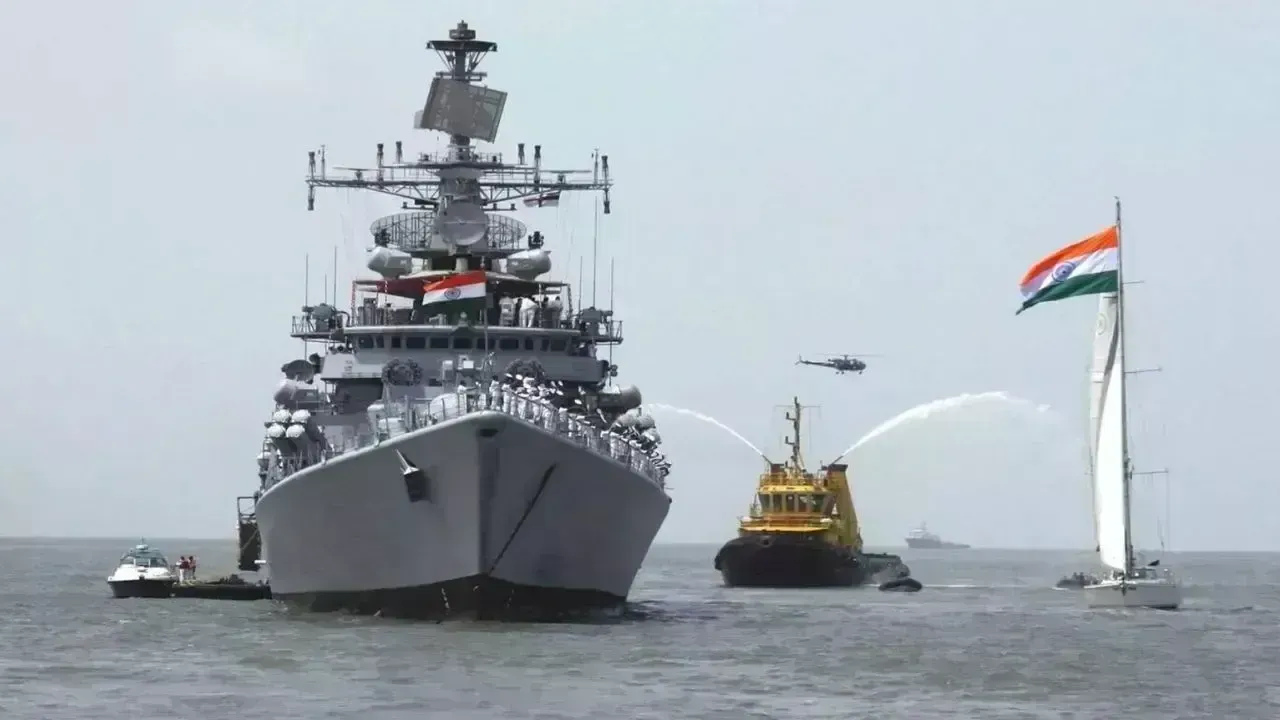
Each year, Indian Navy Day serves as a powerful reminder that a nation's might extends not only across its land but also through its vast waters. In 2025, the importance of this day resonates more than ever, as shifting global dynamics transform oceans into arenas of competition, trade, and strategic influence. The navy's role now encompasses diplomacy, humanitarian missions, and strategic deterrence, far beyond traditional combat.
This observance goes deeper than mere ceremony; it pays tribute to the discipline, innovation, and sacrifices of those who dedicate months at sea to protect India's maritime interests. Beneath the calm oceans lie complexities and dangers, requiring constant vigilance from officers, sailors, engineers, pilots, and specialists of the Indian Navy as they operate in demanding environments often unseen by the public eye.
In 2025, the Indian Navy stands as a robust, technologically advanced, and globally integrated force. This year's Navy Day not only memorializes the past but also emphasizes readiness for the future, reflecting on the navy's journey, its current representation, and its trajectory in a rapidly evolving world.
Indian Navy Day marks a pivotal point in India’s military narrative, remembering a naval operation that significantly altered conflict dynamics and solidified the navy as a crucial element of national defense. Over the years, this day has evolved from a simple historical commemoration into a celebration of the enduring values foundational to naval service.
For the contemporary Indian Navy, this observance symbolizes continuity between past heroism and present-day excellence. Today's sailors build upon the legacies of their predecessors, who safeguarded coastal waters through sheer determination and limited resources. Their spirit is mirrored in every mission undertaken and every patrol conducted.
Indian Navy Day also serves as an opportunity to enlighten citizens about naval history, contrasting with land battles that occur visibly. Naval victories, often overlooked, have profound implications for national security, trade, and regional stability. This day ensures that such contributions are recognized and remembered.
In its nascent stages, the Indian Navy primarily concentrated on coastal defense and territorial security, safeguarding ports, shipping lanes, and maritime territories. The task was critical: ensuring stability and preventing incursions.
Though resources were limited, rigorous discipline prevailed. Sailors trained under challenging circumstances, preparing for threats that often lurked unseen. This period forged the navy's character, prioritizing loyalty and endurance.
With the expansion of India's economy and maritime ambitions, the navy evolved. Transitioning from coastal defense to regional power required strategic planning and investments. New vessels, expansive training initiatives, and collaborative partnerships were established.
By the early 21st century, the navy transformed into a blue-water force, capable of operating across the seas, protecting interests well beyond Indian shores and engaging in multinational drills and international crises.
The contemporary Indian Navy exemplifies decades of technological advancement and strategic foresight. It is defined not solely by numbers, but by capability. From aircraft carriers to advanced destroyers and submarines, it commands respect across every oceanic corridor.
Technological advancements have revolutionized naval operations. Surveillance systems meticulously monitor activities over vast waters, while artificial intelligence underpins navigation and threat evaluations. These capabilities facilitate real-time coordination across continents.
Modern warships act as operational headquarters, equipped with advanced weaponry and defensive mechanisms. Submarines, operating in stealth mode, serve as silent deterrents lurking beneath the waves.
The sailors of 2025 embody the roles of both warriors and technologists, expertly managing sophisticated machinery.
Naval efficiency hinges on continuous skill enhancement. Personnel partake in exhaustive training in areas such as navigation, weaponry, and emergency management, preparing for both combat and humanitarian assistance.
Leadership training is crucial; officers must not only excel at commanding vessels but also navigate crises, make ethical choices, and uphold institution values under immense pressure.
In recent decades, the Indian Navy has positioned itself as an essential first responder during disasters. Whether addressing cyclones, earthquakes, or maritime emergencies, naval teams have provided aid, evacuations, and logistical support.
Their rapid deployment capabilities render them uniquely equipped for emergency situations—ships deliver supplies, helicopters assist the injured, and divers conduct rescue operations underwater.
These missions underscore the navy's humanitarian dimension, emphasizing that its functions extend beyond warfare.
Piracy poses significant threats to international trade, prompting Indian warships to patrol high-risk regions diligently. These operations ensure the safety of commercial shipping and protect crucial economic lifelines.
The Indian Navy's presence in international waters fosters stability, assuring allies, deterring aggression, and upholding maritime laws.
Life for sailors is defined by routine and preparedness. Schedules are meticulously structured, comprising drills, maintenance, and surveillance tasks, while operations continue around the clock.
The isolation from home creates emotional resilience; life aboard necessitates total dependence and trust among crew members.
Mental resilience is vital for seafarers. Extended missions often accompany fatigue and emotional challenges, yet sailors develop coping mechanisms to nurture morale.
Engagement in recreational activities, communication with families, and community building are essential for maintaining emotional health amidst operational demands.
The Indian Navy has made significant strides toward gender inclusivity. Women now serve across various capacities—officers, pilots, technical experts, and commanders.
Their roles challenge historical stereotypes and redefine military professionalism. Both facilities and policies accommodate mixed-gender teams while promoting equal opportunities for training and promotional advancement.
These women inspire future generations, illustrating that commitment to service transcends gender.
Indian naval vessels frequently collaborate with international fleets through joint exercises and goodwill missions, fostering trust, skill enhancement, and diplomatic ties.
The global footprint of the Indian Navy fortifies India's strategic stature, signifying a commitment to peace, stability, and international collaboration.
Indian Navy Day 2025 symbolizes not only national pride but also international standing.
Indian Navy Day plays an integral role in connecting youth to the maritime profession. Engaging exhibitions, ship visits, and documentaries allow young people to visualize life in service.
This outreach fosters aspiration, demonstrating that serving the nation is both honorable and fulfilling, offering purpose, skill development, and a sense of belonging.
The navy seeks not only recruits but individuals of character.
Traditions shape identity. From ceremonial uniforms to historical insignia, the navy cherishes a legacy that unites generations.
Music, rituals, and storytelling fortify institutional memory. Sailors inherit not just equipment, but values accumulated over decades.
Indian Navy Day embodies this continuity of heritage, bridging past and present.
The future presents both promise and challenges, with emerging threats in cyberspace and underwater warfare reshaping naval strategies.
To maintain an edge, the Indian Navy must continually innovate, investing in research, indigenous capabilities, and skilled personnel.
Therefore, Indian Navy Day 2025 is not merely retrospective; it is a forward-thinking celebration, promoting readiness for unforeseen challenges.
Indian Navy Day 2025 pays homage to those who serve silently yet achieve without accolades. It acknowledges unsung bravery and sacrifices that remain uncelebrated.
Behind every uniform lies a profound narrative of duty, separation, and dedication. As vessels traverse beyond the horizon, they carry the aspirations of a nation and the promise of safeguarding its seas.
On this day, India honors its sailors, acknowledging their dual role in defending borders and exemplifying resilience at sea.
Disclaimer:
This article is intended for informational and educational purposes only. It does not represent any official statement, policy, or endorsement by the Indian Navy or the Government of India.










Anticipated Dates for UAE Eid Al Adha 2026 Unveiled by Astronomical Experts
Experts predict Eid Al Adha 2026 in the UAE to start on May 27, prompting early holiday planning amo

DAE Achieves Remarkable Growth in Q1 2026 With Record Revenue
Dubai Aerospace Enterprise announces impressive financial results for Q1 2026, reflecting a surge in

Price Increase for Sony PS5 in Southeast Asia Effective May 1
Sony announces a price increase for the PS5 across Southeast Asia starting May 1, 2026, impacting ga

Potential ‘Super El Niño’ in 2026: Understanding the Climate Risks
Could a Super El Niño emerge in 2026? Discover its implications and potential global climate impacts

Global Energy Crisis Intensifies: Markets React to Oil Supply Challenges
Markets are on edge as oil disruptions escalate, influencing prices and economic stability. Explore

Must-See Tourist Spots in London You Can't Overlook
Explore London's essential attractions, from royal landmarks to vibrant markets, ensuring an unforge




