Post by : Shakul
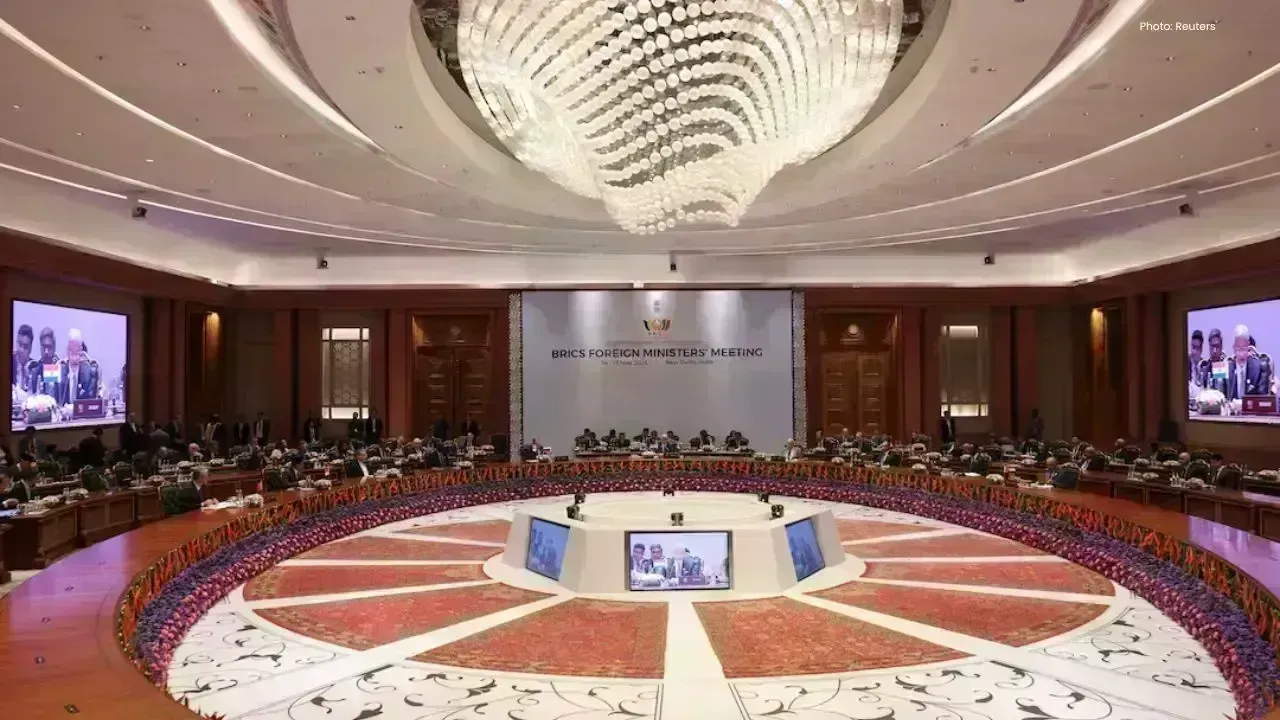
During the BRICS Foreign Ministers meeting in New Delhi, India underscored the crucial need for secure and uninterrupted maritime trade routes to preserve global economic stability. External Affairs Minister Subrahmanyam Jaishankar emphasized the significance of international waterways, particularly the Strait of Hormuz and the Red Sea, as vital conduits for trade, energy supplies, and economic advancement.
In his opening remarks at the two-day meeting, Jaishankar raised alarm over escalating tensions in West Asia, warning of their negative impacts on international shipping and energy sectors. He cautioned that disruptions to major maritime paths could lead to severe repercussions for the world economy, including inflation spikes and heightened uncertainty in trade.
The minister highlighted the critical nature of the Strait of Hormuz, where a substantial portion of global oil and gas traffic transits. Ongoing conflicts in the Middle East have reportedly hindered tanker operations, elevating risks associated with shipping and driving up energy prices across the globe.
Jaishankar called for resolution of global disputes through dialogue and diplomacy rather than unilateral sanctions or coercive tactics, emphasizing how developing nations are disproportionately impacted by economic sanctions and geopolitical tensions. He urged BRICS countries to collaborate in fostering a balanced, stable international system based on established rules.
The current members of BRICS include Brazil, Russia, India, China, South Africa, along with Egypt, Ethiopia, Indonesia, Iran, and the UAE. India, as the chair of BRICS for 2026, is hosting this foreign ministers’ meeting in New Delhi, which has attracted several high-ranking officials, including Iran’s Foreign Minister Abbas Araqchi and UAE Deputy Foreign Minister Khalifa Shaheen Al Marar.
Sources indicate that the ongoing conflict involving Iran has generated rifts among certain BRICS nations, complicating the negotiations for a joint statement. Additionally, the situation has intensified pressure on global energy markets, raising concerns over potential oil supply disruptions.
Economic analysts warn that if tensions persist in the Strait of Hormuz, it could pose a significant challenge to global trade in the coming year, given the route's role in transporting crude oil and liquefied natural gas to continents like Asia and Europe. Extended disruptions could severely affect fuel prices, inflation rates, shipping costs, and global industrial output.
India has consistently championed the concepts of navigational freedom and secure maritime trade routes, given its heavy reliance on energy imports. Indian officials argue that sustaining peace and stability in these strategic waterways is imperative for both economic security and international collaboration.
Over the next two days, the BRICS meeting in New Delhi is set to focus on discussions surrounding global economic stability, trade partnerships, energy security, and diplomatic strategies to resolve international conflicts.






Anticipated Dates for UAE Eid Al Adha 2026 Unveiled by Astronomical Experts
Experts predict Eid Al Adha 2026 in the UAE to start on May 27, prompting early holiday planning amo

DAE Achieves Remarkable Growth in Q1 2026 With Record Revenue
Dubai Aerospace Enterprise announces impressive financial results for Q1 2026, reflecting a surge in

Price Increase for Sony PS5 in Southeast Asia Effective May 1
Sony announces a price increase for the PS5 across Southeast Asia starting May 1, 2026, impacting ga

Potential ‘Super El Niño’ in 2026: Understanding the Climate Risks
Could a Super El Niño emerge in 2026? Discover its implications and potential global climate impacts

Global Energy Crisis Intensifies: Markets React to Oil Supply Challenges
Markets are on edge as oil disruptions escalate, influencing prices and economic stability. Explore

Must-See Tourist Spots in London You Can't Overlook
Explore London's essential attractions, from royal landmarks to vibrant markets, ensuring an unforge




