Post by : Saif Nasser
The conflict along the Israel-Lebanon border has entered a more dangerous phase after Lebanon’s Hezbollah group issued a public warning to Israeli civilians living near the border. The group told residents of Israeli towns located within five kilometers of the border to leave their homes, raising fears that the fighting could spread further and put more civilians at risk.
The message was posted on Hezbollah’s Telegram channel early Friday and was written in Hebrew, clearly aimed at Israeli residents living in northern communities close to Lebanon. In the message, Hezbollah said Israeli civilians should evacuate settlements within about five kilometers, or roughly three miles, from the border area.
The warning came at a time when the situation in the Middle East is already extremely tense. Cross-border clashes between Israel and Hezbollah have increased sharply, and both sides appear to be preparing for the possibility of a wider conflict. The latest developments show how quickly the crisis could escalate and draw more civilians into danger.
Hezbollah said its warning was a response to Israeli military actions in Lebanon. According to the group, Israeli strikes had targeted civilian areas and damaged infrastructure inside Lebanon. Hezbollah accused Israel of violating Lebanese sovereignty and harming ordinary people during its military operations.
In its message, the group stated that Israeli military aggression against Lebanese civilians and infrastructure “will not go unchallenged.” The statement suggested that Hezbollah could launch attacks in response to Israeli operations, which is why it urged Israeli residents living near the border to leave those areas.
The warning came less than a day after Israel issued evacuation instructions of its own. Israeli authorities had told residents to leave parts of Beirut’s southern suburbs, an area known as Dahiyeh, which is considered a stronghold of Hezbollah. The Israeli warning caused large numbers of people to flee the area, creating heavy traffic and crowded roads as families tried to escape potential airstrikes.
Television footage from Beirut showed residents leaving by car and even on foot as they rushed out of neighborhoods that might soon be targeted by Israeli military strikes. Some people were seen carrying bags and belongings as they tried to move to safer areas away from the conflict zone.
These back-and-forth evacuation warnings reflect the growing seriousness of the conflict between Israel and Hezbollah. Each side appears to be preparing for possible strikes that could affect populated areas, which increases the risk for civilians on both sides of the border.
The current escalation began earlier in the week when Hezbollah launched rockets and drones toward Israel. The attacks triggered Israeli retaliation, including airstrikes that targeted areas in southern and eastern Lebanon as well as parts of Beirut’s southern suburbs.
Since the clashes began, hundreds of missiles have reportedly been fired from Lebanon toward northern Israel. Israeli forces have responded with multiple airstrikes aimed at Hezbollah positions, infrastructure, and suspected military facilities inside Lebanon.
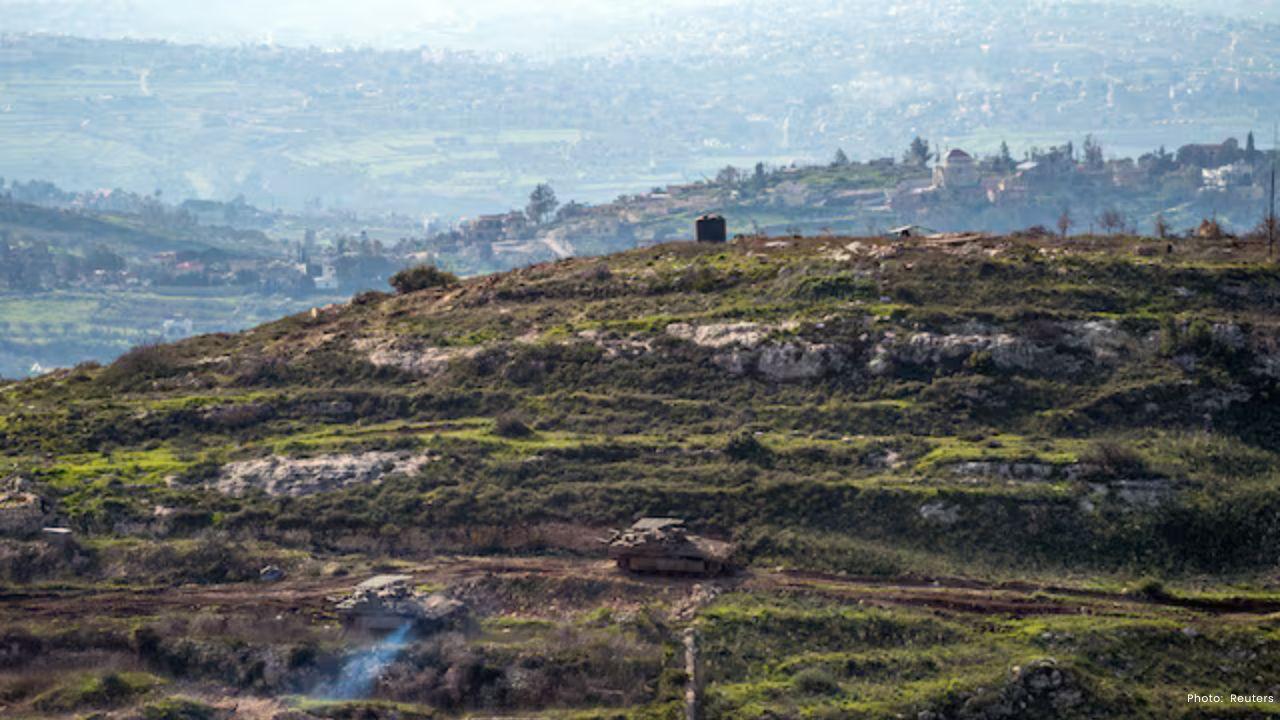
Israel has said it will not evacuate its border communities despite Hezbollah’s warning. Israeli officials have instead reinforced military positions near the border and sent additional troops into the area. According to Israeli authorities, these deployments are defensive measures designed to protect residents living near the frontier.
For people living along the border, the situation has become increasingly uncertain. Residents in northern Israel have already experienced frequent rocket sirens and security alerts over the past several days. Many families have been forced to spend long hours in shelters or safe rooms as they wait for warning systems to signal incoming attacks.
On the Lebanese side, communities in southern Lebanon have also faced repeated airstrikes and security threats. Residents in several towns have fled their homes to avoid the danger posed by Israeli military operations and the ongoing exchange of fire.
The growing confrontation between Israel and Hezbollah is happening during a broader regional crisis that has already drawn in multiple countries and armed groups. Analysts warn that the situation could easily spiral into a wider war if diplomatic efforts fail to calm tensions.
Experts say that evacuation warnings, such as the one issued by Hezbollah, are often used as psychological and strategic tools during conflicts. These messages can signal potential attacks while also spreading fear and uncertainty among civilians living near military targets.
However, such warnings also highlight the serious humanitarian risks that come with escalating warfare. Civilians are often the most vulnerable during conflicts, especially when fighting takes place near towns and cities.
International observers and humanitarian organizations have expressed concern about the safety of civilians in both Israel and Lebanon. Many groups are urging restraint from all sides and calling for diplomatic efforts to prevent the conflict from expanding further.
At the moment, the situation remains highly unpredictable. Military activity continues on both sides of the border, and neither side has shown clear signs of backing down. As a result, residents across the region are watching closely and hoping that tensions will ease before the conflict grows into a larger war.
The latest warnings and military actions show just how fragile the situation is along the Israel-Lebanon border. With missiles, airstrikes, and evacuation orders now part of daily life in the region, the coming days may prove critical in determining whether the conflict escalates further or moves toward de-escalation.









DAE Achieves Remarkable Growth in Q1 2026 With Record Revenue
Dubai Aerospace Enterprise announces impressive financial results for Q1 2026, reflecting a surge in

Price Increase for Sony PS5 in Southeast Asia Effective May 1
Sony announces a price increase for the PS5 across Southeast Asia starting May 1, 2026, impacting ga

Potential ‘Super El Niño’ in 2026: Understanding the Climate Risks
Could a Super El Niño emerge in 2026? Discover its implications and potential global climate impacts

Global Energy Crisis Intensifies: Markets React to Oil Supply Challenges
Markets are on edge as oil disruptions escalate, influencing prices and economic stability. Explore

Must-See Tourist Spots in London You Can't Overlook
Explore London's essential attractions, from royal landmarks to vibrant markets, ensuring an unforge

Ultimate Guide to Snagging Cheap Flights in 2026
Unlock the secrets to booking affordable flights in 2026 with insightful tips and strategies tailore




