Post by : Saif Nasser
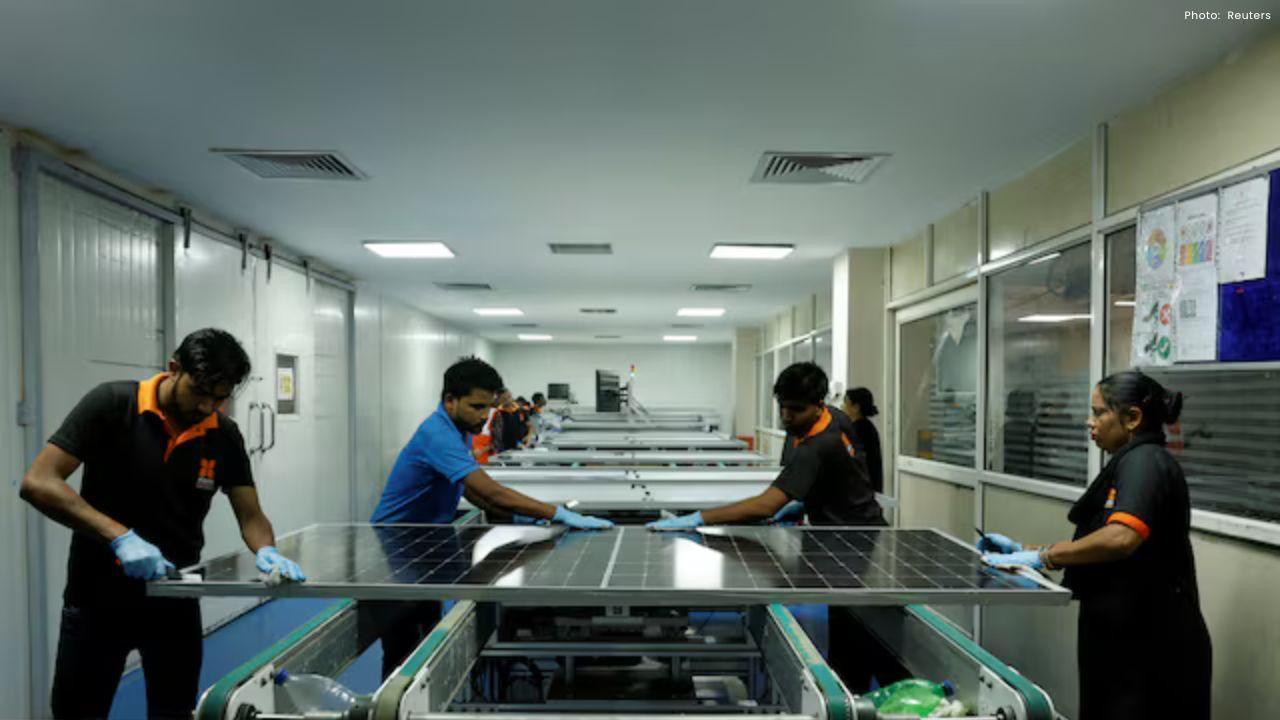
India’s solar industry is facing a serious challenge after the United States announced new trade duties on solar panels and cells imported from India. The decision could make Indian solar products much more expensive in the American market. This may reduce sales and affect the growth plans of several Indian companies.
The US government said the duties are being placed because of concerns that Indian solar manufacturers received government support that gave them a pricing advantage. Officials believe such support may have made it harder for American companies to compete fairly. As a result, high preliminary duties have been announced while the investigation continues.
For Indian solar makers, the United States is an important market. In recent years, exports to the US increased sharply. Many Indian companies expanded their factories and increased production to meet rising demand from American buyers. The new duties now threaten that progress.
If these tariffs remain in place, Indian solar panels will cost more in the US. Higher prices could lead American buyers to look for other suppliers. This would mean fewer export orders for Indian companies. Lower exports could slow revenue growth and delay expansion plans.
The stock market reacted quickly. Shares of several renewable energy companies in India fell after the announcement. Investors are worried that the companies may struggle to maintain profits if access to the US market becomes limited.
Supporters of the US decision say the move is necessary to protect local manufacturing. They argue that domestic producers should have a fair opportunity to grow without facing cheaper imported products. The goal is to strengthen American solar manufacturing and create more local jobs.
However, some experts warn that trade barriers can also have negative effects. Solar energy plays a key role in fighting climate change. If tariffs make solar panels more expensive, it could slow down the adoption of clean energy. This may affect global efforts to reduce carbon emissions.
The situation also shows how closely trade and environmental goals are linked. Countries want to protect their industries, but they also need affordable clean technology. Finding the right balance between economic protection and global cooperation is not simple.
India’s solar industry will now need to adjust. Companies may try to expand into new markets in Europe, the Middle East, or other parts of Asia. They may also focus more on India’s own growing demand for renewable energy. The domestic market continues to expand as the country invests in clean power projects.
Diplomatic talks between India and the United States could also play a role in shaping the future of this dispute. Trade discussions may help reduce tensions or clarify the rules around subsidies and competition.
This development is a reminder that global trade decisions can quickly affect industries and workers across borders. The coming months will be important for India’s solar sector as it works to protect its growth and remain competitive in the global clean energy market.










Meta Unveils Subscription Plans for Instagram, Facebook, and WhatsApp
Meta introduces new subscription plans for users of Instagram, Facebook, and WhatsApp, featuring enh

Suvarna Joy on Education Leadership, Resilience, and Building Purpose Through Adversity in the UAE
Suvarna Joy shares her journey of education leadership, motherhood, faith, and resilience within the

Anticipated Dates for UAE Eid Al Adha 2026 Unveiled by Astronomical Experts
Experts predict Eid Al Adha 2026 in the UAE to start on May 27, prompting early holiday planning amo

DAE Achieves Remarkable Growth in Q1 2026 With Record Revenue
Dubai Aerospace Enterprise announces impressive financial results for Q1 2026, reflecting a surge in

Price Increase for Sony PS5 in Southeast Asia Effective May 1
Sony announces a price increase for the PS5 across Southeast Asia starting May 1, 2026, impacting ga

Potential ‘Super El Niño’ in 2026: Understanding the Climate Risks
Could a Super El Niño emerge in 2026? Discover its implications and potential global climate impacts




