
Post by : Saif Nasser
A deadly hantavirus outbreak aboard the cruise ship MV Hondius has created international concern after several passengers became infected and multiple deaths were reported. Health officials from different countries are now working together to monitor passengers, contain the spread of the virus, and prevent a wider health emergency.
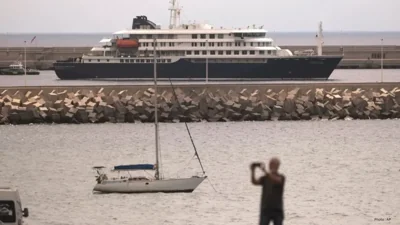
The outbreak began during an expedition cruise that started from Ushuaia, Argentina, in early April. The Dutch-flagged ship was carrying passengers and crew members from more than 20 countries while travelling through Antarctica and islands in the South Atlantic Ocean. What began as a luxury adventure quickly turned into a major medical crisis after passengers started showing serious flu-like symptoms.
According to health officials, at least 11 confirmed cases linked to the ship have now been reported, including three deaths. Several infected passengers were evacuated to hospitals in countries such as Spain, France, the United States, Switzerland, and South Africa.
Medical experts later confirmed that the outbreak involved the Andes strain of hantavirus, which is considered especially dangerous because it can rarely spread from person to person. Most hantavirus infections usually spread through contact with infected rodent urine, saliva, or droppings. Human-to-human transmission is uncommon, making this outbreak particularly worrying for global health authorities.
The World Health Organization (WHO) has stated that there is currently no sign of a large global outbreak, but officials are still remaining cautious because the virus has a long incubation period. Some passengers may develop symptoms weeks after exposure. Health agencies in several countries have therefore ordered quarantines and medical monitoring for passengers and crew members returning home.
Passengers from the ship were evacuated in Tenerife, part of Spain’s Canary Islands, before being flown to their home countries. Many were transferred using military or government aircraft under strict health safety measures. Images of passengers being disinfected before boarding flights highlighted the seriousness of the situation.
In the United States, some passengers were taken to special medical centers in Nebraska and Atlanta designed to handle dangerous infectious diseases. One American passenger tested positive despite showing no symptoms, while another showed mild illness signs. Officials stressed that the risk to the general public remains low.
The outbreak has also raised questions about health preparedness on cruise ships. Reports suggest the MV Hondius had only basic medical facilities onboard, which are normally meant for minor health issues rather than serious infectious disease outbreaks. As the crisis grew, international health experts and epidemiologists had to board the ship to assist the crew and passengers.
Health experts say the outbreak shows how quickly diseases can spread in closed environments such as cruise ships, where passengers spend long periods together in shared spaces. The COVID-19 pandemic had already exposed similar risks in the cruise industry several years ago.
The incident has also reminded the world about hantavirus itself, a disease many people know very little about. Symptoms often begin with fever, headache, muscle pain, and tiredness but can quickly become severe, leading to breathing problems and lung failure in some cases. There is currently no specific cure or vaccine for the virus, making early detection extremely important.
Experts believe the first infections may have started before passengers boarded the ship, possibly during travel through parts of Argentina or Chile where hantavirus is known to exist naturally in rodent populations. Authorities are still investigating the exact origin of the outbreak.
The situation has become one of the most unusual international health emergencies in recent years because cruise ship outbreaks involving hantavirus are extremely rare. Governments and health agencies are now tracing passenger movements, monitoring contacts, and preparing for possible additional cases.
Despite growing public concern, officials continue emphasizing that the outbreak is not similar to the COVID-19 pandemic. Medical experts say hantavirus spreads far less easily and usually requires close contact for transmission between humans.
Still, the MV Hondius crisis has shown how global travel can quickly turn local health problems into international emergencies. In a world connected by tourism and international transport, diseases can cross borders within hours, forcing governments to cooperate rapidly during health crises.








Anticipated Dates for UAE Eid Al Adha 2026 Unveiled by Astronomical Experts
Experts predict Eid Al Adha 2026 in the UAE to start on May 27, prompting early holiday planning amo

DAE Achieves Remarkable Growth in Q1 2026 With Record Revenue
Dubai Aerospace Enterprise announces impressive financial results for Q1 2026, reflecting a surge in

Price Increase for Sony PS5 in Southeast Asia Effective May 1
Sony announces a price increase for the PS5 across Southeast Asia starting May 1, 2026, impacting ga

Potential ‘Super El Niño’ in 2026: Understanding the Climate Risks
Could a Super El Niño emerge in 2026? Discover its implications and potential global climate impacts

Global Energy Crisis Intensifies: Markets React to Oil Supply Challenges
Markets are on edge as oil disruptions escalate, influencing prices and economic stability. Explore

Must-See Tourist Spots in London You Can't Overlook
Explore London's essential attractions, from royal landmarks to vibrant markets, ensuring an unforge




