Post by : Priya
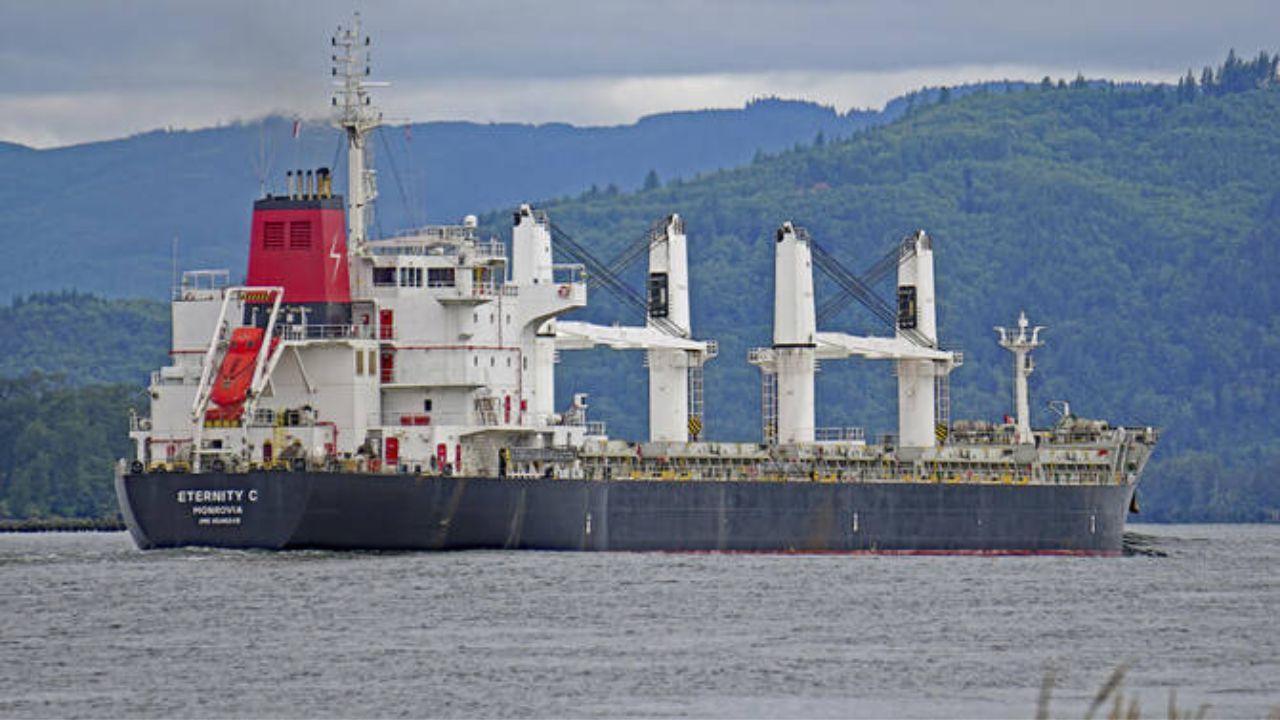
Photo:AP
A Greek-owned cargo ship sank off the coast of Yemen after being struck by a missile, reportedly fired by Houthi rebels. This tragic incident, which occurred in the Bab al-Mandab Strait—one of the world’s most important maritime chokepoints—has not only endangered lives but also raised serious concerns about the safety of global shipping lanes. With rescue operations underway and investigations beginning, the world is closely watching what might turn into a wider crisis in the Red Sea.
This editorial provides a comprehensive look at the attack, the possible motivations behind it, the danger it poses to international shipping, and the wider geopolitical consequences. It uses clear, easy-to-understand language and provides detailed insights to help readers grasp the full picture of this developing story.
What Happened to the Greek Ship?
The incident took place on Tuesday morning, July 9, 2025. The ship, named Tutor, was sailing under the Liberian flag but owned by a Greek shipping company. It was on a routine voyage through the Red Sea when a missile hit the vessel. The location of the attack was near the Bab al-Mandab Strait, a narrow waterway connecting the Red Sea to the Gulf of Aden.
According to maritime security agencies, the missile struck the rear section of the ship, causing heavy damage. Within a short time, water began flooding the engine room. Despite the crew’s best efforts, the vessel could not be saved. The ship eventually sank, sending distress signals to nearby ships and naval forces operating in the area.
The ship was reportedly carrying general cargo. No dangerous or hazardous materials were on board. However, the attack itself was enough to cause a global reaction.
The Rescue Operation
As the ship went down, its crew members had to jump into the sea. Fortunately, distress calls were quickly picked up by nearby vessels and naval units patrolling the region. Helicopters and rescue boats were immediately dispatched to the scene.
Initial reports suggest that most of the crew were successfully rescued, though a few members remain unaccounted for. The identities of the rescued sailors and their nationalities have not yet been released publicly.
Search and rescue efforts are still ongoing as authorities try to ensure that no one is left behind. Meanwhile, medical teams are checking those rescued for injuries or trauma.
Who Is Behind the Attack?
Although no group officially claimed responsibility at the time of writing, military experts and security officials believe the missile was launched by Yemen’s Houthi rebels. This group, backed by Iran, has been active in launching attacks against both military and civilian targets in the region for years.
In recent months, the Houthis have openly threatened to attack international vessels they believe are associated with Western or Israeli interests. They claim such actions are part of their response to the ongoing conflict in Gaza and Yemen. These attacks are intended to disrupt trade and put pressure on their enemies, but they endanger innocent lives and global commerce.
This is not the first time the Houthis have targeted ships. They have launched drones, missiles, and even sea mines in past attacks. The group’s control of parts of Yemen’s coastline gives them a strategic advantage in launching such operations.
Why the Red Sea Is So Important
The Bab al-Mandab Strait, where the attack occurred, is one of the most crucial shipping routes in the world. Every day, hundreds of ships carrying oil, food, and goods pass through this narrow waterway. It connects the Mediterranean Sea (via the Suez Canal) with the Indian Ocean and Asia.
According to global trade data, about 10% of all seaborne trade passes through the Red Sea. Disruptions in this area can lead to delays in deliveries, rising shipping costs, and even increased prices for fuel and essential goods worldwide.
The sinking of the Tutor is expected to worsen fears among shipping companies, many of which have already rerouted vessels away from the Red Sea due to rising security risks. If the threat continues, it could impact global supply chains and hurt economies across the world.
The Human Cost
Behind the headlines and political tensions are real people—sailors, families, and workers whose lives are at risk. Merchant shipping may seem like a mechanical process, but it relies on humans operating in difficult and dangerous conditions.
The crew aboard the Tutor were ordinary men performing a tough job. Many come from developing countries and work long hours at sea to support their families back home. For them, a sudden missile strike is not just a news story—it’s a matter of life and death.
Seafarers' unions and global labor organizations have condemned the attack, calling for stronger protections for those working at sea. They urge governments to treat commercial sailors as non-combatants and to guarantee their safety through diplomatic and military means.
Global Reactions
The news of the attack and the sinking of the Tutor quickly spread around the world. Greece’s Ministry of Foreign Affairs said it was "deeply concerned" and was working with international partners to ensure the safety of the crew.
The International Maritime Organization (IMO) issued a statement condemning the attack and urging all parties to respect international law, which prohibits targeting civilian ships. The United Nations echoed this message, calling for the protection of global shipping lanes.
The United States, United Kingdom, and European Union have also spoken out, promising to increase their naval presence in the Red Sea. These nations already operate warships in the region to secure commercial routes, but this incident may push them to expand their operations.
Previous Attacks and Rising Tensions
This is just the latest in a series of attacks on commercial vessels in the Red Sea and Gulf of Aden:
In January 2025, a British tanker was hit by a drone strike while heading to the Suez Canal.
In April, an Israeli-linked cargo ship was damaged by a missile.
Last month, a vessel belonging to a German shipping line narrowly escaped an attack by a Houthi-controlled drone boat.
These attacks are part of a wider pattern. The Houthis, who control large parts of northern Yemen, have long used asymmetric warfare tactics to exert pressure on their opponents. Their access to Iranian weapons and technology has made them more dangerous.
At the same time, regional conflicts—such as the Israel-Palestine war, the Iran-Saudi rivalry, and unrest in Sudan—have added to the instability in the Red Sea area.
Impact on Global Trade and Shipping
The immediate impact of the Tutor attack is increased fear and hesitation among shipping companies. Already, several major carriers have announced they will reroute ships via the Cape of Good Hope—adding 10 to 14 days of travel time.
This move increases fuel costs and insurance premiums, which will likely be passed on to consumers. Small shipping companies may not be able to afford these costs, forcing some out of business.
Experts also warn of a ripple effect across industries: from delays in electronics to higher food prices. Insurance firms have already labeled the Red Sea a "high-risk zone," making it harder and more expensive to operate there.
What Needs to Be Done?
To prevent more tragedies like the Tutor, international action is needed on several levels:
Stronger Naval Protection: Countries with naval forces in the region must increase patrols and offer direct escort services to cargo ships, especially those passing through high-risk zones.
Diplomatic Pressure: Governments must use political tools to push back against armed groups threatening maritime safety. This includes sanctions, peace negotiations, and international cooperation.
Support for Sailors: The safety and rights of crew members should be prioritized. Sailors must be given proper training, safety equipment, and mental health support.
Technology and Early Warning: New systems like missile-detection radars and automated response drones could help ships avoid or deflect attacks in the future.
Safe Shipping Corridors: Designating and protecting specific lanes in international waters could help reduce risks.








DAE Achieves Remarkable Growth in Q1 2026 With Record Revenue
Dubai Aerospace Enterprise announces impressive financial results for Q1 2026, reflecting a surge in

Price Increase for Sony PS5 in Southeast Asia Effective May 1
Sony announces a price increase for the PS5 across Southeast Asia starting May 1, 2026, impacting ga

Potential ‘Super El Niño’ in 2026: Understanding the Climate Risks
Could a Super El Niño emerge in 2026? Discover its implications and potential global climate impacts

Global Energy Crisis Intensifies: Markets React to Oil Supply Challenges
Markets are on edge as oil disruptions escalate, influencing prices and economic stability. Explore

Must-See Tourist Spots in London You Can't Overlook
Explore London's essential attractions, from royal landmarks to vibrant markets, ensuring an unforge

Ultimate Guide to Snagging Cheap Flights in 2026
Unlock the secrets to booking affordable flights in 2026 with insightful tips and strategies tailore




