Post by : Priya
Photo:Reuters
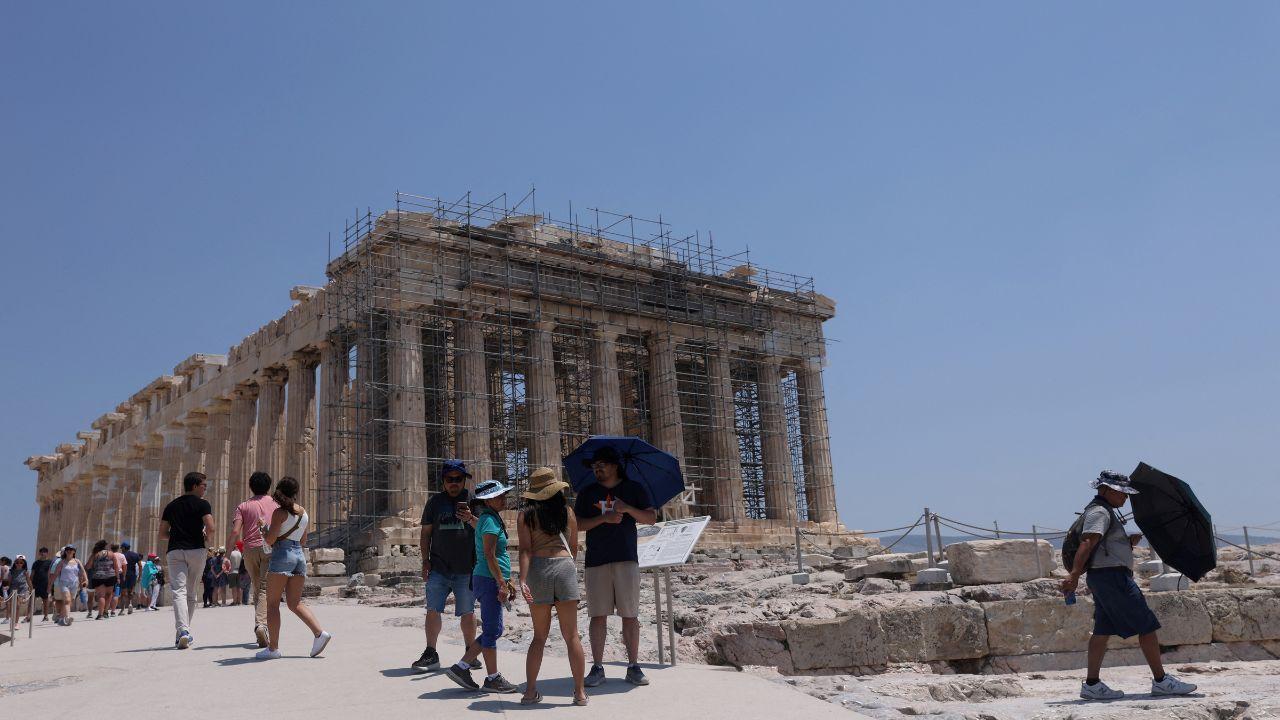
Greece is currently facing one of the most severe heatwaves in recent years. The rising temperatures have created dangerous conditions for both locals and tourists. As a safety measure, the government has taken serious steps, including the closure of the world-famous Acropolis in Athens and halting outdoor work during peak heat hours.
The heatwave, which has caused temperatures to soar above 43 degrees Celsius (over 109°F) in some areas, has put immense pressure on public health, tourism, and the country’s economy. Meteorologists have issued multiple warnings, stating that this might be one of the earliest and strongest heatwaves Greece has experienced in decades.
This article provides a detailed look into how the heatwave is affecting daily life in Greece, what steps the government is taking, the reaction of the public, and the wider implications for the region.
The Acropolis: Greece’s Crown Jewel Closed to Tourists
One of the most significant steps taken by Greek authorities is the closure of the Acropolis, the historic site that draws millions of tourists each year. Located in the heart of Athens, the Acropolis is not only a major tourist attraction but also a symbol of Greece’s cultural heritage.
Due to extremely high temperatures, the Ministry of Culture has decided to shut the site during the hottest part of the day — from 12:00 PM to 5:00 PM. This measure is intended to prevent heatstroke and exhaustion among both visitors and staff.
Many tourists were disappointed, but most expressed understanding of the situation. One visitor from Canada said, “It’s disappointing, of course. We traveled thousands of miles to see the Acropolis, but health and safety should come first. You can’t enjoy anything if you’re falling ill.”
Emergency workers have also been stationed near the site to assist anyone feeling unwell. Free water is being distributed to visitors, and shaded areas have been set up for those waiting outside.
Outdoor Work Suspended: A Move to Protect Laborers
The Greek Labor Ministry has issued special guidelines to protect outdoor workers during the heatwave. From noon to 5:00 PM, outdoor physical labor is now restricted. This applies to a wide range of industries including construction, delivery services, agriculture, and road work.
The new rules require employers to:
These decisions came after several workers were hospitalized with symptoms of heat exhaustion. Labor unions welcomed the move, but they have also called for long-term protections as such heatwaves become more common due to climate change.
A construction worker in Thessaloniki said, “We’re used to working in the heat, but this is something else. I’ve never seen temperatures like this in June or July before. It’s dangerous.”
Heatwave’s Impact on Public Health: Hospitals on High Alert
Public hospitals and health centers across Greece have been placed on high alert. Doctors and nurses have been advised to prepare for a rise in heat-related illnesses such as dehydration, heat exhaustion, and heatstroke.
The Ministry of Health has issued public advisories asking citizens, especially the elderly, young children, and people with existing health conditions, to stay indoors during peak heat hours and drink plenty of water. Special attention is also being paid to people living alone, the homeless, and those without access to air conditioning.
Ambulance services have been increased in high-risk areas, and some hospitals in Athens have opened additional emergency units to treat heat-related conditions. The government has also partnered with local NGOs to distribute water and supplies to vulnerable communities.
Schools, Summer Camps, and Public Activities Disrupted
The heatwave has also disrupted educational and recreational activities. Many schools in Athens and other major cities have been temporarily closed or have shortened school hours to avoid exposing students to dangerous temperatures.
Summer camps and outdoor programs for children have been moved indoors or cancelled entirely in some areas. Parents are being advised to keep children at home, avoid outdoor play, and keep them hydrated.
Local sports events, public performances, and festivals have been either cancelled or postponed until cooler weather returns. Even cultural sites besides the Acropolis, including ancient ruins and open-air theaters, are adjusting operating hours.
Wildfire Threat Looms as Heatwave Continues
Apart from the danger to human health, the ongoing heatwave has also heightened the risk of wildfires across the country. High temperatures combined with dry winds and vegetation create perfect conditions for fires to start and spread quickly.
The Greek Fire Department has already responded to several small fires in forested areas. Luckily, they were brought under control before they could cause large-scale damage. However, the threat remains very real.
Authorities have banned all open flames, including barbecue fires, in high-risk zones. Residents have been warned not to throw cigarette butts on dry grass or burn garden waste. A state of high alert has been declared in central and southern Greece.
Fire-fighting helicopters and planes have been deployed in anticipation of possible outbreaks. Extra firefighters have been stationed in vulnerable regions, and evacuation plans are ready if needed.
Tourist Industry Caught in the Middle
Tourism is one of the most important parts of Greece’s economy. Each summer, millions of travelers from Europe, North America, and Asia come to enjoy the sun, sea, and historic sites. But the current heatwave is affecting the tourism sector in several ways.
Hotel managers, tour guides, and transport operators are adjusting their schedules. Many outdoor tours now start early in the morning or after sunset. Buses and tourist vehicles are offering more breaks and providing cold water to passengers.
Tourist agencies are also giving health tips to visitors, such as:
Despite the heat, Greece continues to see a strong inflow of tourists, especially on the islands. However, if the heatwave continues or worsens, it could lead to booking cancellations and shorter stays, especially among families with children and older travelers.
Government Measures and Public Communication
The Greek government has been holding regular emergency meetings to coordinate the national response to the heatwave. Prime Minister Kyriakos Mitsotakis has spoken publicly, urging calm and assuring citizens that all necessary steps are being taken.
Government departments are working together to ensure public safety. The Ministry of Interior has asked all municipalities to activate their emergency plans. Special “cooling centers” have been opened in city halls, libraries, and sports centers for people without access to air conditioning.
Public television, radio, and online channels are broadcasting warnings and tips on how to stay safe. Social media platforms have also been used to share updates and emergency contacts.
The Role of Climate Change
Experts say that this heatwave is not just a one-time event. Climate scientists warn that such extreme weather events are becoming more frequent and intense due to global warming.
Greece, like many Mediterranean countries, is especially vulnerable to rising temperatures. The region is expected to face more severe heatwaves, longer dry periods, and stronger wildfires in the coming decades.
Climate researchers are calling for stronger action on climate adaptation. This includes better infrastructure, more green spaces in cities, early warning systems, and long-term urban planning to protect people from extreme weather.
The Voice of the People
Across the country, people are adjusting to the heat in different ways. While many understand the need for safety measures, there is also growing concern about how to deal with such conditions in the future.
In a public park in Athens, 68-year-old Georgia M., who lives alone, said: “It’s hard. I don’t have air conditioning. I go to the community center to stay cool, but I can’t stay there all day.”
Younger workers are also feeling the strain. A food delivery rider in Thessaloniki, Nikos, shared: “I work on my bike all day. Even though we stop at noon now, it’s still hot in the evening. I hope we get some rain soon.”
Preparing for the Days Ahead
Weather experts have forecast that the current heatwave will continue for at least another five days, possibly longer. Temperatures will remain dangerously high in many parts of the country, with only minor drops expected in the northern regions.
Emergency services and hospitals are expected to remain on alert until the heat breaks. The government is urging people to remain cautious and follow safety guidelines at all times.
What to Do During a Heatwave: Safety Tips from Authorities
For everyone living in or visiting Greece during this heatwave, here are some simple but important safety measures:







DAE Achieves Remarkable Growth in Q1 2026 With Record Revenue
Dubai Aerospace Enterprise announces impressive financial results for Q1 2026, reflecting a surge in

Price Increase for Sony PS5 in Southeast Asia Effective May 1
Sony announces a price increase for the PS5 across Southeast Asia starting May 1, 2026, impacting ga

Potential ‘Super El Niño’ in 2026: Understanding the Climate Risks
Could a Super El Niño emerge in 2026? Discover its implications and potential global climate impacts

Global Energy Crisis Intensifies: Markets React to Oil Supply Challenges
Markets are on edge as oil disruptions escalate, influencing prices and economic stability. Explore

Must-See Tourist Spots in London You Can't Overlook
Explore London's essential attractions, from royal landmarks to vibrant markets, ensuring an unforge

Ultimate Guide to Snagging Cheap Flights in 2026
Unlock the secrets to booking affordable flights in 2026 with insightful tips and strategies tailore




