Post by : Sami Jeet
Disclaimer: This article is intended for informational purposes and should not be construed as financial or legal counsel.
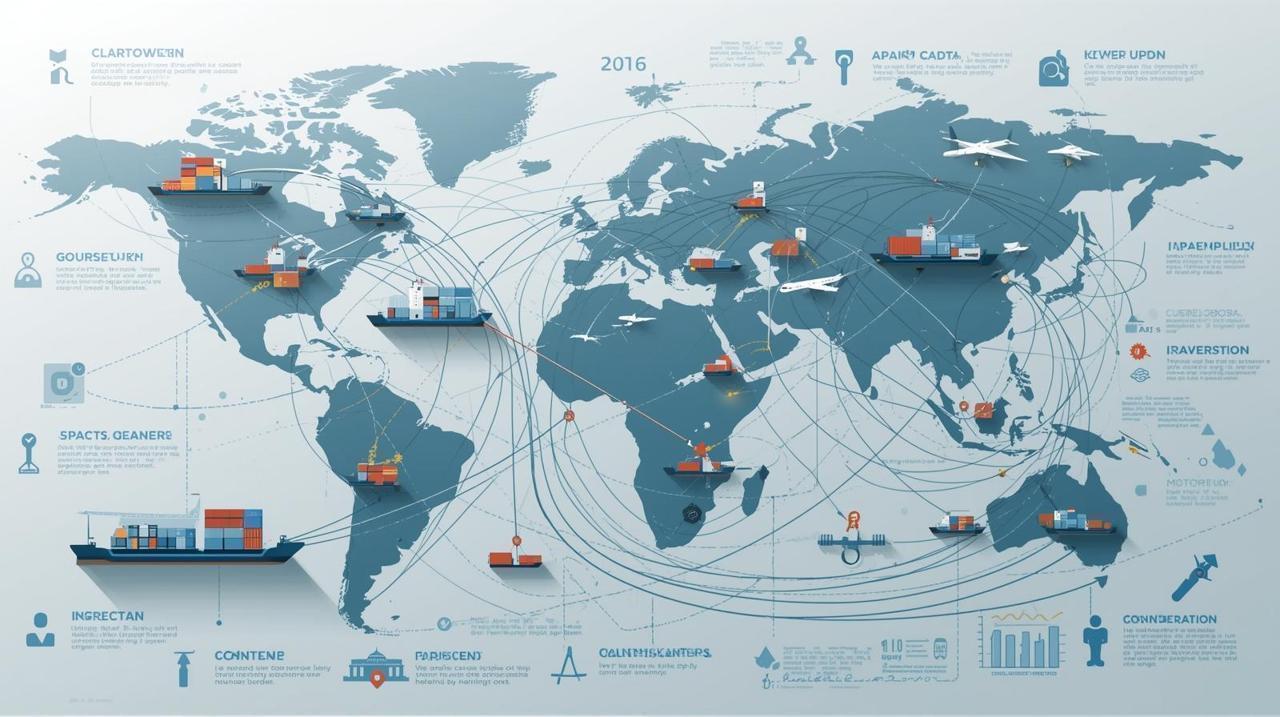
The Red Sea crisis disrupted one of the globe's pivotal maritime routes, compelling key shipping entities to redirect their vessels, extend shipping periods, and rethink logistics strategies comprehensively. Initially perceived as a localized security matter, it soon reverberated across international markets, leading to elevated shipping costs and delayed product shipments. The current landscape reflects a significant reconfiguration in how global supply chains function, particularly affecting areas reliant on maritime trade such as Europe, Asia, and the Middle East. This article delineates how these shifts are redefining trade patterns, innovative technologies, and strategic planning for enterprises.
The Red Sea proves to be a crucial trade conduit linking the Mediterranean Sea to Asia via the Suez Canal, managing roughly 12% of global trade. It holds paramount importance for shipping firms that rely on swift east-west transit routes. The onset of disruptions resulted in heightened insurance costs, extended travel distances, and operational uncertainties. Such challenges instigated a series of novel strategies now being adopted by businesses striving for resilience.
The rerouting of vessels around the Cape of Good Hope extended travel times by up to 14 days, significantly affecting:
Surging freight charges
Escalated fuel usage
Prolonged inventory cycles
Disruptions across retail, automotive, and electronics industries
These rising costs have prompted companies to rethink their supply chain diversification strategies, a concept gaining traction in today's global logistics landscape.
Enterprises worldwide are enacting substantial changes to minimize risks, avoid bottlenecks, and diversify their sources. Below are the key shifts influencing the future of supply chains.
Nearshoring entails relocating production closer to consumers. This trend has gained momentum, driven by a heightened awareness of the risks associated with over-reliance on a single route or region. Countries in Eastern Europe, the Middle East, and Southeast Asia are emerging as new manufacturing centers. Nearshoring strategies not only lower shipping times but also mitigate disruptions, enabling companies to establish a more stable supply chain.
Prior to the crisis, the Suez route was the primary shipping avenue for many companies. Currently, businesses are designing multi-route logistics frameworks encompassing:
Alternative maritime paths
Rail corridors
Hybrid air-freight solutions
Land-bridge routes across GCC and Central Asia
Utilizing diverse pathways equips companies with flexibility in the face of unforeseen geopolitical challenges.
The crisis underscored the necessity of real-time data and automation for global operations. Consequently, businesses are swiftly integrating technologies such as:
AI-driven route optimization
Blockchain for secure trade transactions
Robotics in warehousing to minimize delays
IoT sensors for tracking cargo
Predictive analytics enable shippers to steer clear of risky regions, strategize fuel utilization, and uphold schedules with enhanced precision.
Disruptions in the Red Sea have prompted GCC nations to enhance regional trade connectivity. Projects such as:
The GCC Railway Initiative
Expanded port capacities across UAE, Saudi Arabia, and Oman
New logistics free zones
These advancements reduce reliance on global shipping routes, bolstering internal networks. The UAE’s role as a logistics hub has further gained momentum, particularly through Jebel Ali Port and essential air-cargo corridors.
An increasing number of enterprises are moving away from heavy reliance on East Asian production. Nations like India, Vietnam, Mexico, and the UAE are rising as viable alternative manufacturing sites. This trend mitigates vulnerabilities tied to maritime chokepoints and enables businesses to establish more diverse global supply chains.
Rising fuel costs due to the crisis have spurred organizations to investigate eco-friendly alternatives. Evolving trends include:
Utilization of biofuels
Experimentation with hydrogen-powered vessels
Implementation of slow-steaming methods
Compliance with environmental regulations
These sustainable measures yield ecological benefits while providing long-term cost efficiencies as global fuel prices fluctuate.
Historically, enterprises prioritized low-cost sourcing. In the aftermath of the Red Sea crisis, resilience has taken precedence. This shift encompasses:
Supplier diversification
Risk assessment
Establishing surplus inventory for essential goods
Formulating emergency response measures
This evolution demonstrates a growing emphasis on stability rather than marginal savings.
As a logistics leader, the UAE is leveraging the current supply chain transformation by investing in:
Smart port technology
Advanced air-freight systems
Logistics-focused free zones
Digital trading platforms
Dubai and Abu Dhabi are strategically positioning themselves as central players in the renovated global trade framework, assisting businesses in circumventing unstable routes and ensuring smooth operations.
For consumers, this transformation may lead to transient price fluctuations, particularly in imported goods. Conversely, enterprises stand to gain long-term benefits from the new supply chain model:
Reduced lead times via alternative channels
Lower reliance on precarious pathways
Enhanced integration of automation and technology
Strengthened regional collaborations
While the crisis presented immediate challenges, it ultimately fosters a more secure and varied global trade environment in the long run.
The Red Sea crisis represented a critical juncture reshaping corporate perspectives on logistics and global sourcing. Heightened geopolitical uncertainties have compelled firms to embrace resilience, innovation, and diversification as foundational elements of contemporary supply chains. As nations like the UAE continue to develop state-of-the-art logistics infrastructures, the global trade framework is evolving towards greater flexibility, technology reliance, and enhanced security.





Anticipated Dates for UAE Eid Al Adha 2026 Unveiled by Astronomical Experts
Experts predict Eid Al Adha 2026 in the UAE to start on May 27, prompting early holiday planning amo

DAE Achieves Remarkable Growth in Q1 2026 With Record Revenue
Dubai Aerospace Enterprise announces impressive financial results for Q1 2026, reflecting a surge in

Price Increase for Sony PS5 in Southeast Asia Effective May 1
Sony announces a price increase for the PS5 across Southeast Asia starting May 1, 2026, impacting ga

Potential ‘Super El Niño’ in 2026: Understanding the Climate Risks
Could a Super El Niño emerge in 2026? Discover its implications and potential global climate impacts

Global Energy Crisis Intensifies: Markets React to Oil Supply Challenges
Markets are on edge as oil disruptions escalate, influencing prices and economic stability. Explore

Must-See Tourist Spots in London You Can't Overlook
Explore London's essential attractions, from royal landmarks to vibrant markets, ensuring an unforge




