Post by : Anees Nasser
The intrigue of the night sky continues to captivate humanity, and in 2026, this fascination will reach new heights. Scientists and space agencies are keenly observing the rise in geomagnetic storms and auroras, which are set to occur more frequently as the Sun's activity cycle approaches a pivotal point.
As solar flares and coronal mass ejections escalate, 2026 is predicted to be a significant year where cosmic phenomena impact earthly life. While auroras amaze observers, the associated geomagnetic storms pose risks, making it vital to comprehend their underlying science.
The Sun undergoes an 11-year cycle, alternating between periods of low and high activity. At solar maximum, an increase in sunspots and solar flares is observed, leading to heightened magnetic activity.
With the current cycle nearing its peak, scientists note a rise in solar instability, which contributes to lower latitudes experiencing auroras and stronger geomagnetic disturbances.
During this vital phase, the complexity of the Sun's magnetic field intensifies, elevating the chances of eruptions that can interact with Earth’s magnetic field.
A geomagnetic storm results from a surge of charged particles from the Sun, often linked to coronal mass ejections that collide with Earth’s magnetic field, destabilizing the magnetosphere and leading to rapid changes.
These storms can range from minor disturbances to severe events, disrupting satellites, power grids, and communications.
Significant geomagnetic storms occur only when solar eruptions are directed towards Earth and are potent enough to penetrate the magnetosphere, a dynamic influenced by the orientation and speed of solar particles.
Earth's magnetic field, generated by its molten core, forms a protective shield against harmful solar radiation and charged particles.
During solar storms, the magnetosphere absorbs and reroutes energy. However, in extreme cases, this shield can be overwhelmed, leading to geomagnetic effects on our planet.
The magnetic field lines converge at the poles, creating pathways for charged particles to enter the upper atmosphere, which is why auroras are predominantly seen in Arctic and Antarctic regions.
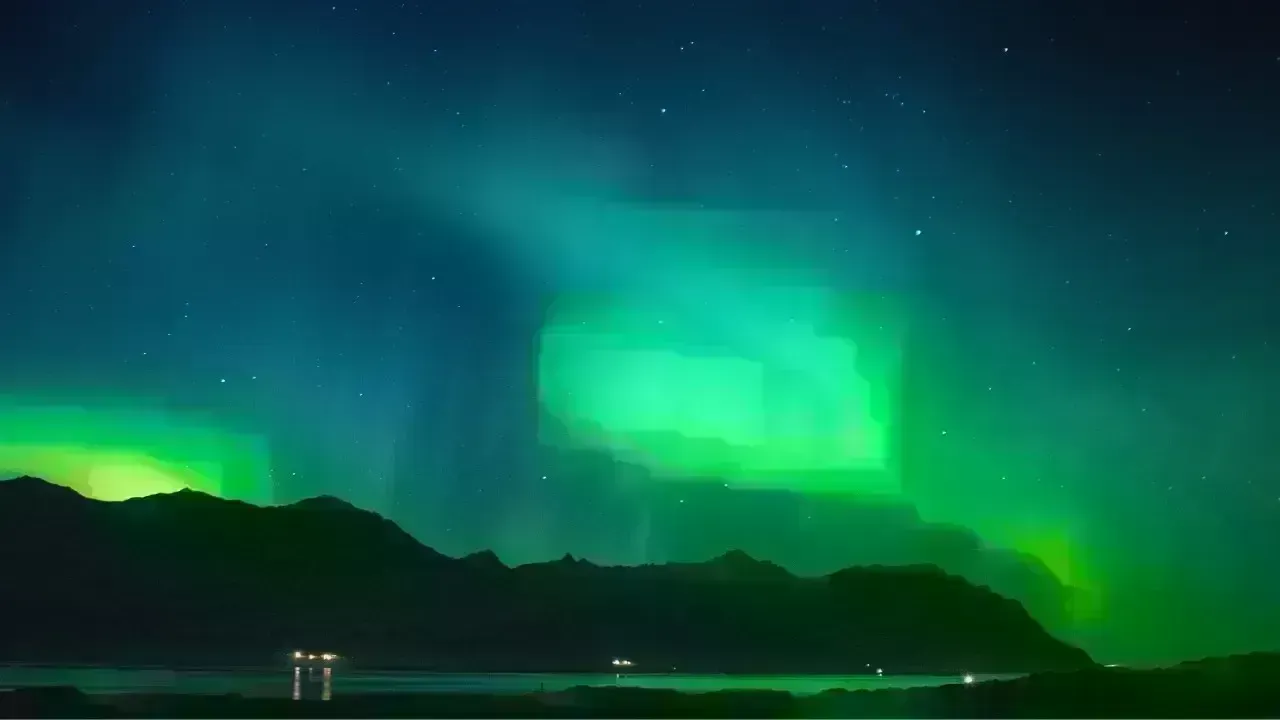
Auroras are born when solar particles collide with gases in Earth's upper atmosphere, releasing energy in luminous displays.
Oxygen produces vivid green and red hues.
Nitrogen contributes blue and purple shades.
The breathtaking phenomena are known as aurora borealis in the northern hemisphere and aurora australis in the southern hemisphere.
Heightened geomagnetic storms enable charged particles to venture further from the poles, allowing auroras to be visible in regions that seldom witness them.
Current monitoring of space weather indicates an uptick in solar flares and coronal mass ejections, aligning with forecasts for an active solar cycle.
Organizations like NASA and NOAA have amplified surveillance efforts due to anticipated escalations in geomagnetic activity.
Geomagnetic storms can disrupt satellite functions, affect solar panel efficiency, and shift orbital trajectories. Navigation systems such as GPS may face temporary inaccuracies.
Strong storms can generate electric currents in power lines, risking transformer overloads. Historical events highlight the potential for large-scale blackouts, increasing concerns for grid resilience in 2026.
During severe geomagnetic storms, airlines may reroute flights near polar regions to mitigate risks associated with radiation exposure and communication disruptions.
High-frequency radio communications for aviation and maritime operations can be disrupted by instability within the ionosphere caused by geomagnetic activity.
For those on Earth, geomagnetic storms generally pose minimal health risks, thanks to the protection offered by the atmosphere and magnetic field.
Astronauts in space, particularly beyond Earth’s magnetic field, experience heightened radiation exposure during solar storms, necessitating careful mission planning.
Geomagnetic storms mainly affect the upper atmosphere but can lead to heating and expansion of atmospheric layers, impacting satellite drag.
Research is ongoing to explore whether prolonged solar activity has any correlation with climate variability, although opinions remain cautious.
Modern space weather forecasting employs satellites positioned between Earth and the Sun to detect incoming solar activity hours or even days ahead.
This technology enables power providers, satellite operators, and airline authorities to implement precautionary measures.
Improvements in solar observation methods and artificial intelligence contribute to better prediction accuracy, allowing for more diligent monitoring of space weather in 2026.
With auroras appearing in uncommon regions, public interest is surging. Social media is rife with images showcasing rare light displays captured in mid-latitude locations.
Auroras serve as a striking reminder of Earth’s position within a dynamic universe, showcasing the interplay of cosmic forces.
The Carrington Event of 1859 remains the most potent geomagnetic storm recorded. A similar occurrence today could wreak havoc on modern technology.
This historical context underscores the importance of vigilance as scientists observe solar behavior throughout 2026.
Governments and utility providers are enhancing grid resilience, implementing satellite protective measures, and establishing backup communication systems to mitigate risks.
Space weather presents worldwide challenges. Collaborative data sharing among nations and agencies is critical for effective forecasting and response strategies.
As our civilization leans heavily on satellites, digital communications, and electrical energy, geomagnetic storms serve as a crucial test of our resilience.
Understanding these phenomena is now not just scientific—it’s essential for our technological preparedness.
The year 2026 is destined to be a landmark for space weather. With geomagnetic storms amplifying and auroras illuminating unexpected landscapes, the Sun starkly reminds us of its powerful influence.
These occurrences blend awe with caution, elevating our sense of responsibility. By studying and readying for them, we can protect modern infrastructure and expand our understanding of the life-giving star that is central to our existence on Earth.
This piece serves informational and editorial purposes only. Space weather activity is variable, and forecasts may shift based on live solar observations. Readers should consult official advisories from space agencies and scientific entities for alerts and safety guidance.









Anticipated Dates for UAE Eid Al Adha 2026 Unveiled by Astronomical Experts
Experts predict Eid Al Adha 2026 in the UAE to start on May 27, prompting early holiday planning amo

DAE Achieves Remarkable Growth in Q1 2026 With Record Revenue
Dubai Aerospace Enterprise announces impressive financial results for Q1 2026, reflecting a surge in

Price Increase for Sony PS5 in Southeast Asia Effective May 1
Sony announces a price increase for the PS5 across Southeast Asia starting May 1, 2026, impacting ga

Potential ‘Super El Niño’ in 2026: Understanding the Climate Risks
Could a Super El Niño emerge in 2026? Discover its implications and potential global climate impacts

Global Energy Crisis Intensifies: Markets React to Oil Supply Challenges
Markets are on edge as oil disruptions escalate, influencing prices and economic stability. Explore

Must-See Tourist Spots in London You Can't Overlook
Explore London's essential attractions, from royal landmarks to vibrant markets, ensuring an unforge




