Post by : Monika
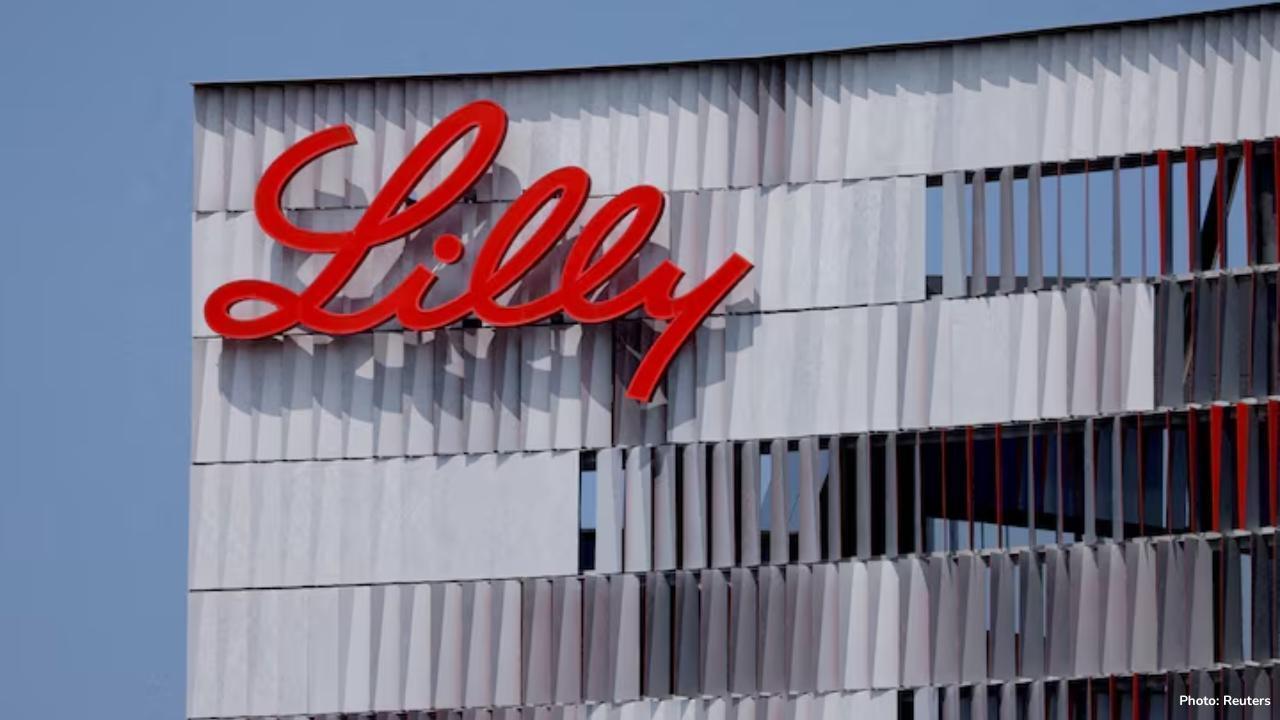
Eli Lilly, a major American pharmaceutical company, has announced that it will invest more than $1 billion in India over the next few years. This investment is part of the company’s plan to increase the production and supply of important medicines that treat obesity, diabetes, Alzheimer's disease, cancer, and autoimmune conditions.
The company is focusing on India because the country has a strong pharmaceutical industry, a skilled workforce, and a growing market for healthcare products.
This move reflects Eli Lilly’s strategy to strengthen its global manufacturing operations while meeting the rising demand for medicines worldwide. India is one of the fastest-growing pharmaceutical markets, and companies like Eli Lilly see it as an opportunity to expand production and reach more patients.
Why India?
India is often called the “pharmacy of the world” because it produces a large portion of the world’s medicines. Many global pharmaceutical companies rely on Indian manufacturers to make medicines for both domestic use and international export. India has experienced significant growth in the pharmaceutical sector due to its strong technical expertise, availability of trained scientists and engineers, and relatively low production costs.
By investing in India, Eli Lilly can take advantage of these benefits. The company can expand its production capacity without having to build all facilities from scratch. It can also partner with local companies to manufacture drugs under strict quality standards, ensuring that the medicines produced are safe and effective. This approach allows Eli Lilly to meet increasing demand quickly and efficiently.
Focus on Key Medicines
Eli Lilly’s investment in India will focus on several important medicines. One of the most notable is Mounjaro, a weight-loss drug for obesity and diabetes. Mounjaro has already been launched in India and has gained significant attention. Within months, the demand for the drug doubled, showing that it could play a crucial role in tackling rising obesity and diabetes rates in the country.
In addition to Mounjaro, Eli Lilly is working on expanding the production of medicines for Alzheimer’s disease and cancer, conditions that are becoming more common in India and worldwide. Treatments for autoimmune diseases will also be a focus, as these conditions affect a growing number of patients and require specialized medications.
The investment will ensure that these medicines are available in sufficient quantities for both India and international markets. By increasing production, Eli Lilly aims to make these treatments accessible to more patients while maintaining high quality standards.
Manufacturing Expansion in India
Currently, Eli Lilly does not own its own manufacturing facility in India. Instead, the company works with contract manufacturers in the country. These local companies produce complex drugs, injectables, and vials on behalf of global pharmaceutical companies. This approach allows Eli Lilly to scale up production without the initial costs of setting up its own factories.
As part of the $1 billion investment, Eli Lilly plans to establish a new manufacturing and quality control facility in Hyderabad. This facility will oversee production and manage operations for the India-based contract manufacturing network. It will also employ engineers, chemists, and quality control specialists to ensure that production processes meet international standards.
The new facility will play a key role in strengthening Eli Lilly’s manufacturing capabilities in India. It will also serve as a hub for managing supply chains, monitoring quality, and coordinating with global operations. By investing in infrastructure and skilled personnel, Eli Lilly ensures that it can produce medicines efficiently while maintaining safety and efficacy.
Meeting Rising Global Demand
The demand for medicines is growing both in India and globally. Factors such as population growth, aging demographics, and the increasing prevalence of chronic diseases have led to higher demand for treatments. Eli Lilly’s investment is intended to meet this demand by expanding production capacity and ensuring a steady supply of medicines.
Additionally, global competition in the pharmaceutical sector is increasing. For example, the active ingredient in Novo Nordisk’s weight-loss drug, Wegovy, is expected to go off-patent next year. This means that generic manufacturers could produce similar medicines at lower prices. By expanding production in India, Eli Lilly is positioning itself to remain competitive and protect its market share.
The investment also aligns with the company’s goal to improve global access to medicines. By increasing production in India, Eli Lilly can supply both domestic and international markets efficiently, reducing shortages and ensuring patients have access to life-saving treatments.
Impact on the Indian Economy
Eli Lilly’s investment will have positive effects on the Indian economy. The new manufacturing facility and expansion of contract manufacturing networks will create jobs for engineers, chemists, technicians, and support staff. It will also boost the local pharmaceutical supply chain, benefiting raw material suppliers, logistics providers, and service industries.
Moreover, the investment will help India strengthen its position as a global hub for pharmaceutical manufacturing. Other multinational companies may follow suit, attracted by the skilled workforce, robust infrastructure, and supportive government policies. This can lead to further growth in foreign investment, technology transfer, and innovation in the sector.
Supporting Healthcare Development
Beyond manufacturing, Eli Lilly’s investment can improve healthcare outcomes in India. By increasing the availability of medicines for obesity, diabetes, Alzheimer’s, cancer, and autoimmune diseases, more patients will have access to essential treatments. This is especially important in rural and underserved areas, where access to medicines can be limited.
The expansion also reflects Eli Lilly’s commitment to innovation and public health. The company invests in research and development to create new treatments that address unmet medical needs. By manufacturing these medicines locally, Eli Lilly ensures that patients benefit from timely access to new therapies.
Challenges and Considerations
Despite the positive outlook, there are challenges. Producing complex medicines requires strict quality control, regulatory compliance, and skilled personnel. Eli Lilly must ensure that all facilities meet international standards to maintain safety and efficacy.
Additionally, competition from Indian generic drug manufacturers is strong. Many companies in India produce high-quality generic medicines at lower costs. Eli Lilly will need to balance pricing, production efficiency, and quality to remain competitive.
Regulatory approvals and import-export policies may also impact operations. The company must navigate these factors carefully to ensure smooth production and distribution of medicines.
Global Significance
Eli Lilly’s investment in India is not only important for the company and India but also for the global pharmaceutical market. India’s production capabilities can help meet the worldwide demand for essential medicines, reducing shortages and stabilizing prices.
This investment reflects a broader trend of multinational pharmaceutical companies expanding operations in emerging markets. Countries like India offer advantages such as skilled labor, lower production costs, and access to growing domestic markets. By leveraging these benefits, Eli Lilly can strengthen its global supply chain and reach more patients worldwide.
Future Outlook
The $1 billion investment by Eli Lilly is expected to be implemented over the next several years. As production capacity increases, the company anticipates being able to supply more medicines, meet rising demand, and maintain high standards of quality.
This expansion also supports India’s position as a key player in the global pharmaceutical industry. With increased manufacturing capabilities, India can continue to supply essential medicines to both domestic and international markets efficiently.
Eli Lilly’s commitment to India highlights the importance of strategic investments in emerging markets. By focusing on manufacturing expansion, workforce development, and quality control, the company aims to ensure long-term growth and sustainability.
Eli Lilly’s plan to invest over $1 billion in India marks a significant step for the company and the country’s pharmaceutical sector. By expanding production and establishing a new manufacturing facility in Hyderabad, Eli Lilly aims to increase the availability of essential medicines for obesity, diabetes, Alzheimer’s, cancer, and autoimmune diseases.
The investment will create jobs, strengthen India’s position as a global hub for pharmaceutical manufacturing, and support healthcare development. It will also help Eli Lilly remain competitive in a rapidly evolving global market, ensuring that patients worldwide have access to innovative and effective treatments.
Overall, this strategic move demonstrates Eli Lilly’s commitment to global health, innovation, and long-term growth, while providing economic and healthcare benefits to India.









DAE Achieves Remarkable Growth in Q1 2026 With Record Revenue
Dubai Aerospace Enterprise announces impressive financial results for Q1 2026, reflecting a surge in

Price Increase for Sony PS5 in Southeast Asia Effective May 1
Sony announces a price increase for the PS5 across Southeast Asia starting May 1, 2026, impacting ga

Potential ‘Super El Niño’ in 2026: Understanding the Climate Risks
Could a Super El Niño emerge in 2026? Discover its implications and potential global climate impacts

Global Energy Crisis Intensifies: Markets React to Oil Supply Challenges
Markets are on edge as oil disruptions escalate, influencing prices and economic stability. Explore

Must-See Tourist Spots in London You Can't Overlook
Explore London's essential attractions, from royal landmarks to vibrant markets, ensuring an unforge

Ultimate Guide to Snagging Cheap Flights in 2026
Unlock the secrets to booking affordable flights in 2026 with insightful tips and strategies tailore




