Post by : Saif Nasser
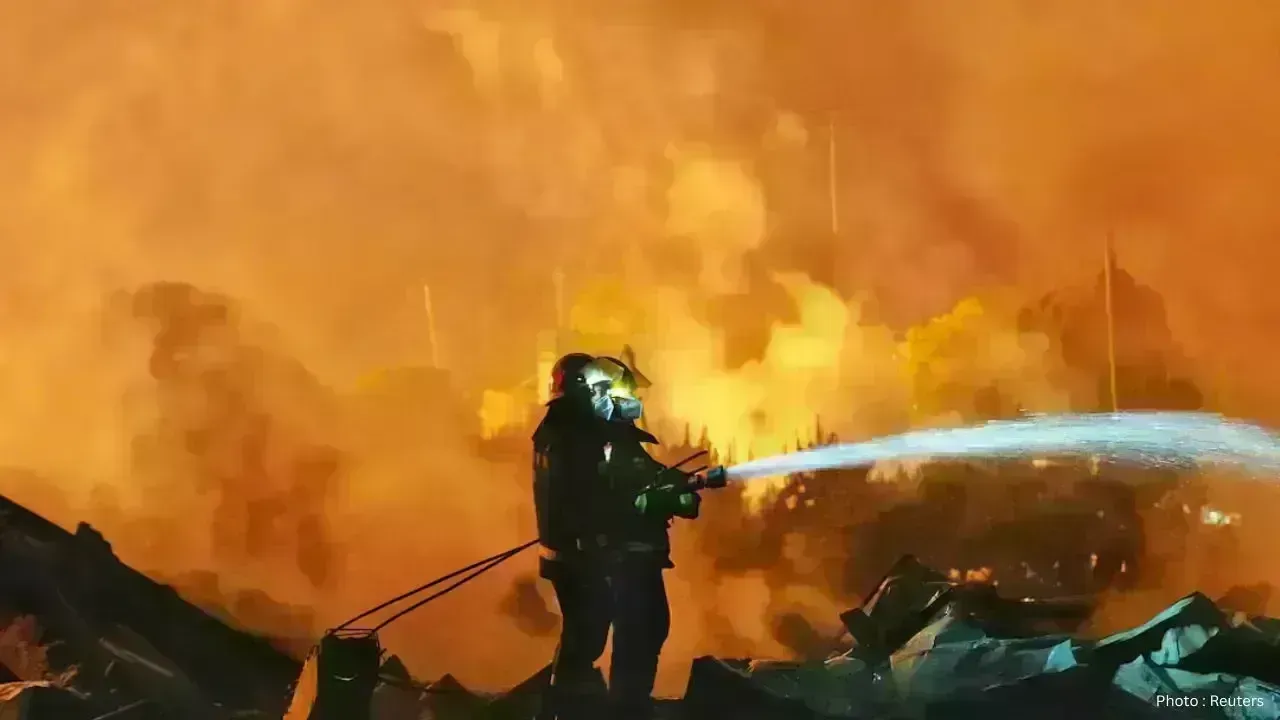
A tragic explosion at a fireworks factory in Hunan Province has shocked the nation and drawn global attention. The blast, which took place in the city of Liuyang near Changsha, killed at least 21 people and injured 61 others.
The incident happened on the afternoon of May 4 at a plant operated by a local fireworks company. Witnesses reported a powerful explosion followed by thick smoke rising high into the sky. The damage was severe, with parts of the factory destroyed and nearby areas affected.
Emergency teams quickly rushed to the site. Nearly 500 rescuers were deployed, working under dangerous conditions to search for survivors and control the situation. Authorities also evacuated nearby residents because of the risk of further explosions, especially due to the presence of black powder stored close to the factory.
Chinese President Xi Jinping ordered full rescue efforts and called for a detailed investigation into the cause of the blast. He also stressed the need to hold those responsible accountable and to improve safety standards across industries that deal with hazardous materials.
This tragic event once again highlights the dangers of the fireworks industry. Cities like Liuyang are known as major centers of fireworks production, supplying products not only within China but also to many parts of the world. However, this industry comes with serious risks because it involves highly explosive materials.
Sadly, this is not the first time such accidents have happened. Earlier this year, another fireworks-related explosion during the Lunar New Year celebrations killed several people. These repeated incidents show that safety rules may not always be followed strictly, or that existing measures are not strong enough.
The loss of lives in Hunan raises an important question: how can such tragedies be prevented in the future? Industrial safety is not just about rules on paper. It requires regular inspections, proper training for workers, safe storage of materials, and strict punishment for violations. Without these steps, accidents can happen again.
There is also a human side to this tragedy. The victims were workers who went to their jobs like any other day but never returned home. Their families are now left with grief and unanswered questions. The injured face long recovery periods, both physically and emotionally.
In a fast-growing economy like China, industries are expanding quickly. While growth brings jobs and progress, it must not come at the cost of human lives. Governments and companies must work together to ensure that safety is always the top priority.
The explosion in Hunan is a painful reminder that behind every factory and every product, there are human lives at stake. Strong action, better enforcement, and a commitment to safety are needed now more than ever. Only then can such tragedies be reduced, and trust in industrial systems be restored.








DAE Achieves Remarkable Growth in Q1 2026 With Record Revenue
Dubai Aerospace Enterprise announces impressive financial results for Q1 2026, reflecting a surge in

Price Increase for Sony PS5 in Southeast Asia Effective May 1
Sony announces a price increase for the PS5 across Southeast Asia starting May 1, 2026, impacting ga

Potential ‘Super El Niño’ in 2026: Understanding the Climate Risks
Could a Super El Niño emerge in 2026? Discover its implications and potential global climate impacts

Global Energy Crisis Intensifies: Markets React to Oil Supply Challenges
Markets are on edge as oil disruptions escalate, influencing prices and economic stability. Explore

Must-See Tourist Spots in London You Can't Overlook
Explore London's essential attractions, from royal landmarks to vibrant markets, ensuring an unforge

Ultimate Guide to Snagging Cheap Flights in 2026
Unlock the secrets to booking affordable flights in 2026 with insightful tips and strategies tailore




