Post by : Anees Nasser
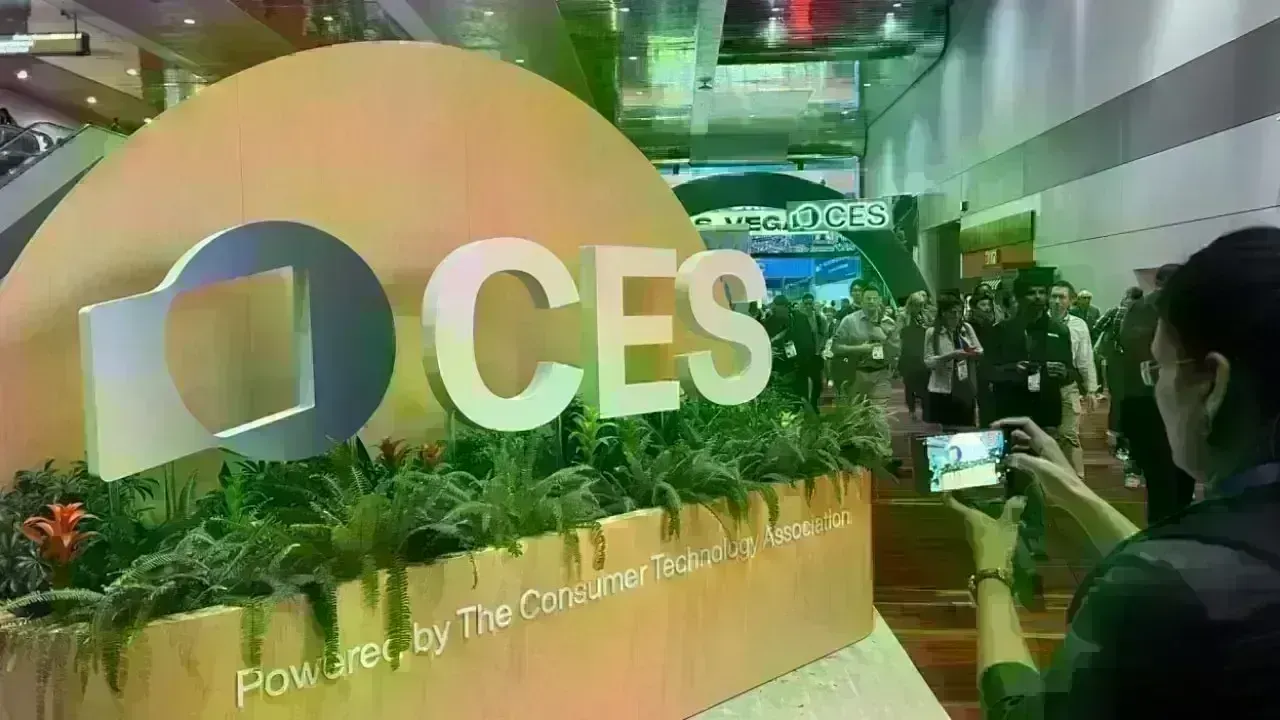
Every January, Las Vegas becomes the hub of technological advancements, and CES 2026 did not disappoint. This year’s event illustrated a landscape where artificial intelligence is central to innovation, evolving from a mere addition to the primary driver of consumer technology.
Hosted in Las Vegas, CES brought together key players in the tech industry: global giants, startup innovators, lawmakers, and financiers. Organized by the Consumer Technology Association, this edition marked a significant pivot towards practical technology that enchants daily life rather than mere flashy prototypes.
Gone are the days when AI was just a buzzword; CES 2026 displayed how it has become the essence of nearly every tech category—robots, wearables, vehicles, appliances, and healthcare products—positioning AI as the fundamental building block of innovation.
This marks a maturing landscape where adaptability, intelligence, and automation are no longer mere options but critical standards.
This year's spotlight fell on the rapid advancements in humanoid robots. Transitioning from laboratories to real-world settings, these robots are now being designed for varied environments, including homes, hospitals, and eldercare.
The showcased models are equipped with enhanced mobility, superior balance, and natural interaction capabilities driven by cutting-edge machine learning.
Manufacturers prioritized real-world applications this year, focusing on robots that assist older adults, streamline repetitive tasks in industry, enhance logistics, and provide customer support in designated settings.
Wearable tech has clearly evolved at CES 2026, moving beyond basic fitness metrics to offering AI-derived health insights, mental wellness evaluations, posture correction features, and real-time stress monitoring.
The goal of these innovations is to transition health management from reactive to proactive.
Numerous new devices now incorporate continuous AI capabilities, learning user preferences and evolving their recommendations accordingly. This shift establishes wearables as personalized digital aides rather than simple tracking devices.
Healthcare emerged as a leading sector at CES 2026. AI-integrated diagnostic solutions, remote monitoring tools, and health-centric wearables demonstrated the ability of technology to alleviate burdens on traditional healthcare frameworks.
The capability to analyze real-time data allows for early detection of potential health issues, significantly reducing serious health risks.
As global demographics shift towards an aging population, attendees saw innovations in robotics and AI tailored to facilitate independent living for seniors, tackling care deficits and enhancing quality of life.
CES 2026 highlighted a movement towards ambient intelligence in residential tech. New devices are designed to operate unobtrusively, fitting into home environments while intelligently responding to user interactions.
AI-driven systems for energy management, security, and climate control manifest how homes can optimize themselves automatically with minimal manual effort.
Privacy concerns have escalated, with an emphasis on on-device AI processing and robust encryption being presented as vital rather than optional features.
Automotive innovations at CES 2026 largely revolved around software-enhanced vehicles. AI now governs navigation, driving assistance, predictive maintenance, and personalized in-cabin experiences.
The gap between vehicles and computing devices continues to close as cars evolve into intelligent mobility systems.
Though fully autonomous vehicles remain aspirational, this year's focus was on progressive intelligence through advanced driving assistance systems that elevate safety while retaining human control.
Display technologies at CES unveiled innovations in energy efficiency, flexibility, and vivid realism. Groundbreaking options like transparent displays, foldable screens, and immersive AR interfaces hinted at novel interactions with information.
Manufacturers emphasized durability and practical usability in addition to novelty.
Sustainability emerged as a headline concern, with AI-fueled energy efficiency, smart grid technology, and resource management tools taking center stage.
From cutting down household energy use to refining industrial productivity, technology is increasingly serving as a facilitator of climate initiatives.
Various companies introduced designs emphasizing recyclability, repairability, and sustainability, reflecting evolving consumer expectations.
A notable trend at CES 2026 was the rise of autonomous AI—systems capable of making decisions based on user preferences and context.
These AI agents can efficiently manage tasks, coordinate devices, and adapt workflows with little human intervention, raising both efficiency and ethical considerations.
With enhanced connectivity, cybersecurity concerns have become paramount. CES 2026 emphasized the need for integrated security measures, biometric safeguards, and AI-supported threat identification.
The industry is pivoting towards treating security as a fundamental aspect of design rather than an afterthought.
Consumer attitudes are evolving, as CES 2026 illustrated. Attendees showed a marked preference for solutions that offer real value over mere experimental displays.
Technologies aimed at improving health, safety, efficiency, and environmental responsibility drew far greater interest than those purely focused on entertainment.
While major corporations claimed much of the exhibition space, it was the startups that introduced some of the most novel solutions. Their collaborative platforms, cloud-based AI solutions, and affordable hardware have minimized entry barriers.
This dynamic affirmed CES's status as both a launchpad for innovation and a marketplace for groundbreaking ideas.
The exhibition stage at CES 2026 featured participants from Asia, Europe, Africa, and the Americas, accentuating the global distribution of innovation.
Cross-border collaborations and interoperable platforms emerged as dominant themes.
Numerous technologies unveiled are poised for commercial release, speeding up the innovation timeline and amplifying market implications.
For investors and decision-makers, CES provided a lens into sectors likely to spur growth in the foreseeable future.
As AI achieves greater autonomy, ethical discussions took center stage. Topics such as bias, accountability, and transparency emerged as integral components in product development.
CES 2026 underscored the necessity of coupling technological advancement with responsible governance.
While automation and AI were prevalent, the narrative of CES 2026 leaned toward a human-centric approach. The technology is increasingly crafted to support human needs rather than supplant them.
This prominently reflects a vital shift in innovation philosophy.
Despite the acceleration of innovation, wide-scale adoption hinges on affordability, infrastructure, and digital literacy. Bridging gaps in these areas remains a crucial obstacle.
The rapid rollout of AI solutions raises concerns about unintended consequences, making responsible regulation and thorough testing more essential than ever.
Rather than presenting fantastical future scenarios, CES 2026 provided a reality check on the current state of technology and its immediate trajectory. The emphasis on deployable solutions, responsible AI, and impactful applications speaks to an industry aware of its societal responsibilities.
CES 2026 will be etched in memory not for dazzling concepts but for its pragmatic outlook on the future. Robots designed for assistance rather than spectacle, wearables that aim to prevent health issues rather than merely count steps, and AI systems that integrate smoothly into everyday life defined this year’s theme.
As these advancements transition from display areas to homes, healthcare facilities, and workplaces, CES 2026 stands as a pivotal point marking the journey from innovative ideas to integrated solutions. Moving forward, the focus isn’t just on smarter tech—it’s on more thoughtful tech.
This article is intended for informational and editorial purposes only. Product features, availability, and timelines may vary by manufacturer and region. Readers should rely on official company announcements for confirmed specifications and release details.










Anticipated Dates for UAE Eid Al Adha 2026 Unveiled by Astronomical Experts
Experts predict Eid Al Adha 2026 in the UAE to start on May 27, prompting early holiday planning amo

DAE Achieves Remarkable Growth in Q1 2026 With Record Revenue
Dubai Aerospace Enterprise announces impressive financial results for Q1 2026, reflecting a surge in

Price Increase for Sony PS5 in Southeast Asia Effective May 1
Sony announces a price increase for the PS5 across Southeast Asia starting May 1, 2026, impacting ga

Potential ‘Super El Niño’ in 2026: Understanding the Climate Risks
Could a Super El Niño emerge in 2026? Discover its implications and potential global climate impacts

Global Energy Crisis Intensifies: Markets React to Oil Supply Challenges
Markets are on edge as oil disruptions escalate, influencing prices and economic stability. Explore

Must-See Tourist Spots in London You Can't Overlook
Explore London's essential attractions, from royal landmarks to vibrant markets, ensuring an unforge




