Post by : Shakul
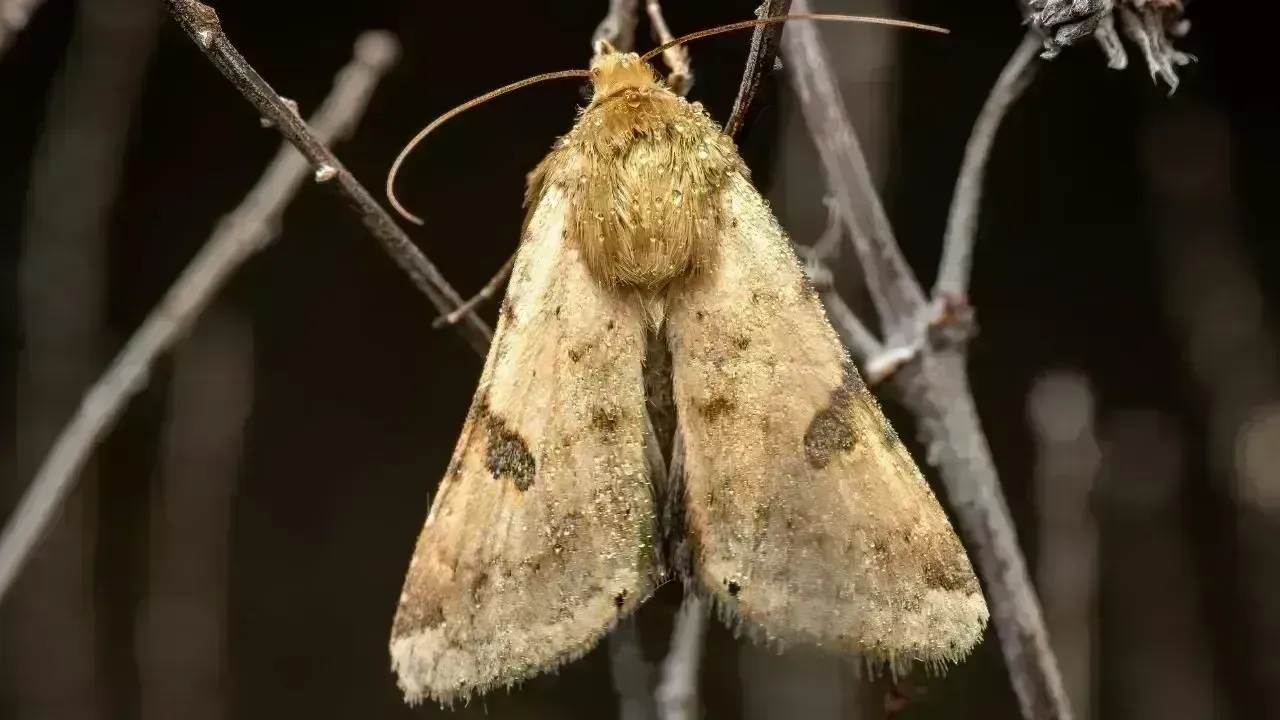
The discovery of a new invasive moth species has ignited significant alarm regarding environmental and agricultural stability in Ladakh, one of India’s ecologically fragile locales. Scientists have identified the Phalera cf. bucephala, or buff-tip moth, in the Suru Valley of Kargil district. This insect's rapid defoliation capabilities are raising red flags over its potential threat to the local farming-dependent economy.
The identification was made by a team of researchers who investigated the cold desert ecosystem of Ladakh. Originating from regions in Africa, East Asia, and Europe, this moth species was noted with the designation “cf.” as it might either mark a new local occurrence or a closely linked variant. Ongoing research is required to clarify the moth's precise classification and understand its implications for the fragile ecology of the Himalayas.
Warnings have been issued concerning the larvae of the buff-tip moth, which are voracious feeders capable of consuming extensive quantities of foliage rapidly, leading to complete stripping of trees within weeks. Such feeding habits pose a significant threat given that Ladakh’s agriculture and rural livelihoods heavily rely on a limited vegetation cover typical to the region's harsh mountainous climate.
Suru Valley, recognized for its agricultural productivity and greener landscapes relative to other parts of Ladakh, supports farmers who cultivate crops and manage orchards vital for community sustenance. Experts express that if the moth's population proliferates unchecked, it could devastate local crops, fruit-bearing trees, and indigenous vegetation, resulting in economic hardship and ecological disruption.
Moreover, scientists highlight that the introduction of invasive species can yield long-term detrimental effects on fragile ecosystems. Given Ladakh’s delicate climate and narrow biodiversity range, an influx of such species could significantly shift the natural equilibrium. Rising temperatures and climate change may further facilitate the survival and geographical spread of these pests into new mountainous areas.
The buff-tip moth's ability to blend into its environment complicates detection, as the adult moth closely resembles broken twigs or tree bark, making it harder for potential predators to spot them. This natural camouflage might also impede efforts by researchers and forest management authorities to effectively monitor and control the species in the near future.
In response, environmental scientists are pressing for renewed vigilance from authorities to track the moth's proliferation and undertake comprehensive ecological studies in Ladakh. They assert that early detection and proactive measures are critical to safeguarding Ladakh’s agricultural prospects, biodiversity, and economic stability against the backdrop of possible lasting damage. This development underscores the intensifying environmental threats confronting Himalayan ecosystems amid the dual pressures of invasive species and climate change.










Anticipated Dates for UAE Eid Al Adha 2026 Unveiled by Astronomical Experts
Experts predict Eid Al Adha 2026 in the UAE to start on May 27, prompting early holiday planning amo

DAE Achieves Remarkable Growth in Q1 2026 With Record Revenue
Dubai Aerospace Enterprise announces impressive financial results for Q1 2026, reflecting a surge in

Price Increase for Sony PS5 in Southeast Asia Effective May 1
Sony announces a price increase for the PS5 across Southeast Asia starting May 1, 2026, impacting ga

Potential ‘Super El Niño’ in 2026: Understanding the Climate Risks
Could a Super El Niño emerge in 2026? Discover its implications and potential global climate impacts

Global Energy Crisis Intensifies: Markets React to Oil Supply Challenges
Markets are on edge as oil disruptions escalate, influencing prices and economic stability. Explore

Must-See Tourist Spots in London You Can't Overlook
Explore London's essential attractions, from royal landmarks to vibrant markets, ensuring an unforge




