Post by : Anees Nasser
The year 2025 was pivotal for space exploration, marking a significant shift in our grasp of astronomy and planetary science. Rather than merely accumulating data, this period unveiled transformative discoveries, reshaping our cosmic understanding. Cutting-edge telescopes, enhanced data analysis techniques, and ambitious missions came together to reveal a universe teeming with complexity and dynamic processes.
What set 2025 apart was not only the sheer number of breakthroughs but also their transformative nature. Groundbreaking evidence contradicted existing theories on planetary evolution, stellar life cycles, and conditions for life beyond Earth. These insights prompted scientists to rethink our questions regarding humanity's place in the expanse of space.
The foundation of 2025’s revelations was rooted in technological advancements. Space observatories that had been operational for years achieved peak efficiency, and previously collected data was reanalyzed with advanced tools. This synergy, combining improved spectroscopy and machine learning with extensive sky surveys, enabled astronomers to discern patterns that had previously eluded detection.
This blend of patience and precision proved vital. Many of the year's most remarkable findings arose not from novel missions, but from innovative reinterpretations of existing data, underscoring the notion that hidden secrets of the universe await discovery even in familiar territories.
Mars has long captured scientific interest, but 2025 brought intriguing new evidence. Subsurface radar indicated substantial and stable ice deposits located surprisingly close to the Martian equator. This finding implies that the Red Planet retained accessible water resources well into its geological timeline.
Even more intriguing was the discovery of organic compounds within these ice layers, suggesting processes that could preserve traces of ancient life. While not definitive proof of past life, this evidence bolsters the argument that Mars once harbored suitable environments for life.
As a result, future mission plans are evolving, focusing on areas previously deemed too arid or geologically inactive.
Among 2025’s most notable discoveries were findings related to exoplanets. Astronomers observed atmospheric compositions that challenged previous assumptions, noting planets with thick cloud layers reflecting intense radiation yet maintaining stable temperatures.
One striking finding was the detection of complex molecules in atmospheres thought to be hostile. These signatures indicated active atmospheric processes and unexpected balance mechanisms, prompting a reevaluation of the 'habitable zone' and broadening the range of worlds potentially conducive to life.
These revelations emphasize the growing understanding that favorable conditions for life might exist in environments far more varied than earlier thought, steering future exoplanet research in new directions.
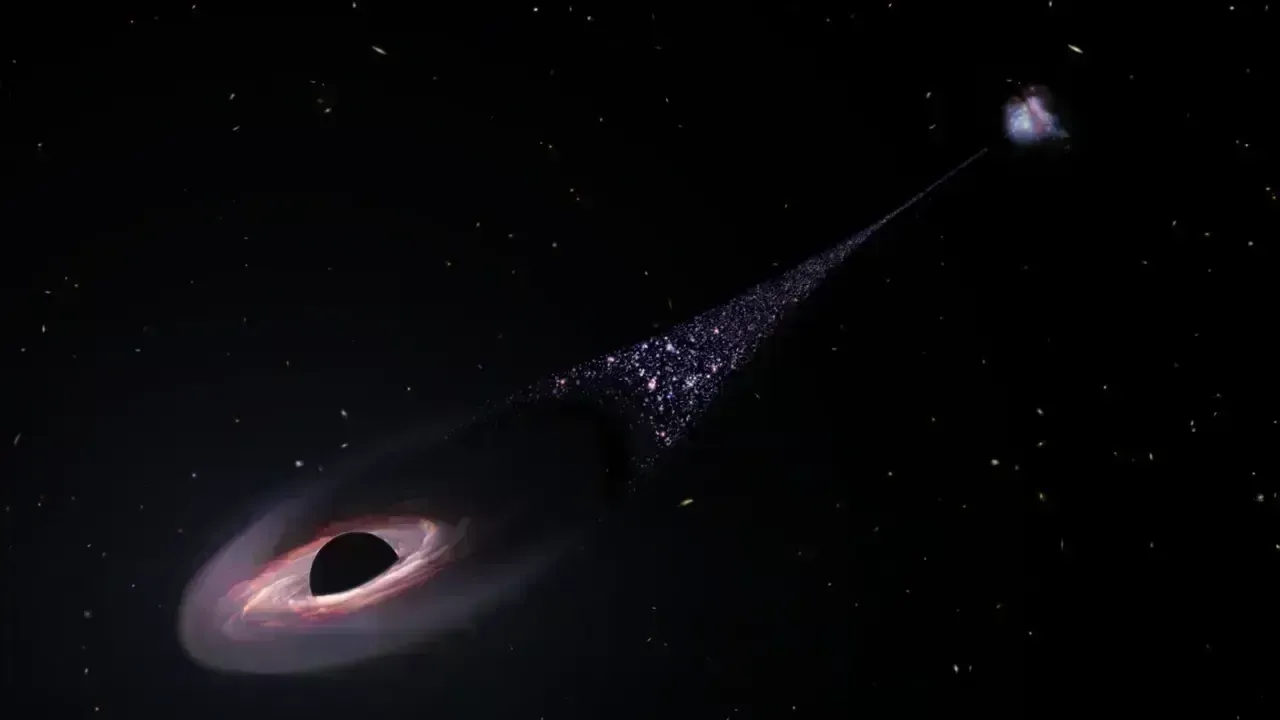
Traditionally seen as cosmic voids, black holes revealed a more intricate nature in 2025. Observations suggested some supermassive black holes emit organized jets of energy that can enhance star formation in surrounding galaxies, fostering the birth of new stars through gas compression.
Additionally, evidence emerged that black holes might undergo cycles of activity and dormancy, resembling natural Earth systems, hinting at a symbiotic relationship between black holes and their host galaxies.
Analysis of asteroid samples gathered in 2025 provided new insights into the early solar system. Researchers identified complex organic molecules similar to those on Earth, reinforcing theories that asteroids contributed crucial water and organic material to our planet.
A surprising aspect was the variety of chemical compositions within single asteroid samples, indicating that early solar system bodies exhibited more dynamism and material exchange during their formation.
Long considered geologically silent, the Moon's status was challenged in 2025. High-resolution imaging and advanced seismic data revealed subtle tectonic activity and heat signatures beneath its surface, suggesting it still retains some internal energy.
These insights are crucial for future human presence on the Moon, influencing habitat stability and resource extraction strategies while deepening knowledge about rocky bodies' longevity and activity levels.
Gamma-ray bursts are among the universe's most violent events, and significant clarity about their origins emerged in 2025. Researchers identified previously unrecognized precursor signals that occur moments before these explosions, enhancing the capacity to predict and study these phenomena in exquisite detail.
This finding illuminated the interconnectedness of stellar evolution events, enabling scientists to chart the life cycles of massive stars with increased precision.
Once deemed largely vacant, interstellar space revealed itself as a site of complex chemical reactions in 2025. Researchers discovered that these processes create molecules vital for star and planet formation, indicating the building blocks of life are prevalent across the universe.
This discovery challenges the perception of a static universe, portraying it instead as a vibrant, dynamic scene where chemistry and physics interact on vast scales.
A quietly transformative element behind this year's discoveries was the integration of artificial intelligence in data analysis. AI systems processed massive datasets, identifying subtle patterns that may have been overlooked by human researchers.
AI-enabled processes allowed for quicker discovery of rare phenomena, underscoring the essential partnership between human insight and computational prowess in modern space science.
The implications stemming from 2025’s space revelations stretch beyond academic research. They shape humanity's future exploration strategies, resource allocation, and our understanding of our own existence in the cosmic landscape. Each breakthrough inches us closer to answers about origins and destiny.
These discoveries also act as catalysts for technological innovation, influencing advancements in everything from materials used for space missions to improved analytical techniques applicable on Earth.
While 2025 set remarkable benchmarks, it also primed future discoveries. Upcoming missions are being recalibrated based on these findings, targeting spots and phenomena that were once underestimated or ignored.
Expectations for the next decade revolve around blurring the lines between science and fiction, leading to discoveries that will challenge the most imaginative of theories.
The surprising discoveries of 2025 collectively illustrate one key theme: the universe is vastly more complex and interconnected than previously thought. Across Mars, the Moon, exoplanets, and black holes, each finding broadened the horizon of human knowledge.
Rather than resolving all questions, these discoveries stimulated new inquiries, ensuring curiosity will remain central to our explorative endeavors. As we gaze toward the future, one truth is evident — the cosmos retains myriad secrets yearning to be unveiled.
Disclaimer: This article summarizes general trends in space research and discoveries reported throughout 2025. Interpretations may change as additional scientific evidence becomes available.










Anticipated Dates for UAE Eid Al Adha 2026 Unveiled by Astronomical Experts
Experts predict Eid Al Adha 2026 in the UAE to start on May 27, prompting early holiday planning amo

DAE Achieves Remarkable Growth in Q1 2026 With Record Revenue
Dubai Aerospace Enterprise announces impressive financial results for Q1 2026, reflecting a surge in

Price Increase for Sony PS5 in Southeast Asia Effective May 1
Sony announces a price increase for the PS5 across Southeast Asia starting May 1, 2026, impacting ga

Potential ‘Super El Niño’ in 2026: Understanding the Climate Risks
Could a Super El Niño emerge in 2026? Discover its implications and potential global climate impacts

Global Energy Crisis Intensifies: Markets React to Oil Supply Challenges
Markets are on edge as oil disruptions escalate, influencing prices and economic stability. Explore

Must-See Tourist Spots in London You Can't Overlook
Explore London's essential attractions, from royal landmarks to vibrant markets, ensuring an unforge




